About Me
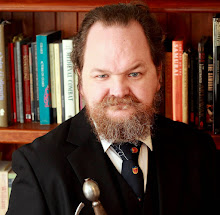
- Henry Walker
- Either an author who fences, or a fencer who tends to write a lot. I found a passion for writing first, then I found fencing. I also found that the pen and the sword work very well together. The pen may be mightier than the sword but together they are much greater.
Tuesday, December 13, 2016
Solo Training: For the Solo Practitioner
Greetings,
This was going to be a post about finding a local group and what consists of a good group with local contacts in my local area, but I changed my mind. I figured that there is a lot of information out there about how to find a local group for doing Historical European Martial Arts (HEMA) in what ever particular flavour you are looking for. Less, on the other hand, is said about the solo practitioner and how a person is to go it alone. Luckily we have the internet and faster communications which makes things easier, but there are still times when it is necessary to do things solo.
Sometimes a group is not convenient to get to. Sometimes the group does not mesh well with you, or is not studying what you are interested in. There are lots of reasons for going it alone. Sometimes it is just necessary for you to start the research into a particular form on your own to get a handle on it before involving other people. Every one of these is a valid reason for going it alone and you should not be ashamed for any of them.
The first thing that the future solo practitioner should note is that it is a hard road, but it is also rewarding as well. Groups have some support mechanisms which are absent when studying or practicing alone. All of the work falls to you, but in the end so do all of the rewards of that work. You can stand there at the end and say that you did it. Each advance is something that you did on your own and each advancement is an achievement in its own right.
In studying alone or practicing alone there are many choices to make, and all of them are open. There is no one to sway you from one path to another or make any other determinations. In the same way there also equally as many chances to be distracted. This is where you need to keep with what you are doing. ...
The rest of this article can be found in Un-Blogged: A Fencer's Ramblings by Henry Walker, which is available in paperback from:
Amazon: https://www.amazon.com/Blogged-Ramblings-Henry-Leigh-Walker/dp/098764470X
Booktopia: https://www.booktopia.com.au/un-blogged-henry-leigh-walker/book/9780987644701.html
Among other places...
It is also available in electronic format (pdf) from: https://buy.stripe.com/fZecP419c7CB9VKeUV
... or direct from the author.

Sunday, November 13, 2016
My Treatise
Greetings,
The idea of putting your knowledge in words is somewhat of a scary prospect. When it comes to fencing and especially the use of the rapier it becomes a little larger due to all of the previous work which others have done. Some of my readers may know of this particular project. I have indicated toward it once or twice in various posts previously. This particular post is designed to have a bit of an examination of the reasoning behind it and the process that I went through to write it.
My parents then moved and I moved with them. Luckily I found a fencing club at the university I was attending at the time and started with the foil. I spent six months doing footwork and trying to learn how to parry. The footwork ended up passable, the parrying was very rudimentary. My lunge on the other hand seemed to be something I was good at. It was long, accurate, and fast. I had to leave the university and lost contact. I came back later and things had changed.
The weapons had changed all of a sudden, they were longer and made out of fibreglass rods glued together and then wrapped in tape. I asked what was going on and was told that they were doing a SCA rapier practice and asked if I would like a go. It looked like fun, sure I said, here is where my love of this weapon truly started. This was some 20-odd years ago.
Taking the influence mostly of Saviolo my particular method is a compilation of various elements of various masters compiled into a single work, much the same way he did. I found what made sense and worked for me and developed my own style out of it. This means that while my rapier techniques and method are based on period sources, they are not all from a single source. This means I have the adaptability to change to what is required as presented by my opponent. This is the method which I have developed over the past years and it is this method which appears in my treatise.
Now there will be some who will claim that I am merely butchering what I have researched and then calling it my own. They will also claim that I am not doing "true rapier" of any "style" because of this method. To these people I ask, what is what I have done any different from any master previously? How many times do we hear in manuals a master stating that he does not do a particular technique because he does not like it or does not think it is effective? What is the difference?
The next claim will be that I am plagiarizing and not giving due credit to where I have taken my research. To this I will merely state that fencing theory is very much in the common knowledge arena and anyone who claims a right to it is fooling themselves. To say that I am a plagiarist is to also call most of our previous authors who wrote the manuals the same, and also modern ones to boot. I am taking a series of well-known actions and explaining and assembling them in my own fashion. To claim plagiarism here would be to claim plagiarism on a new piece of music written because none of the notes, times and tempos are different.
(Congratulations dear reader for getting this far.)
Reading from period sources scares some people because they are unfamiliar with the language and do not understand what's going on. My first reason for writing this treatise was to break down this barrier for some people. This is the reason why it will be presented in Modern English and also a dialect of Elizabethan English. By having the two side by side the language will be less frightening for some people and may encourage them to reach out an begin to read primary sources themselves rather than relying on secondary materials.
The Historical European Martial Arts (HEMA) community now has a history which is at least 20 years old, if not 30. This means that there have been people out there studying period manuals for this extent of time. There have been some wonderful productions of period works made available to the public and I thank those who do this for us. There have been some wonderful interpretations of period manuals made available to the public and I thank those who do this for us also. What I have not seen is anyone grow the gumption to put their name on the line and do what the masters did and write their own treatise. Not a translation. Not an interpretation. A treatise of how the individual fights. In this way I hope that my treatise will stand as a sort of a challenge to these people to put their pens to paper and write their own. It would be better that we write these manuals and have them in print than have these knowledgeable individuals pass on and not leave what they know to the rest of the world, as so many did previously.
Not a "master"? Neither were many of the people who produced manuals in the period in which the weapons were used sharp. If you have at least 10 years start planning, if you have 20 or more, this challenge is aimed at you.
(Almost there reader, really you are.)
The next bit was to sit down and plan my chapters so I could organise things a bit better. Theory first, practice second, demonstration of the combination of both as a third, with sundry notes as the final bit. This was the process I went through chopping things down into little bits until I had a structure that I could use, then re-organising the structure so it made sense. Then re-organising things again because this bit needs to be before that bit because you haven't mentioned that bit yet. Please note this was only the "first book". The "second book" was going to be just like Saviolo's about duelling and other more social subjects, and only to appear in the EE version.
Once it is organised then I wrote. I started with the theory element. The hardest part about writing a book based on stuff that you know is filtering out stuff which isn't stuff you know. I made the determination on this one that if I could not explain it and give the "why" answer it would be left out. This was made all the harder because of my training as an historian which was saying "Document it!" all the time. It all also applied all the way through the practical bit as well.
Explaining physical actions is not easy, try it sometime and you will see that it is not as easy as you might think. This is further compounded in the earlier sections of the book where you cannot use jargon which you have not introduced which would explain things simply. I spent sometime at my desk waving a stick, and standing up, and sitting down and writing, and standing up again to repeat the action and so forth. Eventually all of the practical stuff got written.
Next was the "second book". This was based much on Saviolo's Second Book "Of Honour and Honourable Quarrels", thus a sort of code book for duelling. Surprisingly it was actually much easier to write this bit than the previous bit once I managed to get my head straight about what I was talking about. Honour is a sticky subject and it can tie you up in knots really easily. Keeping it all straight was rather a challenge and I can tell you that I still think that I missed something.
Done? Nope. Now we go back and write all the introductory bits. Most of this is tooting your horn about how wonderful fencing is and how awesome the book is. Easy, right? Once you get on a roll it can get easier as you go along, but you do feel like that you are saying the same thing over and over again, especially after doing the "second book". This bit was actually easier to do in EE than it was in Modern English.
Speaking of which, then once all of this is done it all needs to be translated into EE. Or at least the bits which you haven't already because it was just easier to write it that way the first time. If you want to have a look at the process of learning EE that I went through and a bit deeper into this process, have a look at my other blog http://oldewordes.blogspot.com.au/. This is where I have documented my delving into the interesting thing that is EE. One thing that I will tell you, after doing this, it makes Shakespeare a breeze.
Finally comes all the "book" stuff. The bits where you assemble the two together, some of which I have started, others which I have not. At the moment I am doing more edits. I was hoping that this was going to be out in 2016, looks like not to be.
There is the process and some information about my treatise. I will keep people updated and posted as things progress, as much as I can remember to. Just know that it is progressing and it will come out at some point in time. This is one of those projects where you just have to keep plodding along, knowing that in the end, it will be worth it all.
Cheers,
Henry.
The idea of putting your knowledge in words is somewhat of a scary prospect. When it comes to fencing and especially the use of the rapier it becomes a little larger due to all of the previous work which others have done. Some of my readers may know of this particular project. I have indicated toward it once or twice in various posts previously. This particular post is designed to have a bit of an examination of the reasoning behind it and the process that I went through to write it.
A Little History
My real official fencing history starts with my local chapter of the Society for Creative Anachronism (SCA) and the use of the sword and shield to become a "heavy" fighter. I would go to practice, loose some arrows at a target to keep my eye in, and then spend an hour or two throwing blows at the pell with a rattan sword. This was to learn how to throw the blows properly, and it felt right.My parents then moved and I moved with them. Luckily I found a fencing club at the university I was attending at the time and started with the foil. I spent six months doing footwork and trying to learn how to parry. The footwork ended up passable, the parrying was very rudimentary. My lunge on the other hand seemed to be something I was good at. It was long, accurate, and fast. I had to leave the university and lost contact. I came back later and things had changed.
The weapons had changed all of a sudden, they were longer and made out of fibreglass rods glued together and then wrapped in tape. I asked what was going on and was told that they were doing a SCA rapier practice and asked if I would like a go. It looked like fun, sure I said, here is where my love of this weapon truly started. This was some 20-odd years ago.
Treatise Foundation
Since then I have spent the time learning all that I could about the rapier and how it worked. This was sometimes a matter of learning it "on the job" and sometimes learning it from manuals of the period. My two favourite manuals are Giacomo di Grassi's True Arte of Defense (1594) and Vincentio Saviolo's His Practice in Two Bookes (1595). I find myself always going back to these two and always finding something new when I do.Taking the influence mostly of Saviolo my particular method is a compilation of various elements of various masters compiled into a single work, much the same way he did. I found what made sense and worked for me and developed my own style out of it. This means that while my rapier techniques and method are based on period sources, they are not all from a single source. This means I have the adaptability to change to what is required as presented by my opponent. This is the method which I have developed over the past years and it is this method which appears in my treatise.
Now there will be some who will claim that I am merely butchering what I have researched and then calling it my own. They will also claim that I am not doing "true rapier" of any "style" because of this method. To these people I ask, what is what I have done any different from any master previously? How many times do we hear in manuals a master stating that he does not do a particular technique because he does not like it or does not think it is effective? What is the difference?
The next claim will be that I am plagiarizing and not giving due credit to where I have taken my research. To this I will merely state that fencing theory is very much in the common knowledge arena and anyone who claims a right to it is fooling themselves. To say that I am a plagiarist is to also call most of our previous authors who wrote the manuals the same, and also modern ones to boot. I am taking a series of well-known actions and explaining and assembling them in my own fashion. To claim plagiarism here would be to claim plagiarism on a new piece of music written because none of the notes, times and tempos are different.
(Congratulations dear reader for getting this far.)
Reasons
Why would a person go to the effort of attempting to write all that the know and put it into a book? The challenge of writing a book in the first place would be one. The attempt to codify years of knowledge so that a person can see what they have done is another. To present to others their own ideas about the use of a weapon is another reason. Some of these reasons are mine, but not the main one.Reading from period sources scares some people because they are unfamiliar with the language and do not understand what's going on. My first reason for writing this treatise was to break down this barrier for some people. This is the reason why it will be presented in Modern English and also a dialect of Elizabethan English. By having the two side by side the language will be less frightening for some people and may encourage them to reach out an begin to read primary sources themselves rather than relying on secondary materials.
The Historical European Martial Arts (HEMA) community now has a history which is at least 20 years old, if not 30. This means that there have been people out there studying period manuals for this extent of time. There have been some wonderful productions of period works made available to the public and I thank those who do this for us. There have been some wonderful interpretations of period manuals made available to the public and I thank those who do this for us also. What I have not seen is anyone grow the gumption to put their name on the line and do what the masters did and write their own treatise. Not a translation. Not an interpretation. A treatise of how the individual fights. In this way I hope that my treatise will stand as a sort of a challenge to these people to put their pens to paper and write their own. It would be better that we write these manuals and have them in print than have these knowledgeable individuals pass on and not leave what they know to the rest of the world, as so many did previously.
Not a "master"? Neither were many of the people who produced manuals in the period in which the weapons were used sharp. If you have at least 10 years start planning, if you have 20 or more, this challenge is aimed at you.
(Almost there reader, really you are.)
Writing
Where do you begin? The beginning you say. Actually no, I didn't. I started with the format of the book. Because I knew I was going to be translating it into Elizabethan English (EE) and having it look as close to the real thing, the modern one needed to be formatted in a similar way so that the various chapters and bits and pieces matched up. This gave me some ideas about parts that I should be writing at least. Most of it is based on a combination of di Grassi and Saviolo, you should not be surprised.The next bit was to sit down and plan my chapters so I could organise things a bit better. Theory first, practice second, demonstration of the combination of both as a third, with sundry notes as the final bit. This was the process I went through chopping things down into little bits until I had a structure that I could use, then re-organising the structure so it made sense. Then re-organising things again because this bit needs to be before that bit because you haven't mentioned that bit yet. Please note this was only the "first book". The "second book" was going to be just like Saviolo's about duelling and other more social subjects, and only to appear in the EE version.
Once it is organised then I wrote. I started with the theory element. The hardest part about writing a book based on stuff that you know is filtering out stuff which isn't stuff you know. I made the determination on this one that if I could not explain it and give the "why" answer it would be left out. This was made all the harder because of my training as an historian which was saying "Document it!" all the time. It all also applied all the way through the practical bit as well.
Explaining physical actions is not easy, try it sometime and you will see that it is not as easy as you might think. This is further compounded in the earlier sections of the book where you cannot use jargon which you have not introduced which would explain things simply. I spent sometime at my desk waving a stick, and standing up, and sitting down and writing, and standing up again to repeat the action and so forth. Eventually all of the practical stuff got written.
Next was the "second book". This was based much on Saviolo's Second Book "Of Honour and Honourable Quarrels", thus a sort of code book for duelling. Surprisingly it was actually much easier to write this bit than the previous bit once I managed to get my head straight about what I was talking about. Honour is a sticky subject and it can tie you up in knots really easily. Keeping it all straight was rather a challenge and I can tell you that I still think that I missed something.
Done? Nope. Now we go back and write all the introductory bits. Most of this is tooting your horn about how wonderful fencing is and how awesome the book is. Easy, right? Once you get on a roll it can get easier as you go along, but you do feel like that you are saying the same thing over and over again, especially after doing the "second book". This bit was actually easier to do in EE than it was in Modern English.
Speaking of which, then once all of this is done it all needs to be translated into EE. Or at least the bits which you haven't already because it was just easier to write it that way the first time. If you want to have a look at the process of learning EE that I went through and a bit deeper into this process, have a look at my other blog http://oldewordes.blogspot.com.au/. This is where I have documented my delving into the interesting thing that is EE. One thing that I will tell you, after doing this, it makes Shakespeare a breeze.
Finally comes all the "book" stuff. The bits where you assemble the two together, some of which I have started, others which I have not. At the moment I am doing more edits. I was hoping that this was going to be out in 2016, looks like not to be.
Conclusion
There is the process and some information about my treatise. I will keep people updated and posted as things progress, as much as I can remember to. Just know that it is progressing and it will come out at some point in time. This is one of those projects where you just have to keep plodding along, knowing that in the end, it will be worth it all.
Cheers,
Henry.
Thursday, October 13, 2016
Renown Versus Notoriety
Greetings,
Renown and notoriety are two words which some may have heard and some may have not. They are how different fencers are talked about, even if the people doing the talking do not even know the words or what they mean. This post is designed to bring these two words into the light of examination and show how the actions of a swordsman can determine the reactions that he will get from other swordsmen and even non-combatants.
The rest of this article can be found in Un-Blogged: A Fencer's Ramblings by Henry Walker, which is available in paperback from:
Amazon: https://www.amazon.com/Blogged-Ramblings-Henry-Leigh-Walker/dp/098764470X
Booktopia: https://www.booktopia.com.au/un-blogged-henry-leigh-walker/book/9780987644701.html
Among other places...
It is also available in electronic format (pdf) from: https://buy.stripe.com/fZecP419c7CB9VKeUV
... or direct from the author.
Renown and notoriety are two words which some may have heard and some may have not. They are how different fencers are talked about, even if the people doing the talking do not even know the words or what they mean. This post is designed to bring these two words into the light of examination and show how the actions of a swordsman can determine the reactions that he will get from other swordsmen and even non-combatants.
Definitions
The first
thing to do is to define these words and to do that definitions have been taken
from www.merriam-webster.com. Thus
the definitions of the words are:
Renown: a state of being widely acclaimed and highly honoured
Notoriety: the condition of being famous or well-known especially for something bad: the state of being notorious
Clearly
they both have something in common in that in both cases a person with renown
and a person who has notoriety are well-known. This is the common element that
links them. The difference is that one is respected and praised while the other
is known for something less than positive. It is in this difference where the
importance lies. Now that we have the definitions and the beginnings of an
explanation, we can begin to relate them to the swordsman.
For the Swordsman
"How you win is ... important, if not more important, than any individual victory. You must win decisively, cleanly, and gallantly." (Evangelista, 2000:301)
These are
two sides to fame. We all know of celebrities who are famous for doing good
things and staying that way, but we all know of celebrities who are good at
what they do, but are known also for bad things. The former have renown, the
latter have notoriety.
In relation
to the swordsman, the swordsman who has renown is respected on and off the
field regardless of the result of his bouts or tournaments, or even whether he
even participates in tournaments. When he fights he fights with grace and
skill, acknowledging the skill of his opponent, a truly positive influence on
the community. The swordsman who has notoriety is respected on the field ...
The rest of this article can be found in Un-Blogged: A Fencer's Ramblings by Henry Walker, which is available in paperback from:
Amazon: https://www.amazon.com/Blogged-Ramblings-Henry-Leigh-Walker/dp/098764470X
Booktopia: https://www.booktopia.com.au/un-blogged-henry-leigh-walker/book/9780987644701.html
Among other places...
It is also available in electronic format (pdf) from: https://buy.stripe.com/fZecP419c7CB9VKeUV
... or direct from the author.
Bibliography
Evangelista, N. (2000) The Inner Game of Fencing: Excellence
in Form, Technique, Strategy, and Spirit, Masters Press, Illinois, USA
Tuesday, September 13, 2016
On Practice
Greetings,
Practice is important. It is something which we hear and something which we are told again and again. This post is going to examine some of the details with regard to practice, how it is performed and why it is performed. Many will just skip over this one, but I suggest that you do not, as practice really is that important.
1. Importance
Everyone needs to practice. It does not matter if you are the newest swordsman or the most aged practitioner. Skills decay if you do not use them and thus practice is important. This also means that you should also practice everything. When you do not use a skill, it will decay and will not be as sharp the next time you try to use it.
2. Regularity
A post has already done a blog on this one, so why are we back here again? Simply because it relates to the subject at hand. More to the point it is important. You should practice every day, an hour is best, 30 minutes if it is all you can squeeze in. It does not have to be anything complex merely using some footwork and making some attacks will do.
3. Muscle Memory
There is a thing called "muscle memory". When you practice something enough, you will get to a stage where you can do the action without thinking about it, naturally this is a great advantage in any form of swordplay. It takes about 500 repetitions of an action to put it into your muscle memory, but you must practice it accurately. Any mistake you make in the action will also be practiced into muscle memory as well and it will take 50,000 repetitions to remove a mistake from muscle memory, so it is best to do it right the first time.
4. What to Practice
In a word everything. This being said some elements need more focus than others. Foundation elements ...
The rest of this article can be found in Un-Blogged: A Fencer's Ramblings by Henry Walker, which is available in paperback from:
Amazon: https://www.amazon.com/Blogged-Ramblings-Henry-Leigh-Walker/dp/098764470X
Booktopia: https://www.booktopia.com.au/un-blogged-henry-leigh-walker/book/9780987644701.html
Among other places...
It is also available in electronic format (pdf) from: https://buy.stripe.com/fZecP419c7CB9VKeUV
... or direct from the author.
Saturday, August 13, 2016
Fencing and Music
Greetings,
There is no doubt that music has an effect on us all. Indeed that one odd body fact that I read somewhere, and have been meaning to fact-check, is that the human heart will beat alongside with the base of the music which is being played, or something similar. Music can inspire us toward different feelings and also emotional states, this particular effect is used in movies all of the time. So, I did some reading and had some thoughts and decided that it was time to look at it in relation to fencing.
Conveniently, not long after this little gem popped into my head I came across an article entitled, "Western Composers and Western Martial Arts" in Encased in Steel Anthology I. Interestingly enough there were aspects of what was said in here which lined up quite well with what I was going toward. While Keith Farrel's article deals more with the comparison of the dates of music with the dates of treatises to understand their social context and also for a better understanding of their footwork and movement (Farrel, 2015:87), mine was more toward asking questions of how peoples bouts compare to music and what influences it can have on training.
Toward the avenue of my own thoughts I stumbled across an article in Australasian Scientist called "Turn Down the Volume?" which studied the effect of music on study and the performance of students. Needless to say, this article was more along my own lines of thinking as I was also wondering if the playing of music would enhance my students' training or detract from it. Some of it was most helpful with regard to this, as it stated with regard to gene expression and "changes also inferred potential benefits relating to memory, learning and general brain health." music possibly aids in protecting and improving the brain (Flavel, 2015:15).
Clearly there is evidence that music being played is a good thing and can be an aid toward the student's learning. The question next was what music should be played during the practice? Going back to the two useful sources of information there is an examination of the relationship between the manuals and the music in Farrel (2015) as indicated above, Medieval Music is reflected in style of fighting, rhyming method presented in manuals and in music as well (Farrel, 2015:89). This would make medieval music perfect for this kind of fighting. Similarly, Renaissance Music was more complicated also found in music, repetition found in manuals also found in music (Farrel, 2015:90). This meant that the first ...
The rest of this article can be found in Un-Blogged: A Fencer's Ramblings by Henry Walker, which is available in paperback from:
Amazon: https://www.amazon.com/Blogged-Ramblings-Henry-Leigh-Walker/dp/098764470X
Booktopia: https://www.booktopia.com.au/un-blogged-henry-leigh-walker/book/9780987644701.html
Among other places...
It is also available in electronic format (pdf) from: https://buy.stripe.com/fZecP419c7CB9VKeUV
... or direct from the author.
There is no doubt that music has an effect on us all. Indeed that one odd body fact that I read somewhere, and have been meaning to fact-check, is that the human heart will beat alongside with the base of the music which is being played, or something similar. Music can inspire us toward different feelings and also emotional states, this particular effect is used in movies all of the time. So, I did some reading and had some thoughts and decided that it was time to look at it in relation to fencing.
Conveniently, not long after this little gem popped into my head I came across an article entitled, "Western Composers and Western Martial Arts" in Encased in Steel Anthology I. Interestingly enough there were aspects of what was said in here which lined up quite well with what I was going toward. While Keith Farrel's article deals more with the comparison of the dates of music with the dates of treatises to understand their social context and also for a better understanding of their footwork and movement (Farrel, 2015:87), mine was more toward asking questions of how peoples bouts compare to music and what influences it can have on training.
Toward the avenue of my own thoughts I stumbled across an article in Australasian Scientist called "Turn Down the Volume?" which studied the effect of music on study and the performance of students. Needless to say, this article was more along my own lines of thinking as I was also wondering if the playing of music would enhance my students' training or detract from it. Some of it was most helpful with regard to this, as it stated with regard to gene expression and "changes also inferred potential benefits relating to memory, learning and general brain health." music possibly aids in protecting and improving the brain (Flavel, 2015:15).
Clearly there is evidence that music being played is a good thing and can be an aid toward the student's learning. The question next was what music should be played during the practice? Going back to the two useful sources of information there is an examination of the relationship between the manuals and the music in Farrel (2015) as indicated above, Medieval Music is reflected in style of fighting, rhyming method presented in manuals and in music as well (Farrel, 2015:89). This would make medieval music perfect for this kind of fighting. Similarly, Renaissance Music was more complicated also found in music, repetition found in manuals also found in music (Farrel, 2015:90). This meant that the first ...
The rest of this article can be found in Un-Blogged: A Fencer's Ramblings by Henry Walker, which is available in paperback from:
Amazon: https://www.amazon.com/Blogged-Ramblings-Henry-Leigh-Walker/dp/098764470X
Booktopia: https://www.booktopia.com.au/un-blogged-henry-leigh-walker/book/9780987644701.html
Among other places...
It is also available in electronic format (pdf) from: https://buy.stripe.com/fZecP419c7CB9VKeUV
... or direct from the author.
Bibliography
Farrel, K. (2015) "Western Composers and Western Martial Arts" in Farrel, K. (ed) (2015) Encased in Steel Anthology I, Fallen Rook Publishing, Triquetra Services (Scotland), Glasgow
Flavel, M. (2015) "Turn Down the Volume?" in Australasian Scientist (Vol. 36, No. 7, Sept. 2015) Central Publications Pty Ltd, Wattletree Rd, Australia, pp 14-15
Flavel, M. (2015) "Turn Down the Volume?" in Australasian Scientist (Vol. 36, No. 7, Sept. 2015) Central Publications Pty Ltd, Wattletree Rd, Australia, pp 14-15
Wednesday, July 13, 2016
Brutal Fencing II: Aggressive Versus Assertive
Greetings,
A long while ago I wrote a post on Aggressive and Brutal Fencing. At that point in time I really was not able to explain what I meant. Well, I was able to explain what I didn't mean, but I was not able to explain what I thought was suitable. This post is an attempt to address this particular issue and hopefully clear up some meaning. This was greatly helped by reading one of the articles in the Encased in Steel: Anthology I, which I reviewed.
The Oxford dictionary (http://www.oxforddictionaries.com/) defines the terms as follows:
Assertive: "having or showing a confident and forceful personality"
Aggressive: "Ready or likely to confront; characterized by or resulting from aggression"
One is an expression of confidence, the other is an expression of confrontation. While they could be seen as being quite similar they are actually different. The assertive may attack because he is confident about himself and is thus assured of the result, but he will choose when. The aggressive must attack because he must because that is his way, he has no choice.
So, a person in their fencing when facing and bouting or even competing against another opponent should be assertive rather than aggressive. To be aggressive in this instance is to use power and force where it is not required, to overtly over-power the opponent much as any thug would. To be assertive on ...
The rest of this article can be found in Un-Blogged: A Fencer's Ramblings by Henry Walker, which is available in paperback from:
Amazon: https://www.amazon.com/Blogged-Ramblings-Henry-Leigh-Walker/dp/098764470X
Booktopia: https://www.booktopia.com.au/un-blogged-henry-leigh-walker/book/9780987644701.html
Among other places...
It is also available in electronic format (pdf) from: https://buy.stripe.com/fZecP419c7CB9VKeUV
... or direct from the author.
Monday, June 13, 2016
Book Review: Fencing Through the Ages
Greetings,
What? Another book review? Yes, it is. This one is of a similar nature to my last in that I bought this book at Swordplay last year and have been horribly slack about getting around to doing a book review on it. This is one that I am actually going to really enjoy telling you about as it will reveal a book and an author who, for the most part had been pushed aside for others.
Corthey, Adolphe (2015) Fencing Through the Ages, LongEdge Press, Brisbane, First Edition 1898, Translated by Chris Slee
So, the bibliographical details have been presented above, and should provide everything you should need to search for this book online for you to buy it. Why would you buy it? Well the book presents some very interesting material which has otherwise been shoved aside by the English-speaking world.
This book was translated into English from French by Chris Slee in a literal fashion. In this he attempted to stay as true to the language as possible. The advantage of this, while meaning that the result is less smooth than it could be, means that it is closer to the original as possible for the English-speaking reader. Slee supplies notes with regard to his translation of particular words throughout the book to inform the reader of his choices.
Adolphe Corthey is the French equivalent to Captain Alfred Hutton and Egerton Castle and is of as much importance to the revival of Historical European Martial Arts. His book Fencing Through the Ages presents an account of various masters of fencing, much as Castle's Schools and Masters of Defence. While it was Hutton and Castle on one side of the English Channel, it was Corthey on the other side.
The book presents an interesting discussion of the history of fencing from the very beginning all the way up to the eighteenth century. His discussion of the very early periods is, of course, very brief whereas his discussion of Renaissance and later period weaponry is much longer. The first weapon he discusses in detail is the two-handed sword, and the last is the smallsword. In this discussion he mentions the works of various masters in the same sort of fashion as is found in Castle's. This is the primary part of the book, and the actual book written by Corthey. As expected, of course, there are present many of the historical biases of the period with the "development" toward the dominance of the point and so forth, but as an historical document, this makes it still useful.
The fact that the above is the primary part of the book does not mean that the sundry materials should be skipped over in any way whatsoever. There is the presentation of contemporary media information also included demonstrates significance of author and work. Thus the presentation of such work was placed in the public eye, much as HEMA practitioners are attempting to do now.
One of the most interesting documents contained within this volume actually resides in the back pages. It is entitled "On the Subject of the Transformation of the Combat Sword" and discusses the transformation from combat weapon to weapon usable for practice. This is a document which should be of great interest to all practitioners of revivalist martial arts, but especially HEMA with regard to examining how to get weapons at least resembling their historical counter-parts.
In the end I found that this book, understated by its size and weight, was a most interesting read from cover to cover and I would recommend it for all with an interest in history and HEMA. The wide areas of knowledge which Corthey points toward should at least indicate to the reader other areas in which research may be made, and other areas in which maybe they had not thought to cover.
Cheers,
Henry.
What? Another book review? Yes, it is. This one is of a similar nature to my last in that I bought this book at Swordplay last year and have been horribly slack about getting around to doing a book review on it. This is one that I am actually going to really enjoy telling you about as it will reveal a book and an author who, for the most part had been pushed aside for others.
Corthey, Adolphe (2015) Fencing Through the Ages, LongEdge Press, Brisbane, First Edition 1898, Translated by Chris Slee
So, the bibliographical details have been presented above, and should provide everything you should need to search for this book online for you to buy it. Why would you buy it? Well the book presents some very interesting material which has otherwise been shoved aside by the English-speaking world.
This book was translated into English from French by Chris Slee in a literal fashion. In this he attempted to stay as true to the language as possible. The advantage of this, while meaning that the result is less smooth than it could be, means that it is closer to the original as possible for the English-speaking reader. Slee supplies notes with regard to his translation of particular words throughout the book to inform the reader of his choices.
Adolphe Corthey is the French equivalent to Captain Alfred Hutton and Egerton Castle and is of as much importance to the revival of Historical European Martial Arts. His book Fencing Through the Ages presents an account of various masters of fencing, much as Castle's Schools and Masters of Defence. While it was Hutton and Castle on one side of the English Channel, it was Corthey on the other side.
The fact that the above is the primary part of the book does not mean that the sundry materials should be skipped over in any way whatsoever. There is the presentation of contemporary media information also included demonstrates significance of author and work. Thus the presentation of such work was placed in the public eye, much as HEMA practitioners are attempting to do now.
One of the most interesting documents contained within this volume actually resides in the back pages. It is entitled "On the Subject of the Transformation of the Combat Sword" and discusses the transformation from combat weapon to weapon usable for practice. This is a document which should be of great interest to all practitioners of revivalist martial arts, but especially HEMA with regard to examining how to get weapons at least resembling their historical counter-parts.
In the end I found that this book, understated by its size and weight, was a most interesting read from cover to cover and I would recommend it for all with an interest in history and HEMA. The wide areas of knowledge which Corthey points toward should at least indicate to the reader other areas in which research may be made, and other areas in which maybe they had not thought to cover.
Cheers,
Henry.
Subscribe to:
Posts (Atom)