About Me

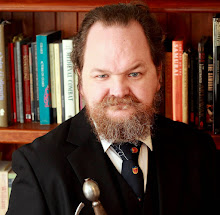
My photo
Either an author who fences, or a fencer who tends to write a lot. I found a passion for writing first, then I found fencing. I also found that the pen and the sword work very well together. The pen may be mightier than the sword but together they are much greater.
Showing posts with label attack and counter. Show all posts

Saturday, September 28, 2024

Some random thoughts coalesced...

 Greetings,

I haven't been on here in a while, most of my posts go to my Patreon site these days. However, I will share some thoughts with you which came together over the past week or so. I haven't really edited this much. It started out as thoughts for a historical fiction, or something similar, and then coalesced as a collection of thoughts about fencing and training for fencing. As I said it is a collection of thoughts which I really have not edited. So here it is, this post is also available on my Patreon site, which I recommend you go have a look at, because you are missing out on some free stuff as well.

I hope you find this interesting and useful.

Cheers,

Henry.

The blade sliced effortlessly through the air. A sharp noise rang out as the two blades intersected. The offensive action of one countered by the action of the other, placing his weapon in the right position, at the right time. The reason for their contest with weapons had melted away, it was trivial compared to the importance of skilful use of their weapons and the defence of life and limb. How long would the contest last, was the death of one required to satisfy the encounter, or was it simply a test of arms, a test of courage? Only the two combatants knew.

The scene around them seemed to have been blotted out, the only things left were the two people in the contest. It was as if a black cloth surrounded them as they moved about, concerns of the outside world were gone. Any focus on those details would detract from their focus, and any minor loss of focus could result in failure of action, due to the distraction. They were focused on one another and their weapons and nothing more.

Why were these two individuals attempting to strike the other? What is the reason for these martial skills to be employed? What is the prize, the goal, the purpose of their combat? All of these questions are questions for away from the combat, so neither combatant considers them at this moment. There are more important things to be concerned with.

A counter made from the defence of the other’s attack, there is the hissing sound of edge on edge as one weapon slides down the other with pressure. One blade dominates the other to gain the combatant an advantage over the other. To gain such dominance requires placement at the correct time, everything is bound by the concepts of Time and Distance, more about these things in action. The other blade flies off the weapon as pressure is increased to its limit.

The blade moves almost silently toward its target, like a predator in the night, seeking to strike the other’s flesh. With the blade deflected away from the counter, the combatant moves their body, clearing it from the line of the opponent’s attack. Using his body, he brings his weapon back, cutting at the other in their exposed position as they thrust.

A foot is drawn back, bringing the body and the weapon with it, the blade is lifted over the combatant’s head, deflecting the opponent’s blade away from the combatant’s arm, countering the attack again. The opponent moves again, stepping and using their body, throwing another cut. The combatant draws their weapon down impacting on the opponent’s weapon, another attack, another counter made.  

This is how the story of combats between individuals is made, an attack, a defence, a counter, a counter to the counter, maybe even another after that. The combatants withdraw as Time runs short, not pressing any perceived advantage past its limit. The two combatants are controlled in their actions; this is a contest of precision more than strength. The combatants work with their weapons, not against them. They seek the best line, the best angle, the best distance, for their actions.

These actions are a conversation between the combatants; one makes a statement, the other replies in kind a counter to the statement. There is a counter to the counter, another statement is made, another counter. This is a conversation in motion, in action, in steel. Each has his time to speak, each has his time to reply. Unlike the conversation in words, the statements and their responses are quicker, based on trained instinct.

Some actions are learnt, others are trained. This is the way of the student of the blade. Those which are trained, become instinct, informed and educated by the situation, the action of the opponent. Often the difference between victory and defeat is a mistake made by one opponent or the other, rather than a purposeful action made or action perfected. To every action there is a counter, the combatant merely has to find it.

There is no question of social status once the weapons are drawn, there is no question of race, gender, or any other difference between the combatants. They rely on their skills to succeed not some imposed identifier; the sword is the great leveller, anyone can learn enough to succeed, once weapons are in hand, one combatant facing the other, outside considerations pale in comparison to the skills of the fencers. The short can defeat the tall, just as the tall can defeat the short; it is a matter of the application of skill. The skills of the combatants are what really matters.

Some will claim there are differences due to various factors, but these differences can be countered. A longer weapon, a shorter weapon, both can be countered. The fencer needs to know their ability, their attributes, their situation and then apply it to counter the opponent’s. Some will counter with the question of luck. This is always present regardless of the skill, but it is not as reliable as skill. Luck requires certain things to be present and is random. The combatant dices with the skills of their opponents, presenting a random occurrence against the honed skill of the opponent. This is no sure way to succeed. Better that the fencer learns and trains, becomes proficient, rather than rely on luck.

Train, and train well. The path is long, and it is not easy, but for those willing to travel it, the benefits are certainly present.


Sunday, December 13, 2020

Against Strength

Greetings,

In a person's fencing career, they will always come up against an opponent who will want to use strength as their primary method to force their way through an engagement. Over the past months I have been dealing with this problem with some of my students, thus how to deal with an opponent who uses strength. This article deals with questions relating to the use of physical strength and where it originates.

Reasons

To understand where the idea of a person using strength, it is necessary to understand where this individual is coming from, where they get the idea that strength is the most advantageous method. This often comes from a couple of main sources: a) skill compensation, b) improper grip on the sword, and c) simple size advantage over their opponent. Each will be addressed in turn.

1. Compensation

The first is skill compensation. Often a fencer will compensate for a lack of skill with a weapon by using strength against an opponent. They will compensate for a lack of finesse in their actions by using strength, forcing the action through rather than using the correct blade engagement or Timing. This often happens when a person has not practiced the individual elements enough, or has not spent enough time honing their skill, as a result they use strength in their blade-work to force the weapon through. This results in actions which rely on strength for success.

2. Improper Grip

The next is an improper grip. If the weapon is gripped tightly or even simply incorrectly, a fencer will not be able to use an even grip on their sword. This will prevent the use of senso di ferro or sentiment du fer. This means that they will rely on a heavy pressure against their opponent's blade and will not  feel a lighter pressure against it. This will cause the fencer to force their way through an engagement rather than reading through feeling and applying the appropriate pressure for the action which they want to use. An improper grip on the weapon can cause a fencer many issues, and not just this one.

3. Size/Strength Advantage

Finally there is size advantage. A larger opponent will often use strength against an opponent who is smaller or weaker than they are believing that strength and speed are the best ways to deal with this opponent. This is often seen with larger male opponents against female opponents, but is not necessarily restricted to such. The same larger male combatant will also use strength against a weaker male opponent as well. This is simply using an aspect of physical strength against another. It is a very unsubtle approach and the weaker combatant will be surprised and defeated by the stronger opponent and will not see a way around them. But the stronger combatant can also be defeated by the weaker opponent as will be demonstrated below.

With all the discussions of the reasons that strength is used in an over-compensating way, it is now possible to discuss how to defeat a combatant who uses strength in this method. It should be noted, there is a place for strength in swordplay, but it needs to be applied with knowledge of the situation at the correct moment for the greatest effect. Much of this relies on a correct reading of the situation and thus good senso di ferro.

Against Strength

There are two prime methods of dealing with an opponent who uses strength: avoidance and using the strength against them. These two methods have a similar approach to them but are also different and thus must be explained separately. Each uses an aspect of the use of strength so that the fencer who is subject to the strength of the opponent to gain an advantage.

1. Avoidance

You can use avoidance to compensate for an opponent using strength. There are a couple of ways to do this. The first is through Absence of Blade. If the opponent is strong on their engagements and is using strength to control or move the weapon away so they can control or strike, simply do not give them the opportunity. Avoid contact with their weapon. This way the opponent will not be able to apply their strength to your weapon because they will not connect with it.

Another method is diversion. Rather than seeking solid contact with the opponent's weapon, which they can then use to gain strength against your weapon. Use your weapon to divert their attacks when they are made; divert their weapon when they want to make contact with yours. Such is achieved by angling your weapon so theirs always deflects off your weapon so it never maintains contact. Using disengages and slips with the weapon are prime methods in the arsenal for diversion.

2. Use the Strength

You can use their strength against them and also strength that they cannot resist. These are two different approaches which are based on a similar approach. The first is an approach using the Strength/Weak dichotomy. It is known that strength has the advantage over weak, because it can force the weak, but the weak can also have the advantage over the strength because the weak can slip from the weak and remain mobile and put the strength out of place. For example: The opponent engages hard with strength on the blade pushing forward, the combatant uses weakness and uses the strength to turn their weapon out of the way and back on-line so an attack can be made. This approach is similar in approach to the Avoidance approach above but uses the strength of the opponent's weapon use against them.

You can also use mechanical advantage to your advantage to create strength. Ensure that when the opponent applies strength to your weapon that you always ensure that you have mechanical advantage or can angle your weapon so theirs, through their strength, is always moved to your forte. Regardless of how strong they are, when their debole (or foible) is at your forte you have a clear mechanical advantage and their strength does not count for much. This uses some of the idea of diversion, which was discussed above.

There are aspects of strength which even the smallest and weakest can use against the largest which they cannot resist. The first of these is foot placement, if yours is better, with your feet lining up with one another, you are in a better and stronger position, especially if this lines up between theirs. This is enhanced if the forward foot lines up with your forward hand. The last part of this is what di Grassi calls the "Agreement of Foot and Hand", the previous element comes from Fiore and is noted in the foot positions of his plays. 

Added to this is skeletal alignment, any time that you can line up aspects of your skeleton, in a thrust, parry, or any other action you form a position which the strongest opponent cannot force through. They will be fighting with their muscles against your bones. So long as you keep your bones aligned you will have the strength. If you add this to the two previous elements, you will be in the position of strength.

Recommendations

In regard to recommendations of which skills to use against a stronger opponent, I would recommend those which do not try to match your strength against theirs. If they want to use strength, turn it against them. Show them how the use of strength is not an approach which will be effective against you. I teach these techniques to every student of mine who has issues with those who use strength against them. Like all skills they need to be practiced. Find the skills that suit how you fence, but be warned that applying these new skills may take a change in approach.

A fencer who only uses strength in their game is missing out on a lot. They are missing out on the finer aspects of swordplay and will not go as far as a fencer who spends the time to learn these finer aspects. Spend the time, learn proper blade engagement and all the other skills of fencing so that you have a complete skill-set to use against your opponent. A fencer with a diverse skill-set is a much greater opponent than one who relies on any one skill-set. 

Cheers,

Henry.

Monday, July 13, 2020

On Respect for the Point

Greetings,

The following article discusses the respect given to the weapon which is being used in a martial context, something which seems to be being lost in some HEMA (Historical European Martial Art) situations. The original weapons, and the idea of the original weapons, is being lost the result is this art is beginning to turn into another sport which happens to involve swords. Of note, originally this article was going to discuss the "fear" of the point, but fear is not what is required. It is a healthy respect of the weapon that is being used.

The fencer needs to respect the weapon that they are using not fear it.

If the fencer has fear of the weapon they are not likely to engage with the opponent with their full being and thus actions will be performed sloppily and without intention. This will result in inaccurate actions, bad form and bad practice on the part of the fencer. Further, the same actions engaged with fear are actually more likely to get the fencer hurt than if they engaged with them properly and fully and not holding back.

There needs to be respect for the weapon that is being used. This means that the original use and capabilities of the weapon need to be acknowledged and kept in mind when performing actions with the weapon. Having a sharp point of a sword pointed at a person will change what they will and will not do as compared to having even merely a blunted one, let alone one which is blunted and has a tip on it, regardless of whether protective gear is worn or not. The fencer must acknowledge that the weapon and techniques that they are using were once used to decide life and death struggles.

The lack of respect for the weapon is demonstrated in actions of "exchanged thrusts" or "double-kills" or "trading targets" in each of these instances the fencer is not respecting the weapon of the opponent. A person facing an opponent's sharp weapon would not willingly allow them to strike them just so that they could strike their opponent, especially with the state of medicine when these weapons were originally used. A fencer should be aiming to avoid being struck at all, thus "striking without being struck" as is the aim of all fencing.

The "double-hit" and "double-loss" in a bout today resulted in injury and death in the past. "Double-hits" should not be accepted as good fencing in any way shape or form. In all instances the safety of the fencer, thus the defence of the opponent's action should be most important, followed by the striking of the opponent; this demonstrates respect for the weapon being used. Having tournaments run in a single-kill, single-elimination format, begins to make people realise the importance of this, having people carry their wounds through the tournament also emphasizes this as well.
"For there are few nay there is no man at all, who (perceiuing himselfe readie to be stroken) giues not back, and forsaketh to performe euerie other motion which he hath begun." - Giacomo di Grassi (1594) His True Arte of Defence
Here di Grassi states quite clearly that a person who is about to be struck will give up the idea of striking to defend himself, rather than being attacked. So one of his defences against a slower action of the cut is to present the point to the opponent, who seeing it will not complete the cut. This does not work in many current HEMA bouting because there is no respect of the point which is being directed at the fencer. So, the cut will be completed and so will the thrust, resulting in a "double-hit".

If fencers are supposed to recreate these texts as they were performed. Is it not also required that the individuals who use them also have the same sort of respect for the weapons which they are using? Is it not also required that they have a healthy respect for the point and edge of the weapon, regardless of whether they can actually do damage, but what they are simulating? If this is not the case what is the difference between what is being performed with these weapons and those of sport fencing aside from some electronics, history and formalisation?

In any form of weapons use, be it swordsmanship, archery, or shooting, there must be respect for the weapon. This is necessary because the capabilities of the weapon must be recognised by the person using the weapon, regardless if the person ever actually wanted to use these capabilities. This respect is necessary for safety to ensure that the weapon is treated properly and that those around them are kept safe. In the case of fencing it is also necessary so that the art of fencing can be performed properly with the intent of the treatises that the art is based upon kept intact through its practice.

Cheers,

Henry.

Friday, March 13, 2020

Of the Use of the Foil

Greetings,

The foil is a much misunderstood weapon. From the point of view of many historical fencers it is much maligned, and even from modern fencers it is misunderstood due to the rules which are associated with it. The following discussion attempts to shed some light on the use of the foil not only to the modern fencer, but to fencers in general as it can be a most useful tool when it is approached from the correct perspective.

The original purpose of the foil was as a training weapon for the smallsword. It was a lighter version created so that the weapon could be held for an extended period of time so more training could be done. Clearly it was blunted so that it could be used in training. The "right of way" rules which are associated and also its target area, limited to the torso, were both designed to protect the individuals who were practicing with it to prevent injury to them.

When the foil was first introduced, masks were not being used so removing the head from target was an effort to prevent damage to the vulnerable face. The "right of way" rules encouraged fencers to ensure that they had a defence presented before they launched an attack at their opponent, thus preventing two fencers from impaling one another and losing control of where the points of the weapons went. This training tool encouraged the fencer to prepare a proper defence, and penalised the fencer who did not defend themselves before attacking.

The foil's prime current use is in modern fencing where it is recognised as one of the three weapons used. This is the weapon which every beginner should start with as it teaches all of the basic fencing actions with the point and teaches the fencer form in these actions. Further, with the "right of way" rule, as it was previously stated, teaches the fencer to defend themselves before attacking. The foundation of a good modern fencing career starts with the foil. All of the actions of the foil transfer to the epee, and the "right of way" rules are used in sabre, with the addition of cuts.

The historical fencer can use the foil for its original purpose, as indicated, for practicing smallsword, but this is not the only purpose that the foil can serve. The nature of the weapon means that actions need to be performed with precision for them to work, so it encourages the individual who practices with the foil to increase their accuracy in their technique. This weapon has utility in practicing for rapier actions as well.

If the foil is used for practicing rapier actions one will find that accuracy in technique is required. There is no weight in the weapon to compensate for sloppy technique. Blade engagement actions need to be made accurately and so do actions on the blade. This is only accentuated where the foil is used for practice against a partner using a rapier, but if the actions are accurate in their performance then the actions will succeed. It is not recommended that the foil be taken against the rapier in any sort of antagonistic scenario as the foil is simply much too light physically to stand against the rapier and has a higher chance of breaking dangerously in this sort of scenario.

The foil is especially useful for those times when a person is restricted due to some illness or injury. The foil is much lighter than most other weapons and thus can still be carried and used for practice. I have done this myself when I was not able to use a rapier due to an injury and found that using the foil, I was able to participate in training exercises. I further found that such participation was useful because it made me perform the actions properly, due to the nature of the weapon that was being used.

To understand the use of a weapon means that a person must understand the weapon. This requires looking into the purpose of the weapon. The foil is a practice weapon and should be used as such. It is an often forgotten, and often maligned weapon that can be most useful to all sorts of fencers, should it be examined from the correct perspective. Take another look, have another go, the foil is more useful than you realise.

Cheers,

Henry.

Wednesday, July 13, 2016

Brutal Fencing II: Aggressive Versus Assertive


Greetings,

A long while ago I wrote a post on Aggressive and Brutal Fencing. At that point in time I really was not able to explain what I meant. Well, I was able to explain what I didn't mean, but I was not able to explain what I thought was suitable. This post is an attempt to address this particular issue and hopefully clear up some meaning. This was greatly helped by reading one of the articles in the Encased in Steel: Anthology I, which I reviewed.

The Oxford dictionary (http://www.oxforddictionaries.com/) defines the terms as follows:
Assertive: "having or showing a confident and forceful personality"
Aggressive: "Ready or likely to confront; characterized by or resulting from aggression"

One is an expression of confidence, the other is an expression of confrontation. While they could be seen as being quite similar they are actually different. The assertive may attack because he is confident about himself and is thus assured of the result, but he will choose when. The aggressive must attack because he must because that is his way, he has no choice.

So, a person in their fencing when facing and bouting or even competing against another opponent should be assertive rather than aggressive. To be aggressive in this instance is to use power and force where it is not required, to overtly over-power the opponent much as any thug would. To be assertive on ...

The rest of this article can be found in Un-Blogged: A Fencer's Ramblings by Henry Walker, which is available in paperback from:

Amazon: https://www.amazon.com/Blogged-Ramblings-Henry-Leigh-Walker/dp/098764470X
Booktopia: https://www.booktopia.com.au/un-blogged-henry-leigh-walker/book/9780987644701.html
Among other places...

It is also available in electronic format (pdf) from: https://buy.stripe.com/fZecP419c7CB9VKeUV

... or direct from the author.

Thursday, December 10, 2009

Newton's 3rd Law in Fencing

Greetings, This blog may be a little short, but it will be focussing on a single point in fencing which is of importance. One of the fundamental things about fencing is that there is no ultimate killing move. There is always a counter to every single attack performed. This is one of the things which is so exciting about fencing, it is about putting the bits together in order that they can work. So this blog will be focussing on action and counter.
"To every action there is an equal and opposite reaction."
With regard to many things, this particular comment has been used many times. This particular statement is as applicable to fencing as it is to human interactions as it is to physics. There is an action which can be used in response to any other action in fencing, no matter how simple it may be. This is one of the most essential points that as teachers, we must instill in our students, and as fencers, we must understand. This is one of the keys to the development of the fencing mind. So first, there is attack and defence. A scenario, a thrust is made this is a very simple attack to which there are at least three defences regardless of the form of fencing you are doing. The attack can be parried, voided or retreated from. Each one of these either displaces the body or displaces the attack. For this particular purpose the parry will be used. So, the attack is parried, this allows the parrier to mount a counter-attack, the riposte. With regard to this discussion, tempo is not going to be mentioned so bear with me. Even in a stesso tempo response there is still the element of a parry and a riposte, they are simply blended together. Of course the individual recieving the riposte can perform anyone of the three actions described in defence, the ceding parry being the most useful if blade engagement is to be maintained. From the ceding parry another counter-attack may be made. With the simple description above, it can be seen that each attack has a counter, this counter then builds to a counter-attack, and against this there is also a counter. There is no action in fencing which is performed which cannot be countered in some manner. It is up to the fencer to find this particular counter and use it against the attack. In many ways it is like the arms race. One builds a weapon, the other builds a weapon to counter it and so forth. Luckily in this competition the world is not under threat.

....

The rest of this article can be found in Un-Blogged: A Fencer's Ramblings by Henry Walker, which is available in paperback from:

Amazon: https://www.amazon.com/Blogged-Ramblings-Henry-Leigh-Walker/dp/098764470X
Booktopia: https://www.booktopia.com.au/un-blogged-henry-leigh-walker/book/9780987644701.html
Among other places...

It is also available in electronic format (pdf) from: https://buy.stripe.com/fZecP419c7CB9VKeUV

... or direct from the author.