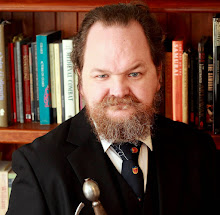
About Me

My photo
Either an author who fences, or a fencer who tends to write a lot. I found a passion for writing first, then I found fencing. I also found that the pen and the sword work very well together. The pen may be mightier than the sword but together they are much greater.
Showing posts with label motivation. Show all posts

Friday, November 13, 2020

Fence Like Wile E. Coyote


Greetings,

The most important thing that a fencer can do is fill themselves with fortitude and strength, because the path that they have chosen is not going to be easy. From this perspective there are lessons that can be learned from the character of Wile E. Coyote and his struggle to catch the elusive Road Runner. It is necessary to look within ourselves to find the strength to carry on.

Anyone who has seen animations involving Wile E. Coyote chasing the Road Runner will have seen him use ever more extravagant devices to gain an edge to catch the Road Runner. These devices most often result in him getting blown up, or falling off a cliff, or some other end, clearly not catching the Road Runner. These chases are amusing and many of us have watched and been amused by his antics, but there is something to learn from him. He never quits. He is back in the next frame chasing his prey again. We should be the same in the pursuit of our Art, never quitting. (You can forget about the extravagant devices they won't help you either.)

Looking deeper into the subject, it can be seen that in his long career there is only a single instance where the coyote manages to catch the Roadrunner.[1] He manages to catch his prey once, in the many years of trying; once in so many attempts. This shows much grit and determination, and even then he does not get his prize. One could claim that this is a pointless struggle and he should give up, of course this would ruin the premise of the cartoon. Such would be the approach seen in the Wisdom of Silenus.


“There is an old saying to the effect that King Midas for a long time hunted the wise Silenus, the companion of Dionysus, in the forests, without catching him. When Silenus finally fell into the king's hands, the king asked what was the best thing of all for men, the very finest. The daemon remained silent, motionless and inflexible, until, compelled by the king, he finally broke out into shrill laughter and said, 'Suffering creature, born for a day, child of accident and toil, why are you forcing me to say what is the most unpleasant thing for you to hear? The very best thing for you is totally unreachable: not to have been born, not to exist, to be nothing. The second best thing for you, however, is this: to die soon.'”[2]  


According to Silenus the best thing for man is to never be born, because he will never reach his goal. So the next best thing is to die soon. Related to the current discussion of the fencer, the best thing would be to never start fencing because a fencer will never learn all there is to learn and never perfect all the techniques that are possible, the next best thing is to quit soon. Needless to say, this is not an approach which is presented here.

Conversely, the fencer should rejoice that they can never learn everything, because it means that there will always be something to learn. They should be happy that they can never perfect all of their skills, because it means that they can always learn and always keep practicing. Rather than a negative, the Wisdom of Silenus, for the fencer should be seen as a boon.

There will be times in your fencing career where things will not go your way. There will be times where you feel that you are going nowhere. There are explanations for this. Often you do not notice when you are improving because you are basing this on those around you, rather than your previous self. Likewise in learning and improvement, everyone reaches plateaus. The better a fencer gets, the longer they will be and more often they will occur.

The essential thing is to keep going with what you are doing. Do what Wile E. Coyote has been doing for the past 70-odd years, pick yourself up, dust yourself off, and have another go. No need to call Acme and get the Rocket Skates, or other devices, they will not really help with your fencing.

Cheers,

Henry.


[2] Nietzche, F. (2003) The Birth of Tragedy, Blackmask Online (http://www.blackmask.com), Translated by Ian C. Johnston, para.3

Tuesday, December 13, 2016

Solo Training: For the Solo Practitioner


Greetings,

This was going to be a post about finding a local group and what consists of a good group with local contacts in my local area, but I changed my mind. I figured that there is a lot of information out there about how to find a local group for doing Historical European Martial Arts (HEMA) in what ever particular flavour you are looking for. Less, on the other hand, is said about the solo practitioner and how a person is to go it alone. Luckily we have the internet and faster communications which makes things easier, but there are still times when it is necessary to do things solo.

Sometimes a group is not convenient to get to. Sometimes the group does not mesh well with you, or is not studying what you are interested in. There are lots of reasons for going it alone. Sometimes it is just necessary for you to start the research into a particular form on your own to get a handle on it before involving other people. Every one of these is a valid reason for going it alone and you should not be ashamed for any of them.

The first thing that the future solo practitioner should note is that it is a hard road, but it is also rewarding as well. Groups have some support mechanisms which are absent when studying or practicing alone. All of the work falls to you, but in the end so do all of the rewards of that work. You can stand there at the end and say that you did it. Each advance is something that you did on your own and each advancement is an achievement in its own right.

In studying alone or practicing alone there are many choices to make, and all of them are open. There is no one to sway you from one path to another or make any other determinations. In the same way there also equally as many chances to be distracted. This is where you need to keep with what you are doing. ...

The rest of this article can be found in Un-Blogged: A Fencer's Ramblings by Henry Walker, which is available in paperback from:

Amazon: https://www.amazon.com/Blogged-Ramblings-Henry-Leigh-Walker/dp/098764470X
Booktopia: https://www.booktopia.com.au/un-blogged-henry-leigh-walker/book/9780987644701.html
Among other places...

It is also available in electronic format (pdf) from: https://buy.stripe.com/fZecP419c7CB9VKeUV

... or direct from the author.

Thursday, October 13, 2016

Renown Versus Notoriety

Greetings,

Renown and notoriety are two words which some may have heard and some may have not. They are how different fencers are talked about, even if the people doing the talking do not even know the words or what they mean. This post is designed to bring these two words into the light of examination and show how the actions of a swordsman can determine the reactions that he will get from other swordsmen and even non-combatants.

Definitions

The first thing to do is to define these words and to do that definitions have been taken from www.merriam-webster.com. Thus the definitions of the words are:
Renown: a state of being widely acclaimed and highly honoured
Notoriety: the condition of being famous or well-known especially for something bad: the state of being notorious
Clearly they both have something in common in that in both cases a person with renown and a person who has notoriety are well-known. This is the common element that links them. The difference is that one is respected and praised while the other is known for something less than positive. It is in this difference where the importance lies. Now that we have the definitions and the beginnings of an explanation, we can begin to relate them to the swordsman.

For the Swordsman

"How you win is ... important, if not more important, than any individual victory. You must win decisively, cleanly, and gallantly." (Evangelista, 2000:301)
These are two sides to fame. We all know of celebrities who are famous for doing good things and staying that way, but we all know of celebrities who are good at what they do, but are known also for bad things. The former have renown, the latter have notoriety.

In relation to the swordsman, the swordsman who has renown is respected on and off the field regardless of the result of his bouts or tournaments, or even whether he even participates in tournaments. When he fights he fights with grace and skill, acknowledging the skill of his opponent, a truly positive influence on the community. The swordsman who has notoriety is respected on the field ...

The rest of this article can be found in Un-Blogged: A Fencer's Ramblings by Henry Walker, which is available in paperback from:

Amazon: https://www.amazon.com/Blogged-Ramblings-Henry-Leigh-Walker/dp/098764470X
Booktopia: https://www.booktopia.com.au/un-blogged-henry-leigh-walker/book/9780987644701.html
Among other places...

It is also available in electronic format (pdf) from: https://buy.stripe.com/fZecP419c7CB9VKeUV

... or direct from the author.

Bibliography


Evangelista, N. (2000) The Inner Game of Fencing: Excellence in Form, Technique, Strategy, and Spirit, Masters Press, Illinois, USA

Saturday, August 13, 2016

Fencing and Music

Greetings,

There is no doubt that music has an effect on us all. Indeed that one odd body fact that I read somewhere, and have been meaning to fact-check, is that the human heart will beat alongside with the base of the music which is being played, or something similar. Music can inspire us toward different feelings and also emotional states, this particular effect is used in movies all of the time. So, I did some reading and had some thoughts and decided that it was time to look at it in relation to fencing.

Conveniently, not long after this little gem popped into my head I came across an article entitled, "Western Composers and Western Martial Arts" in  Encased in Steel Anthology I. Interestingly enough there were aspects of what was said in here which lined up quite well with what I was going toward. While Keith Farrel's article deals more with the comparison of the dates of music with the dates of treatises to understand their social context and also for a better understanding of their footwork and movement (Farrel, 2015:87), mine was more toward asking questions of how peoples bouts compare to music and what influences it can have on training.

Toward the avenue of my own thoughts I stumbled across an article in Australasian Scientist called "Turn Down the Volume?" which studied the effect of music on study and the performance of students. Needless to say, this article was more along my own lines of thinking as I was also wondering if the playing of music would enhance my students' training or detract from it. Some of it was most helpful with regard to this, as it stated with regard to gene expression and "changes also inferred potential benefits relating to memory, learning and general brain health." music possibly aids in protecting and improving the brain (Flavel, 2015:15).

Clearly there is evidence that music being played is a good thing and can be an aid toward the student's learning. The question next was what music should be played during the practice? Going back to the two useful sources of information there is an examination of the relationship between the manuals and the music in Farrel (2015) as indicated above, Medieval Music is reflected in style of fighting, rhyming method presented in manuals and in music as well (Farrel, 2015:89). This would make medieval music perfect for this kind of fighting. Similarly, Renaissance Music was more complicated also found in music, repetition found in manuals also found in music (Farrel, 2015:90). This meant that the first ...

The rest of this article can be found in Un-Blogged: A Fencer's Ramblings by Henry Walker, which is available in paperback from:

Amazon: https://www.amazon.com/Blogged-Ramblings-Henry-Leigh-Walker/dp/098764470X
Booktopia: https://www.booktopia.com.au/un-blogged-henry-leigh-walker/book/9780987644701.html
Among other places...

It is also available in electronic format (pdf) from: https://buy.stripe.com/fZecP419c7CB9VKeUV

... or direct from the author.

Bibliography

Farrel, K. (2015) "Western Composers and Western Martial Arts" in Farrel, K. (ed) (2015) Encased in Steel Anthology I, Fallen Rook Publishing, Triquetra Services (Scotland), Glasgow


Flavel, M. (2015) "Turn Down the Volume?" in Australasian Scientist (Vol. 36, No. 7, Sept. 2015) Central Publications Pty Ltd, Wattletree Rd, Australia, pp 14-15

Thursday, June 13, 2013

What's Next?

Greetings,

Much has been posted on this blog and others about weapon forms and what we should be doing about training and a myriad of other topics. These topics are all important and should have not paid to them, however there is another topic which needs addressing. A school curriculum is only so long and the completion of such a curriculum is important and an achievement of note, however the question remains when this curriculum is completed... what's next?

A good school will teach the basics in a formal or at least semi-formal manner in order that the student can build their skills gradually. Regardless of the weapon form chosen, this process will teach the student the basic operations of the weapon and set a foundation for the student in order that they can participate in the martial aspects of the school. Once this foundation is laid then the student will, or should, after a while, ask "What's next?"

So the student will progress on to more advanced techniques. These may involve more advanced techniques on the same weapon and/or may include the addition of other weapons. Once again, based on the foundation laid in the beginnings of training, the skills of the student will develop. This is the purpose of the training at this point in time to develop and hone the skills. This will, no doubt, take ...

The rest of this article can be found in Un-Blogged: A Fencer's Ramblings by Henry Walker, which is available in paperback from:

Amazon: https://www.amazon.com/Blogged-Ramblings-Henry-Leigh-Walker/dp/098764470X
Booktopia: https://www.booktopia.com.au/un-blogged-henry-leigh-walker/book/9780987644701.html
Among other places...

It is also available in electronic format (pdf) from: https://buy.stripe.com/fZecP419c7CB9VKeUV

... or direct from the author.

Tuesday, April 14, 2009

Motivation and Fencing

Greetings,

I would like to talk at this time about motivation and fencing. This is an important subject for all fencers and should seriously be considered. We all have our own reasons for taking up fencing in the first place. For some we have seen something in the media and thought it would be cool to be able to do it. For some we have been influenced by friends and family who fence and have decided to fence ourselves. For others we were looking for a pastime that would last a long time, and for others it is a simple search for the secrets of swordplay in all its forms. What ever your reason for learning to fence in the first place, it will become a factor in your motivation to continue.

Your fencing instructor or teacher will attempt to keep you motivated by introducing new skills for you to learn and encouraging you, but when it comes down to it, the motivation must become internalised if you want to really get anywhere. You need to decide where your fencing sits in your priorities and this will decide how much energy you will be willing to put in.

Do your lessons end at the end of your training session, or do you do extra research? Do you practice alone at home in order to improve your skill at and understanding of the things you have learnt at the lesson? Do you do extra research into things related to fencing in order to understand more of what is out there? All of these things relate to personal motivation. If you are truly motivated, you should have answered "Yes" to all of the questions. If you really want to succeed in fencing these things are the key and they require motivation on your part. Your teacher will have information about these things and can give you direction, but in the end it is up to you.

....

The rest of this article can be found in Un-Blogged: A Fencer's Ramblings by Henry Walker, which is available in paperback from:

Amazon: https://www.amazon.com/Blogged-Ramblings-Henry-Leigh-Walker/dp/098764470X
Booktopia: https://www.booktopia.com.au/un-blogged-henry-leigh-walker/book/9780987644701.html
Among other places...

It is also available in electronic format (pdf) from: https://buy.stripe.com/fZecP419c7CB9VKeUV

... or direct from the author.