About Me

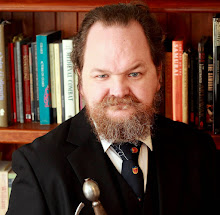
My photo
Either an author who fences, or a fencer who tends to write a lot. I found a passion for writing first, then I found fencing. I also found that the pen and the sword work very well together. The pen may be mightier than the sword but together they are much greater.
Showing posts with label encouragement. Show all posts

Friday, November 13, 2020

Fence Like Wile E. Coyote


Greetings,

The most important thing that a fencer can do is fill themselves with fortitude and strength, because the path that they have chosen is not going to be easy. From this perspective there are lessons that can be learned from the character of Wile E. Coyote and his struggle to catch the elusive Road Runner. It is necessary to look within ourselves to find the strength to carry on.

Anyone who has seen animations involving Wile E. Coyote chasing the Road Runner will have seen him use ever more extravagant devices to gain an edge to catch the Road Runner. These devices most often result in him getting blown up, or falling off a cliff, or some other end, clearly not catching the Road Runner. These chases are amusing and many of us have watched and been amused by his antics, but there is something to learn from him. He never quits. He is back in the next frame chasing his prey again. We should be the same in the pursuit of our Art, never quitting. (You can forget about the extravagant devices they won't help you either.)

Looking deeper into the subject, it can be seen that in his long career there is only a single instance where the coyote manages to catch the Roadrunner.[1] He manages to catch his prey once, in the many years of trying; once in so many attempts. This shows much grit and determination, and even then he does not get his prize. One could claim that this is a pointless struggle and he should give up, of course this would ruin the premise of the cartoon. Such would be the approach seen in the Wisdom of Silenus.


“There is an old saying to the effect that King Midas for a long time hunted the wise Silenus, the companion of Dionysus, in the forests, without catching him. When Silenus finally fell into the king's hands, the king asked what was the best thing of all for men, the very finest. The daemon remained silent, motionless and inflexible, until, compelled by the king, he finally broke out into shrill laughter and said, 'Suffering creature, born for a day, child of accident and toil, why are you forcing me to say what is the most unpleasant thing for you to hear? The very best thing for you is totally unreachable: not to have been born, not to exist, to be nothing. The second best thing for you, however, is this: to die soon.'”[2]  


According to Silenus the best thing for man is to never be born, because he will never reach his goal. So the next best thing is to die soon. Related to the current discussion of the fencer, the best thing would be to never start fencing because a fencer will never learn all there is to learn and never perfect all the techniques that are possible, the next best thing is to quit soon. Needless to say, this is not an approach which is presented here.

Conversely, the fencer should rejoice that they can never learn everything, because it means that there will always be something to learn. They should be happy that they can never perfect all of their skills, because it means that they can always learn and always keep practicing. Rather than a negative, the Wisdom of Silenus, for the fencer should be seen as a boon.

There will be times in your fencing career where things will not go your way. There will be times where you feel that you are going nowhere. There are explanations for this. Often you do not notice when you are improving because you are basing this on those around you, rather than your previous self. Likewise in learning and improvement, everyone reaches plateaus. The better a fencer gets, the longer they will be and more often they will occur.

The essential thing is to keep going with what you are doing. Do what Wile E. Coyote has been doing for the past 70-odd years, pick yourself up, dust yourself off, and have another go. No need to call Acme and get the Rocket Skates, or other devices, they will not really help with your fencing.

Cheers,

Henry.


[2] Nietzche, F. (2003) The Birth of Tragedy, Blackmask Online (http://www.blackmask.com), Translated by Ian C. Johnston, para.3

Tuesday, October 13, 2020

On "Stupid" Questions

Greetings,
"Carl Sagan, in his work The Demon-Haunted World: Science as a Candle in the Dark said: "There are naive questions, tedious questions, ill-phrased questions, questions put after inadequate self-criticism. But every question is a cry to understand the world. There is no such thing as a dumb question"." (Wikipedia (2020) “No such thing as a stupid question” in Wikipedia, https://en.wikipedia.org/wiki/No_such_thing_as_a_stupid_question, [accessed 31/5/2020])
In training there will be elements which we do not know. There will be questions which arise from training which we need answered for us to go on with our training. There are different options available: ask another student, ask the trainer, or go see if you can find the information yourself.  In many situations people will opt for the last one until there is no other avenue, for fear of having to ask a question in the group. This fear can cripple not only the individual's learning but also the group's learning. This is primarily caused by the nemesis of the "stupid" question.

When a so-called "stupid" question is asked, the group usually responds with derision, and sometimes the trainer does too. This does not encourage the asking of any question within the group at all. It creates fear that the same sort of social rejection will occur. As a trainer it is something that we should fight against, it is something we should fight against even as fellow students. Each question should be treated with respect.

Some will claim that a question about something that has already been answered or explained should not be asked and is a "stupid" question. Is it really? What if the individual did not understand the explanation? If the information is useful, what is the harm of hearing it again? Is it not better that they hear the information again than make a mistake later and have to re-learn?

Some will claim that questions about things which are obvious should not be asked and are "stupid" questions. If the question is being asked, clearly it is not obvious to the individual who is asking the question. Such approaches do not take into account different paths to the same situation, different cultural or social situations, or people who may be new to the group.

The concept of the "stupid" question closes the mind off to chances for learning. The simple question seeks to the heart of a matter and can open new ways and new ideas about things. It can even give simple solutions to complex problems which people who are too embedded may not see. Questions in every group need to be encouraged.

Questions allow people to learn about their environment. We ask questions all of the time without realising it. Questions should be encouraged so members of a group, or school, can all become familiar with its operations. A person who is new to a group or school is not going to know how things operate and through questions, they can learn. We should always be encouraging questions from our students and our classmates.

For a much more in-depth discussion of the subject of "stupid" questions, their effect and how questions should be encouraged see one of my other blogs https://historicalsocialpolitical.blogspot.com/2020/07/on-stupid-questions.html. If you are interested in a pdf of this discussion, please contact me via e-mail.

Cheers,

Henry.

Monday, May 13, 2019

Of Wolf and Dog

Greetings,

The following discussion is a little off my usual discussion of fencing subjects, but it does apply to the broad general area of fencing. The following is a discussion of Jack London's White Fang and how its themes and concepts can be applied. While not exactly aimed at fencing it does discuss training in fencing and also concepts around expectations and education, two subjects which are related to fencing.

The novel White Fang has been used by many people to explain many different things. For myself, it is one of my favourite books that I enjoy reading because it immerses you in the place and period in which it is set and also shows you somewhat the life of one wolf from pup to full-grown, and the interesting experiences that he had along the way. There is an animated version of this story available now on Netflix, which hits most of the main plot points, but misses much of the detail which is contained within the book. It also, as can be expected, changes elements within the story as well.

The first question that White Fang asks is how much of you is wolf and how much of you is dog? Or to put it another way, how much is driven by your instincts and how much of you is driven by what you have learnt at the hands of others? The same question could also ask how much of you is free and how much of you is tied to expectations and impositions, many which are imposed by the self?

We would all like to think that we are more wolf than dog, that we are free to do what we want when we want, but this is really not the truth. We are tied by our expectations of our society, and impositions made by ourselves and our own egos and what we want out of life, which tie us to society. The freedom of the wolf is an illusion that we would like to hold, but many cannot grasp.

Other aspects of the dog show themselves, our education, our further learning at the hands of other education and being part of societal systems. All of these things make us good members of society, good dogs. To rebel against these, to become the wolf, is to threaten ourselves with the potential of becoming outcasts, to stand alone, something which our gregarious nature and ego-financial-driven selves are somewhat afraid of. We admire the rebels in our midst, those who stand alone, but do not join them. Sometimes we need to stand alone, because it is the right thing to do.

In the story, White Fang spends some of his early years in the wild. Then with his mother, Kiche, becomes a sled-dog for an Indian named Gray Beaver. He is trained in this role. He does not get along with the other dogs in the tribe, his mostly-wolf self shows too much. He fights the other dogs to defend himself and place himself on the top of the pack. But he is accepted by Gray Beaver and thus works for him. Later, through some trickery White Fang is sold to “Beauty” Smith and is trained as a fighting dog. He is beaten and set upon other dogs. The fights are vicious and all that White Fang learns is how to fight and kill the dog that is in front of him. Eventually he is taken by Weedon Scott who heals him after a dog-fight and then teaches him another way; that he can live without fighting, or at least that fighting should only be reserved for enemies.

White Fang’s story shows many fights with other dogs who refuse to accept him. In some instances it is to prove that he belongs and others it is because it is what he was trained to do. Some instances are because it is what he is. His early experiences are of rejection from other dogs, these are his formative years and they leave an imprint of not being wanted by other dogs. The result is he defends himself against them and establishes his dominance. This fighting ability pure and raw is taken by “Beauty” Smith and harnessed and let loose on other dogs for money. Weedon Scott wants something else from White Fang, to show him another way; that he can be accepted and that fighting is not the only way to be accepted. He learns from these experiences that he can be accepted and that fighting is not the only way to fit in.

What we must all ask ourselves is in our teaching and interactions are we acting like “Beauty” Smith or Weedon Scott? Are we taking someone at face value and just accepting everyone else’s view of them, or are we forming our own opinion? Are we simply harnessing one ability or are we really developing a human being? This is a question that trainers in all forms of martial arts must ask. What sort of impact is the training having on the individual? Is it perpetuating a cycle or is it doing the best for the individual?

As trainers of martial arts we should all be seeking the improvement of our students, in all senses of the word. We should not just be honing their fighting abilities, but we should also be examining other aspects as well. The social aspects of the art that we teach should be a serious consideration, as the students will learn everything from their teachers. If you teach in a gung-ho, “anything for a win” fashion, then that is what the students will take away. If you teach in an honourable, victory by art and skill rather than pure force fashion, then that is what the students will take away.

I recommend White Fang to anyone as a good read, and a book which will probe thoughts. The themes and ideas which the author presents are some which need to be considered. The story itself is well-written, primarily from the point of view of the protagonist wolf-dog White Fang, which is an achievement in itself, it describes scenes which will make you think.

Cheers,

Henry.

Tuesday, June 13, 2017

Being a Good Training Partner

Greetings,

Well this will seem a little ironic coming after my advice for the solo practitioner previously, but it is a subject which we all need to consider because sooner or later we will all be involved in a partnered drill, or in a partnered situation. This may be at our regular practice or at a convention or at some other sort of gathering. The partner may be someone who you have fenced with for years, or you may have literally just met them. All of the same stuff applies.

1. Don't Hurt Your Partner

Seems pretty obvious that we do not want to hurt the person that we are fencing with, right? Seems not to be the case with some. Some seem that they need to put a little bit more emphasis in on their strikes and other offensive actions. There is no need for it. If you continue to do this, you will simply run out of people who will be your partner and you will run out of people to train and spar with.

2. Follow the Drills

This means that if you are doing a parry and riposte drill and you are attacking, you are going to get hit. The only reason why you should not get hit is if your partner misses, and even then you should assist them so that you do. You need to do your part of the drill as faithfully as possible to ensure that the learning experience is fulfilling for your partner. You should be practicing your actions at the same time to make sure that they are correct. If you don't follow the drill you and your partner will not learn what is supposed to be learnt. If you continually not follow drills people will not want partner with you and you again will run out of people to train with.

3. No Additions

Even if you know what's coming next in the next drill don't make any additions to the drill. Wait until the trainer teaches the additional part of the drill. Your partner may not know about the new part and will be come confused, and will also want to focus on the current part. This also means that you should not really experiment with other options available as you may miss the point of the drill. If added defences so you don't get hit are not part of the drill, so don't add them. If you are supposed to get hit as part of the drill, you get hit. Additions to drills just show you as unwilling to follow instruction or arrogant, and not a good student.

4. Remain in Control

Some drills will be done at slow speed, some drills will be done at faster speeds. This will be determined by your instructor. It is up to you to remain in control of your actions. If you are supposed ...

The rest of this article can be found in Un-Blogged: A Fencer's Ramblings by Henry Walker, which is available in paperback from:

Amazon: https://www.amazon.com/Blogged-Ramblings-Henry-Leigh-Walker/dp/098764470X
Booktopia: https://www.booktopia.com.au/un-blogged-henry-leigh-walker/book/9780987644701.html
Among other places...

It is also available in electronic format (pdf) from: https://buy.stripe.com/fZecP419c7CB9VKeUV

... or direct from the author.

Sunday, December 13, 2015

Females and Fencing (Part 1)

Greetings,

The following post is based on a lesson I delivered this year at a "local" event and I use the word "local" very loosely as it is becoming recognised as a national one. That event was Swordplay '15. Essentially it was designed to get all of the female combatants together and have a chat about Historical European Martial Arts (HEMA), tournaments and the whole gambit of things and the simple thing that they are not alone and that they needed to talk more to one another to share their experiences, more on this later.

While at the event in the position of Safety Marshal I was in a great position to see a lot of fighting at the event and see how everybody was doing. One of the things that I noticed was that the female combatants were attempting to fight like the male ones, with some achievement it has to be said. The obvious problems associated related directly and indirectly to the method and approach to the fighting is what sparked the idea for the lesson.

Before I go into much detail there are a couple of things that I have to say. Firstly, I apologise to those people who have been waiting since the event for this post to come out, part of this has been slackness and part of this is other factors. Secondly, I know that this post is possibly going to cause some issues that I am talking about females in fencing and I am a male, but this is all from my point of view and based upon my training and my experiences training females. I hope that this post will help rather than hinder women in HEMA. Thirdly, I know it is a little arrogant to be speaking on the subject, but please bear with me. Finally, this is probably going to be a pretty hefty sort of post so get ready for a solid sort of a read.

So we have the situation that women most often taught by men and men most often do not know how women work physically and mentally. This is simply because most of the more experienced members of the community are male. This presents problems in training for the women who are participating in the training and, for the most part, these problems are kept to themselves. I would like to highlight these "problems" and demonstrate them not as "problems" but as "differences" and differences which trainers need to take into account. The following will be divided up into various sections so that areas can be highlighted for discussion.

Physical

So men and women are different physically. Well done, Captain Obvious! Tell us something we don't know. This simple fact is something we need to take into account when training. It is something which I have indicated before in a previous post (http://afencersramblings.blogspot.com.au/2009/10/bio-mechanics-and-effect-of-body-shape.html). This post was mostly indicated at different body shapes as in short versus tall, broad versus thin and so forth, for this discussion we need to go more deeply into the discussion and examine how the male and female form differ and how they move differently.

To start with we need to examine hip shape, the hips control the centre of mass and also control the legs which makes them essential for movement. If you do not have free movement through this you are bound to have problems. Well, males and females are markedly different here, especially the way that the legs join up with the hips. The way that the leg joints are positioned in men and women are different and this can be seen in the on guard position. Let us take the generic terza (third) guard.


The right foot is forward the left is to the rear, many guards in HEMA will begin like this. Many will actually be a little more broad with the rear foot a little further outward and a little more forward. This will immediately put the hips in a diagonal position if this position is adopted, which for a male suits them perfectly, due to the way their leg joints are shaped. For the female she will have all sorts of trouble keeping her front foot pointing at the opponent, this is because her hips do not want to do this. So what we need to do here is make a change in position to make it more comfortable and more moveable for the female. It is not radical it is a change in position from diagonal to horizontal, from the male position to the female position.
In the case of the image above it is from the lower image to the upper image. In the first instance you do this you may need to physically move your hip into this position. In the case of a trainer you may need to move the student's hip into the correct position, make sure you ask permission to do so first. The change in position may require a broadening of the stance, and a slight withdrawal of the foot, that is fine. The ease of movement will have its own reward.

While we are on movement, we might as well stay there for a while. The female combatant will also move differently from the male combatant. This you will see in their actions with the weapon, but also in their movement across the ground. The woman can also access a lot more mobility in their hips and waist than the male can for the movement of their body for voiding and other actions than most men will be able to and this is a great advantage, and one that should be used.

As a female, in general, you will simply not be able to compete with the raw power of the male, so you should not try to. However there are different ways to approach the combat through movement and being lighter on your feet. Against the stronger opponent use their strength against them, slip off their attacks, redirect their power to other directions. Use the lightness that you have to simply avoid the power that your opponent possesses, and with the extra movement indicated already, this will be even easier.

Now we come to one final attribute of the female form which most trainers often forget to take into account in their training, the female breast. The Parry of Fourth, the Parry to the High Inside Line, any time your arms have to cross your body close they get in the road, and the trainer often will not take it into account because he doesn't have them.
Parry of 4th
Breast protection just doesn't help the situation, in fact it even often makes it worse. How do I know? First, I listen. Second, I wear a chest plate myself. How do we get around this particular problem? We look at the assets again and see what we can use to our advantage. Once again it comes down to the hips and waist. In the case of the Parry of Fourth, or High Inside Line, turn your body at the same time you make the parry. This will give you some more clearance for the parry and also some more room. In fact, as far as this "problem" goes this is the primary way around it, use the other attributes of mobility to get around it.

So, this is the end of Part 1, if I have not insulted or bored you too much, Part 2 will start with a look at some of the psychological aspects which have to be dealt with and go from there, depending on how things go and how deep it gets will see how long it goes for.

Cheers,

Henry.

Wednesday, October 21, 2009

Building Self-Confidence

Greetings, Going by the title of this particular blog one could assume that this is going to be some sort of "make people happy" discussion. Actually, that is not the point of view that will be the focus of this one. In this particular case the subject of self-confidence will be addressed from two points of view. Firstly it will be examined from the student's point of view and then from the teacher's point of view. The purpose of this blog is to address the idea of how both the teacher and the student can build self-confidence in the student. This is an important process that both the student and the teacher need to be aware of in order for the student to excell. From the student's point of view, there are three main points that will be raised. Firstly that training is a learning process and mistakes will be made. Secondly, the importance of practice and how it builds skill and thus confidence, and finally being comfortable in what you are doing. Each one of these particular points is important and needs to be addressed in order for the student to build confidence in themselves. Fencing and training is a learning process, in this there will be mistakes made by the student in what they are doing. What is important about this is that the student needs to learn from these mistakes, in this way the mistake made is not a failure but a chance for the student to learn and improve what they are doing. The learning process takes time. This is important as the student must realise that it will take time for them to learn skill-sets and be able to use them effectively in fencing. Fencing is a long road if it is approached from the correct point of view and they will never stop learning. When something is done well it should be celebrated. The student should take pride in all of their achievements, no matter how small they might be, but this must be in proportion to the level of the achievement, and also through this not become over-confident. This achievement should spur them on to want to do more. It is practice that builds skill, and skill that builds confidence. Needless to say, practice is required for all of the skills in fencing so that they can be called upon and used at anytime that the student requires them. In this practice the student needs to be practicing the correct action in order that the correct action is learnt. In this the teacher should be correcting them in order tha this is possible, and to a point the student should also be correcting themselves. The action performed must be completed. Where the drill involves a parry and riposte, both actions need to be completed in order for the student to learn the correct thing. Where the parry is missed, the student should correct the parry, and then make the appropriate riposte. This is the same for all actions. It is this sort of repetition that builds muscle memory and allows a student to perform an action without thinking about it. Much in these blogs has already been said about practice, but it is something which is vital for the student to keep progressing. Being comfortable in what a person is doing is about several things. Firstly it is necessary for them to understand what they are doing and what it is suppose to achieve. Next it is important to understand the effect of the action and the parts that are involved in the action. This understanding will enable the student to have a better grasp of what they are doing and thus be more comfortable with it. Once the mind is prepared it is important for the body to be able to feel what is happening. Performing an action slowly will allow the student to feel the activation of muscles and other parts of their body. This will enable them to perform the action properly at faster speeds once they can feel what their body is doing during the performance of the action. Each student will find things that feel more comfortable for them. In some cases there may be some modification in the action required for the action to work for them, and this is fine. It is important for the student to discover what works for them and thus enable them to develop a level of comfort for themselves in their actions. Of course, the development of this level of comfort in an action will take time, especially for a new action. It is important that the teacher allows the student to take the time that they need in order for them to become comfortable with an action. An action which is comfortable for the student will more readily be used by them. From the teacher's point of view, there are also three main points that will be raised. The teacher's purpose in training is an important factor in building self-confidence in the student. Next is encouragement and how it can be effective in building self-confidence through building the student. Lastly is the idea of relaxation on the part of the student in order that they can more freely learn what needs to be learnt. Rather than specific points of reference for the teacher, it will be a general discussion focussed on the particular sub-topics presented.

....

The rest of this article can be found in Un-Blogged: A Fencer's Ramblings by Henry Walker, which is available in paperback from:

Amazon: https://www.amazon.com/Blogged-Ramblings-Henry-Leigh-Walker/dp/098764470X
Booktopia: https://www.booktopia.com.au/un-blogged-henry-leigh-walker/book/9780987644701.html
Among other places...

It is also available in electronic format (pdf) from: https://buy.stripe.com/fZecP419c7CB9VKeUV

... or direct from the author.