Greetings,
There is a certain flavour to swordplay, and an expected code of conduct which is seen. This is one of the things that differentiates it from just two combatants beating the snot out of one another with swords. Many of these elements of etiquette are common knowledge, but some, it would seem, are not so common and need to be brought into the light. I have previously written a rather long discussion about fencing etiquette if you're interested, it can be found here. Needless to say this is a big thing for me.
At the beginning of a bout the two combatants salute one another, this is a sign of respect and thanks for their presence. Any officiating staff or an official table can be saluted as well, this is also a sign of respect and thanks. Once the bout has concluded the two combatants should handshake at the end of the bout to thank each other for the bout, all this is usual stuff. None of these actions should display any attitude toward the opponent or how well the fencer did during the bout. More to the point, these actions should be done regardless if the officiating staff directs the fencers to do so or not. It is just being polite and keeps the bout civil. This is all expected sort of stuff, which most fencers who have been about for a while would know.
Before all of this happens, there are some important steps that need to happen. Firstly, if this is the first time that you are meeting this particular opponent. It is good fencing etiquette to go up and introduce yourself to them. This is a good way to get the measure of your opponent and also break some of the tension. Even when the tournament stakes a relatively high, they are not to the death, and when they were the two combatants knew one another by name. It also means that you will know who you are fencing next time that their name is called, and it is also more likely that you will be able to discuss the bout afterward in a friendly manner. Friendships can be made by such a simple introduction.
With regard to introductions there is another step that needs to be made. When you arrive you should go and introduce yourself to the tournament officials and thank them for running the event. This will instantly put you on their radar in a positive way. When another school is running the tournament, you should also go and find their head instructor and introduce yourself to them, this is simply being polite.
If you are a head instructor of another school then this is even more important so that the other head instructor knows who you are. This way they know who to contact about disciplinary actions and also commendable actions performed by your students. If you merely just hang around with your students and other school members no one will know who you are, and if you then start giving instructions, offence may be given. This is an element of fencing etiquette which ensures smooth communication between participating schools at tournaments and builds a community spirit among them. It is vital to remember that fencing etiquette applies to all and that students will learn the keys of this from their teachers and thus they need to be examples for their students to follow.
There are designated safety officials at events, sometimes they are called Safety Marshals, sometimes just plain Marshals, either way, these individuals are the individuals who take the official burden of the safety of the event upon their shoulders, and it is not an easy task. What is even more important is that safety is everyone's concern, thus by default everyone is a safety official. If you see something which is of a safety concern, you are expected to call it. No one is going to complain if a bout is briefly halted due to someone being concerned about safety. Don't wait until it becomes a real issue stop it early. What is this doing in a discussion about etiquette? A person who does not assist where it is required in this area and leaves an incident to happen, which they could have stopped, breaches etiquette by their silence. There are times when staying silent is worse than standing up and saying something, and this is one of them.
Cheers,
Henry.
About Me
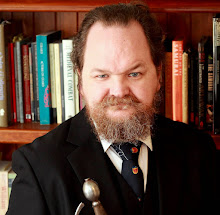
- Henry Walker
- Either an author who fences, or a fencer who tends to write a lot. I found a passion for writing first, then I found fencing. I also found that the pen and the sword work very well together. The pen may be mightier than the sword but together they are much greater.
Showing posts with label etiquette. Show all posts
Showing posts with label etiquette. Show all posts
Sunday, January 13, 2019

Saturday, January 13, 2018
Dalai Lama's Rules for the New Millennium
Greetings,
The title is going to be a bit of a bother for some people, but you are just going to have to read on and see the relevance for fencing (talking to HEMA people too) in general. I have these rules posted on my kitchen wall and I decided that it would be useful to do a post about how they can be related to fencing. Being that there are 17 of them here, so this is going to be a long one.
The title is going to be a bit of a bother for some people, but you are just going to have to read on and see the relevance for fencing (talking to HEMA people too) in general. I have these rules posted on my kitchen wall and I decided that it would be useful to do a post about how they can be related to fencing. Being that there are 17 of them here, so this is going to be a long one.
1. Take into account that great love and great achievements involve great risk.
When you become a lover of fencing and you want to do well with it you are going to have to throw yourself wholy into it. This means that you will be putting yourself at risk. Physically obviously there is a risk, but for some there will also be an emotional one as well.
2. When you lose, don't lose the lesson.
I have made posts about the learning process before, and losing is not a bad thing when looked at from the right direction. This rule points out why. If you lost there is a reason why, and it is not because the referee was bad, or the rules were bad, it was because you got hit. Figure out the reason why and work on that.
3. Follow the three Rs: Respect for self, respect for others and responsibility for all your actions.
Where to start with this one? Respect for yourself does not mean having a big ego, it means not doing stuff which would reduce the level of respect you have for yourself. Respect for others means examining what they are doing and seeing where they are at before making comment. It also means treating people as you would want to be treated. Responsibility for all your actions is simple, if you did it you own up to it. It also means not blaming others for stuff which put you in the place where you are.
4. Remember that not getting what you want is sometimes a wonderful stroke of luck.
Sometimes we wish for short-cuts, it is better to work our way to our goals. Sometimes we want a particular piece of gear and we get another, and it turns out it works better, the list goes on.
5. Learn the rules so you know how to break them properly.
Knowing how to use the rules to your advantage is one of the keys to survival. In most cases it is not "breaking" them that is the best, but "bending" them. Just remember to look at the rules properly before you do this to know exactly what rules you are bending and what the result will be.
6. Don't let a little dispute injure a great friendship.
So you like a different master, is this a big enough difference to break a friendship? So you prefer different weapons, is this a big enough difference to break a friendship? Most of the time we can negotiate and find common ground between people. Do this and you will find more friends.
7. When you realize you've made a mistake, take immediate steps to correct it.
This one goes back to rule 3 about responsibility for actions. Don't wait around to be discovered, admit you have made a mistake and fix it before it gets blown out of proportion. It is better to be up-front about a mistake than be hiding and discovered.
8. Spend some time alone every day.
Solo training is important, and so is training every day. Both of these apply here.
9. Open your arms to change, but don't let go of your values.
So you have found something new that you like, don't let it change your values. A change of pace with another school should not mean that you change the reason why you fence. A change of method should not change the foundation principles of fencing upon which you fence either.
10. Remember that silence is sometimes the best answer.
Sometimes it is better to be silent than to make a comment. These are often the cases where someone is looking for an argument and making a response gives them what they want. Walking away is often the best response in some situations.
11. Live a good, honourable life. Then when you get older and think back, you'll be able to enjoy it a second time.
When you sit back and remember tournaments which you have fought in, you know whether you were struck or not. If you fought honourably and gave your opponent blows when you were struck and acted with honourable methods you can sit back and enjoy those tournaments again. The same goes for all encounters. Make good memories that you want to keep.
12. A loving atmosphere in your home is the foundation for your life.
In this case we talk about your school. "Loving" may not be the most appropriate word, "welcoming" would suit, so would "supportive". Students need to be supported by all members of the school not just trainers but also fellow members, this will keep them coming back.
13. In disagreements ..., deal only with the current situation. Don't bring up the past.
In this case use only the information which is current. Reputations of individuals can stick for a long time, even when they have far out-grown them. Deal only with the current issue at hand with the information present, there is no need to dredge up old situations.
14. Share your knowledge. It's a way to achieve immortality.
Ah, the reason why I write. Sharing knowledge is important for us all. The more we share the better we all get in our fencing, it is a knock-on effect. Put it on paper even and spread it far and wide so more people can see it.
15. Be gentle with the earth.
The SCA prides itself on leaving a site cleaner than it was when it arrived. All fencing communities should do the same.
16. Once a year, go some place you've never been before.
Travel. It widens your experience. Go some place and fence with people that you haven't fenced before and you will find that you will learn from the interaction with them.
Yes, I can count, 17 and 19 are missing. 17 was more related to personal relationships so I left it out. 19 was not really useful to the current discussion.
18. Judge your success by what you had to give up in order to get it.
It is better when you judge your success to look back at what you have sacrificed to get where you are than to look at your achievements along the way. Tournament prizes are nice but they do not really last in memory, they are pretty and shiny and they sit nicely on the wall as reminders of a good day. They do not remind you of the hard work and training that you put in to get to the tournament, or the training that you did with your students, or the research that you did on a particular manual to get your technique correct. They also do not remind you of the nights out that you didn't go on because you were training, or the extra things that you could have bought that you didn't because you had to pay for training or new gear. These are the things that you should be looking at.
There are points all the way through which will resonate with some and others which will not resonate at all. That is fine. Find a copy of the original, which you can find all over the internet, and post it up on a wall and look at it occasionally. Have a think and see if there is something that you could be doing, or not doing to improve your fencing, or even out-of-fencing, life.
Cheers,
Henry
Cheers,
Henry
Tuesday, June 13, 2017
Being a Good Training Partner
Greetings,
Well this will seem a little ironic coming after my advice for the solo practitioner previously, but it is a subject which we all need to consider because sooner or later we will all be involved in a partnered drill, or in a partnered situation. This may be at our regular practice or at a convention or at some other sort of gathering. The partner may be someone who you have fenced with for years, or you may have literally just met them. All of the same stuff applies.
The rest of this article can be found in Un-Blogged: A Fencer's Ramblings by Henry Walker, which is available in paperback from:
Amazon: https://www.amazon.com/Blogged-Ramblings-Henry-Leigh-Walker/dp/098764470X
Booktopia: https://www.booktopia.com.au/un-blogged-henry-leigh-walker/book/9780987644701.html
Among other places...
It is also available in electronic format (pdf) from: https://buy.stripe.com/fZecP419c7CB9VKeUV
... or direct from the author.
Well this will seem a little ironic coming after my advice for the solo practitioner previously, but it is a subject which we all need to consider because sooner or later we will all be involved in a partnered drill, or in a partnered situation. This may be at our regular practice or at a convention or at some other sort of gathering. The partner may be someone who you have fenced with for years, or you may have literally just met them. All of the same stuff applies.
1. Don't Hurt Your Partner
Seems pretty obvious that we do not want to hurt the person that we are fencing with, right? Seems not to be the case with some. Some seem that they need to put a little bit more emphasis in on their strikes and other offensive actions. There is no need for it. If you continue to do this, you will simply run out of people who will be your partner and you will run out of people to train and spar with.2. Follow the Drills
This means that if you are doing a parry and riposte drill and you are attacking, you are going to get hit. The only reason why you should not get hit is if your partner misses, and even then you should assist them so that you do. You need to do your part of the drill as faithfully as possible to ensure that the learning experience is fulfilling for your partner. You should be practicing your actions at the same time to make sure that they are correct. If you don't follow the drill you and your partner will not learn what is supposed to be learnt. If you continually not follow drills people will not want partner with you and you again will run out of people to train with.3. No Additions
Even if you know what's coming next in the next drill don't make any additions to the drill. Wait until the trainer teaches the additional part of the drill. Your partner may not know about the new part and will be come confused, and will also want to focus on the current part. This also means that you should not really experiment with other options available as you may miss the point of the drill. If added defences so you don't get hit are not part of the drill, so don't add them. If you are supposed to get hit as part of the drill, you get hit. Additions to drills just show you as unwilling to follow instruction or arrogant, and not a good student.4. Remain in Control
Some drills will be done at slow speed, some drills will be done at faster speeds. This will be determined by your instructor. It is up to you to remain in control of your actions. If you are supposed ...The rest of this article can be found in Un-Blogged: A Fencer's Ramblings by Henry Walker, which is available in paperback from:
Amazon: https://www.amazon.com/Blogged-Ramblings-Henry-Leigh-Walker/dp/098764470X
Booktopia: https://www.booktopia.com.au/un-blogged-henry-leigh-walker/book/9780987644701.html
Among other places...
It is also available in electronic format (pdf) from: https://buy.stripe.com/fZecP419c7CB9VKeUV
... or direct from the author.
Sunday, September 13, 2015
On Winning
Greetings,
Sorry about the lack of a post last month, I had an event on which I help run every year and then I moved.
Everyone likes to win. Everyone likes the feeling of defeating an opponent and feeling the sense of victory. This is a positive feeling that surpasses many. It is highly addictive as many will attest to. What needs to be noted, and will be demonstrated in this post is that there are really two paths to victory and greatness, and these two paths result in two different results. We should all consider what path we are on and whether or not we are willing to live with the consequences of this choice.
The Machiavellian combatant will be noted for his practical manner of his fighting rather than finesse. While having skill in his method, there will be a lack of flair in his method, and there will be little satisfaction fighting this combatant as his methods will always be focussed on the gaining of victory rather than the pleasure of crossing swords with an opponent. This combatant will be respected for his ability to win, and his fighting prowess, but not respected as an honourable combatant, thus for the most ...
The rest of this article can be found in Un-Blogged: A Fencer's Ramblings by Henry Walker, which is available in paperback from:
Amazon: https://www.amazon.com/Blogged-Ramblings-Henry-Leigh-Walker/dp/098764470X
Booktopia: https://www.booktopia.com.au/un-blogged-henry-leigh-walker/book/9780987644701.html
Among other places...
It is also available in electronic format (pdf) from: https://buy.stripe.com/fZecP419c7CB9VKeUV
... or direct from the author.
Sorry about the lack of a post last month, I had an event on which I help run every year and then I moved.
Everyone likes to win. Everyone likes the feeling of defeating an opponent and feeling the sense of victory. This is a positive feeling that surpasses many. It is highly addictive as many will attest to. What needs to be noted, and will be demonstrated in this post is that there are really two paths to victory and greatness, and these two paths result in two different results. We should all consider what path we are on and whether or not we are willing to live with the consequences of this choice.
Two Paths to Greatness
To describe these two paths to greatness I will use the philosophies and use the names and headings of two great writers of the Renaissance. The first is Niccolo Machiavelli, and in this I will focus on his famous book The Prince. The other is Baldassare Castiglione, the writer of the famous book of etiquette The Book of the Courtier. Each one will be used to present a different set of principles and a different approach to victory.1) Machiavelli
"Lisa: ... Ralph Wiggum lost his shin guard! Hack the bone! Hack the bone."The general reading of Machiavelli's The Prince is about a sanguine individual who will do anything to keep his principality alive. Machiavelli is a very practical man and for the most part is about survival. I would encourage all to read his insightful book. However, using the generally accepted view, this discusses anything for a win. The Machiavellian combatant will find the opponent's weakness any way that he can and use it against him regardless of what it is. This combatant is often brutal in his attacks and will exploit weaknesses in armour as well as in defences.
("Lisa on Ice" - Episode 6, Season 6 - "The Simpsons")
The Machiavellian combatant will be noted for his practical manner of his fighting rather than finesse. While having skill in his method, there will be a lack of flair in his method, and there will be little satisfaction fighting this combatant as his methods will always be focussed on the gaining of victory rather than the pleasure of crossing swords with an opponent. This combatant will be respected for his ability to win, and his fighting prowess, but not respected as an honourable combatant, thus for the most ...
The rest of this article can be found in Un-Blogged: A Fencer's Ramblings by Henry Walker, which is available in paperback from:
Amazon: https://www.amazon.com/Blogged-Ramblings-Henry-Leigh-Walker/dp/098764470X
Booktopia: https://www.booktopia.com.au/un-blogged-henry-leigh-walker/book/9780987644701.html
Among other places...
It is also available in electronic format (pdf) from: https://buy.stripe.com/fZecP419c7CB9VKeUV
... or direct from the author.
Monday, January 2, 2012
The Other Project: A Gentleman's Handbook
Greetings,
For those who are used to my more formal manner of writing, they will have to excuse me for this particular edition as this is a discussion of a more personal nature. I have mentioned previously about my project to create a fencing manual in the style of the Elizabethan period, and made some discussion of it. It is still proceeding and as I get further along I will give another update. At the same time I have been working on a second project and it is this one which I will be discussing here.
Before I go any further, I will apologise to my female readership as this project is aimed at the male fencer rather than the female fencer. This does not imply or suggest that the female is not suited to fencing, or cannot learn something from what is contained within this project, simply that it is aimed more at the male fencer. This is simply due to my own knowledge on the subject, the data which has been collected along with my own proximity to the subject being of the male gender. Once again I apologise for any offence taken in any form as it is totally unintended.
The project is what I originally called "supplementary education" and is designed to fill in those parts of the education of the fencer which are not usually filled in the usual aspects of fencing instruction. Since this time it has changed its name to "A Gentleman's Handbook" which more suits its contents, being aimed at the male fencer. With the simple aim of changing the fencer into a gentleman. In order to understand this particular project some information will have to be filled in. This will present an approach and reasons for the project.
I have had an interest in those aspects of fencing which occur both on and off the field for sometime. These are not the simple interactions of two fencers crossing blades with one another but the more social aspects of this encounter. I have already put some of my thoughts into words in an article that I wrote on fencing etiquette a while ago. If you are interested this can be found here: http://www.sca.org.au/rapier/index.php/Henry-Fencing-Etiquette. The writing of this particular article got me thinking about the less martial aspects of the art which is practiced and what the difference between a gentleman and a fencer is.
Before I can explain the thought processes some terms need to be explained. A fencer is someone who is interested and learns how to use a sword and then crosses swords with other like-minded individuals. Hopefully this individual is taught some respect for what he does and the others he does it with. When the gentleman is thought of in the modern conception he is polite and does nice things for people and is an example of good etiquette. This pales in comparison to the character that my project is attempting to inspire the reader to become. The goal in order for this achievement is to bring up the image of the fencer in general and also as a result fencing in general.
For my readers who are of a more sport or classical fencing bend this approach can still apply to you, but it is more aimed at my Renaissance fencing colleagues. This is not in order that a person can become more of their persona, though it will help with this, it is more so that they can more understand the type of individual who wielded a rapier in the Renaissance period, and who they emulate in the process of doing this themselves. It is the finer points of the gentleman of the period and the etiquette associated which gives the sword arts of the period their flavour, and also provides one of the reasons why we engage in combats on a "level playing field" and with courtesy.
There will be two versions for this particular project, one which is a discussion paper presenting theories and points of view in a more formal manner. This is the intellectual discussion of the material presented in the manual. This version of the handbook is singular and succinct and can be found for your perusal, should you be interested, here: http://dl.dropbox.com/u/32538238/A%20Gentleman%27s%20Handbook%20-%20Discussion.pdf. This will form the basis for the second version of the handbook which will be more practical in nature.
The second version of the handbook will see the chapters and discussions presented in the discussion version turned into lessons allowing for more practical application of what is presented in them. This will hopefully allow the reader to take the knowledge presented and then be able to apply the knowledge in appropriate situation and as a process be able to grow as a fencer, hopefully toward the ideal which is presented in the handbook. This version of the book will have a more evolutionary nature in that there will no doubt be supplementary lessons which will be added on to it as time goes along. This is in order to enhance the reader of the handbook and increase his abilities to perform at his best furthering him along the path to the true gentleman. I had thought that I may have to create a website or another blog for the dissimulation of the lessons as they are created, an appropriate method will be found in order to do this. Any thoughts my readers my have about this would be greatly appreciated.
While this has been named the "other" project, I actually find that both projects are important as one another while they serve different purposes. In one way the information from one can be used to enhance the other and vice versa
Cheers,
Henry.
Thursday, December 3, 2009
Why Do Renaissance Fencing?
Greetings,
What a question. This is a big question that needs to be asked both of the beginner and the more experienced fencer. For those at the beginning, the answer is a reason to start and stick with the training. For those more experienced fencers, the answer is a reason to keep going with the training. This blog will bring up some of the reasons for starting fencing and also some of the reasons to continue with it. The important thing about the answer that is given to this question is that it must satisfy you more than anyone else. For some of my readers you will notice that this blog has a great deal of similarity with an article I wrote some time ago, well, to be honest, this is a re-write.
The most interesting, and often most difficult question to answer, especially for the practitioner of Renaissance fencing is, why fence? What is the use of fencing? Why bother going to all the effort? In a way, points have to be conceded to this sort of questioning. For the Renaissance fencer, it is an “outdated” style of combat, which belongs to a period up to 500 or so years ago. For most fencers, there are no gold medals at the end of it, and not to mention the many confusing issues that abound with the recreation of this martial art. The original purpose of learning to fence has gone, people do not generally wander around in public with swords at their sides, and it is not likely you will be challenged to a duel either. This is a question of outsiders to the fencing community and members of the community also. The question is often best answered by each individual practitioner. But we can highlight some general points of relevance in answer to this perplexing question.
There are many influences, which may cause a person to become interested in fencing, these all have an impact on the individual. The media, especially in regard to movies often influences people in this. A person may see a movie and become interested due to the flair, which is shown by the characters in the movie. With special attention to rapier combat, movies such as “The Three Musketeers”, “The Mask of Zorro” and “The Musketeer” all show rapier combat as a combat art with much skill. Unfortunately, these movies do not show the hard work that is required to develop such a level of skill. Learning how to fence and learning how to do it properly takes a great deal of time.
People are also influenced by friends and family, especially those who are already involved in groups which do fence. A person may become influenced by the skills demonstrated by a relation or friend. Others may become interested because of a search for something new; these people often have a background in sport fencing and wish to explore new skills. Still others are interested in fencing because of the different styles and approaches, which are possible, and some become interested because of a level of competition that is not found in other sports. The reasons for starting to fence may actually not be the same reasons that a fencer will continue with it. This notes a change in mind-set in the fencer over time.
A person’s own individual values and passions also influence a person’s interest. Values that are expressed in fencing and not so much in other combat arts. Others simply develop a passion for the arts of their own culture, and especially those from older times. It is often these passions and values, which will sustain a person through the long process of training. While oriental martial arts have a lot of mysticism associated with them, western martial arts do not. The important thing is that something deeper can be found in these martial arts and amongst the community who performs them, if only the fencer will look deeper than what is seen on the surface.
Fencing not only teaches new skills but also teaches control, among other things. It also teaches a new approach on how the world should be viewed through the teaching of the social elements that are important. Though some teachers may neglect this particular aspect of fencing, it is something which should be taught. In some cases the student may have to simply go out and discover these aspects for themselves. Fencing also teaches strategy, strategy which is not only useful when fencing but also in other aspects of one’s life. These things that fencing teaches are of benefit to all, and not just those who fence.
....
The rest of this article can be found in Un-Blogged: A Fencer's Ramblings by Henry Walker, which is available in paperback from:
Amazon: https://www.amazon.com/Blogged-Ramblings-Henry-Leigh-Walker/dp/098764470X
Booktopia: https://www.booktopia.com.au/un-blogged-henry-leigh-walker/book/9780987644701.html
Among other places...
It is also available in electronic format (pdf) from: https://buy.stripe.com/fZecP419c7CB9VKeUV
... or direct from the author.
Subscribe to:
Posts (Atom)