Greetings,
I have not been writing here for a little while. I have been focusing on some larger projects which are found on my Patreon page. I will no doubt be back again at some point, both to promote projects found here and also to present some shorter ideas that I have had, however, on to the meat of the conversation...
Speaking of which I have just presented part of one of these for public viewing. It concerns a project concerning the subject of "spears." I say "spears" in that they come in different forms and this is demonstrated in parts of the investigation throughout. Have a read of what I have put in the post indicated in the link above, and you will have an idea of where this project is heading.
The project itself will be presented in a little while, this is just a "taster" for what is to come. While you are on the page why not have a look at some of the other things on the page, see if they interest you. There will be quite a few more coming as the months progress. If you've enjoyed my posts here, and there will be more coming, just not as regularly as they used to be, then it is likely that you will enjoy what you find on my Patreon page. Come have a look, come join the adventure.
Cheers,
Henry.
About Me
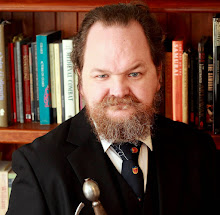
- Henry Walker
- Either an author who fences, or a fencer who tends to write a lot. I found a passion for writing first, then I found fencing. I also found that the pen and the sword work very well together. The pen may be mightier than the sword but together they are much greater.
Thursday, July 13, 2023
Of Things Long and Pointed...

Saturday, February 13, 2021
Read the Whole Thing
Greetings,
I posted a document in October of last year, which I had been working on for a couple of months. It was a recreation of an Elizabethan political pamphlet, which I spoke about on my blog about Elizabethan English you can find that post here. Now, I did this because I wanted to try writing my own Elizabethan political pamphlet and it gave me the chance to have a play with the language, so it was a bit of fun. The reception was not what I expected.
It was thought that I was decrying the use of rubber-band guns (RBGs) on the rapier melee field in the SCA, complaining about their use. I merely used the subject of firearms and their impact upon swordsmanship, a very Elizabethan political topic as my focus. I however focused the argument primarily on the unreliability of the weapons and their primary source of ignition, black powder. The issue was that most read the first part of the argument, where the initial complaint was made, and did not bother to read the rest where the argument unfolded. This, unfortunately happens with a lot of texts, and I have not been immune.
When I first was introduced to the rapier and all things about it, I went madly searching about for treatises about their use. Well, back in the late 1990s there was the choice of three manuals: Saviolo, di Grassi and Silver. For my initial starting I started with George Silver. I started to read his Paradoxes of Defence, only to find that the man was decrying the use of rapiers and telling the reader how useless they were and other such opinions. I did not finish reading the treatise in that sitting feeling that there was nothing of use that I could find in his treatise, indeed I almost avoided anything to do with the author.
Some almost ten years later I circled back to his treatises. Had I read further than I did, in among his complaints about the Italians and their practices, there are actually some gems which are quite useful and I have been using in my training ever since. So for ten years I missed out on useful information because I did not bother reading the whole thing because I thought I knew what he was on about from the first part of his treatise.
Don't fall into the same trap that I did and others often do, don't assume that you know what the author is talking about just by what they have said in their introductory comments. This goes once for modern documents, double for any document which is either not originally written in our language, and triple for any which is not in our time. Arguments were formed differently in different periods. In the pursuit of arms of different periods, or indeed the pursuit of scholarship of anything from a different period this needs to be taken into account. Read the entire thing before you make your opinions about what the author is trying to say, and their evidence.
Scholarly articles in the modern world, have an abstract which give the reader a precis of what the writer will be writing about, describing in very general terms the ideas which will be presented and a very basic idea of the argument. This is not sufficient to know the argument presented.
Scholarly articles are usually set out with an introduction, body and conclusion. Sometimes these are even given headings so that they are easy to find. When a person is skimming through lots of documents it may be sufficient to read just the introduction and the conclusion, but this only scrapes the surface of what the author is speaking about and what evidence they use to support it. Only the basic idea of the argument is then known.
Only through reading the entire document will the reader understand where the reader is coming from, what data they are using as evidence, and how they are forming their argument. This is the only way that the reader can understand whether the argument is strong enough to be supported or not. The paper may be well-written but the data may be rubbish, and you won't know unless you read the whole thing.
In terms of a novel, would you only read the beginning and the end? No, you want to see what trials the character went through and how they got to the end. This is the same with anything else that you read. If you want to make a decent argument about something you need to read the whole thing. If you don't you will make assumptions about what is in there and your argument will be poor, and it will become obvious that you haven't actually read it.
You never know, you might actually find something of real interest in something that you read that you thought at the beginning was not going to interest you.
Cheers,
Henry.
Wednesday, January 13, 2021
Rotella: Considerations of Form and Size
Greetings,
Considerations of the form and size of our companion items tends to be relegated to secondary discussions. In this discussion there will be a short investigation of the rotella, with these considerations in mind, it will be one of my more formal posts.
Cheers,
Henry.
Abstract
A fencer
needs to consider the size of their companion item as much as their primary
weapon. The discussion that follows addresses the size and form of the rotella
directing the investigation toward the proportion of the rotella in reference
to the individual who uses it. This investigation is derived from extant images
from different sources including martial art treatises, to found these ideas in
the period in which the rotella was used, and to give the discussion some
practical consideration.
Introduction
When the
rotella is considered by many, there is the consideration of a ubiquitous round
shield which is used by the combatant to perform various actions. There is rarely any consideration of the form of the rotella or its size. When the form
is considered, small things such as its strap configuration and how the
combatant holds the rotella make a difference. When size is considered the size
of the rotella can determine whether or not the rotella is effective in
protecting the combatant who is using it or is too cumbersome for the combatant
to use it as effectively as it could be. For the examination of the rotella
there will be an examination of images from period eight period pieces,
including five treatises from Renaissance martial art treatises. From this it
is hoped that a greater understanding of the rotella in its form will be
gained.
Historiography
The first is
an image by Bernat Martorell Sant Celoni, from 1452, an altarpiece of Saint
Vincent, referred to as MNAC 15797.[1]
This piece depicts several armoured individuals, but the one in the foreground
is armed with a round shield, so is of great interest to this study. This is
the earliest piece and gives a preview of the rotella, rather than its final
product.
Chronologically, the next two
images come from Marozzo’s treatise of 1536[2]
and represent the rotella in its more usual situation, in a civilian context,
or the context in which many know it from. What is most interesting is this
form is actually more a military than a civilian form intended for use in pike formations,
adopted for civilian use. This depicts the rotella as it is more commonly
known.
Next are three images which come
from Agrippa’s treatise of 1553[3]
and present three situations with pairs of combatants in civilian attire
combating with sword and rotella. The images are quite clear about the actions and
the form of the rotella is quite established by this time. Again it is the
civilian use of this form.
Following after this is the first
of the images from Giacomo di Grassi’s treatise. First there is the image from
his original treatise of 1570.[4]
This is from the original treatise. This should not be confused with the later
treatise by the same author as this is the translated treatise of 1594.[5]
Both depict an individual with arm extended holding a sword in one hand and a
rotella in the other, strapped to the arm.
Lovino published his treatise in
1580[6]
however the images which were used for this discussion were sourced from a
different location.[7]
This was to get better images so the detail could be seen more clearly. The
rotella which are present in these images are somewhat different to the others
which are present in the others which make an interesting difference, even if
it is only slight.
An image from the British Museum
of an individual standing with a sword and a large round shield was used, the
original image made by Jacques de Gheyn II in 1587.[8]
This is clearly a military figure with the line of soldiers marching past
behind him. It demonstrates that the shield, and sword, had not been completely
outmoded on the battlefield, it also gives a good example of a shield of the
period.
Next are two images from Capo
Ferro’s treatise of 1610,[9]
which depict two civilian combatants fighting with rapier and rotella. The
rotella are very plain having only the essential details that are required of
them for the image to make sense and for their effect to be known. It gives the
reader enough of an impression to know what’s going on but not so much to be
distracted.
Finally there is a portrait of
Alessandro Farnese from 1611.[10]
This depicts an interesting round shield with a very large spike on the front
of it. The shield is one of the ones which will be made note of in the
discussion as it has features which stick out as different from the more
standard format, more discussion will be made of its distinct features. The
portrait depicts the individual in a military situation, which places the
rotella firmly at the cross-roads of civilian and military use as is known of
it.
The Form of the Rotella
The two prime
elements of the rotella which have been presented through the examination of
the images which have been presented are that the rotella has two straps on the
back of it and that it is primarily convex in shape. The first strap is held by
the hand and the second strap goes about the arm. The convex shape is
important, it is not merely a round, flat shield, the convex shape is important
as this shape serves to deflect the incoming blade of the opponent.
While the
face of the shield in MNAC 15797 cannot be seen, from the back of the shield
and the shape present, it is likely that this shield is flat. This makes it
more likely that it is in fact merely a round shield rather than an actual
rotella. It can be seen as the precursor to the rotella as it possesses the
other elements found in the later forms of the rotella.
Later
additions such as the shoulder strap seen in the Jacques de Gheyn II example
and the portrait of Alessandro Farnese are examples of how the weight of the
shield was taken up to relieve the individual who may be carrying the shield
for an extended period of time or to move it out of the way, but again, do not
appear to be a standard form of the rotella, likewise the spikes seen on both
of these examples can likewise be seen as additions to the form rather than
standards of the form.
There is also
noted in the di Grassi 1570 and Lovino 1580 examples where the straps seem to
be mounted rather than in the middle of the rotella, but slightly lower on the
rotella. This may enable the fencer who is using the rotella to more easily be
able to protect their head, again this is not a standard form found in all
examples. Further on the di Grassi 1594 example the straps seem to be mounted
more toward the “back” of the rotella, giving more distance from the hand at
the front, pushing the rotella forward. This could be to give the fencer an
additional advantage, or it could merely be a mistake in this woodcut example
in copying the 1570 during translation to the 1594 edition.
Further on
the location of the straps, some have the strap for the arm located on the
forearm, while others have it located in the crook of the elbow. This may be
from the artists’ impression or, it may be deliberate to change the effect of
using the rotella. All seem to have a similar location for the strap, however
which makes this location more likely dependent on the individual who is using
the rotella rather than the make of the rotella itself, or by design. Such
considerations are important when considering the size of the rotella,
especially in proportion to the user.
Size and Proportion of the Rotella
The size of
the rotella, especially in proportion to the user is significant as this
determines the best size of rotella for the individual, and will determine such
things as how much room there is between the hand and the edge, and also where
the second strap sits across the arm. Further the proportion of the rotella to
the individual in regard to its size will also determine how effectively an
individual will be able to use the rotella, especially considering specific
rotella actions. Too large and the combatant will not move it effectively, too
small and the rotella will not sufficiently cover the combatant.
In regard to
the size in proportion to the individuals depicted some interesting results
have been gained. Five results where the rotella measures from shoulder to the
middle of the thigh, six results where the rotella measures from a fist in
front of the hand to the mid-bicep, two results where the rotella measures from
shoulder to waist, or a little in front of the hand to mid-bicep, and a single
result where the rotella measures from the shoulder to the top of the thigh.
In the images
supplied by Agrippa 1553, there is an equivalence gained where the rotella is
determined as above the shoulder to mid-thigh, or one fist in front of the hand
to about half the bicep, or one fist behind the elbow strap. This could mean
that the two highest results could be combined together to form a single result
due to the equivalent measurement presented.
The
proportion of the rotella to the fencer is important as it will determine how
the fencer can use the rotella. A rotella which is smaller in proportion to the
user will move more freely, while a larger one will cover more easily. The
fencer has to make a decision about what approach they will be taking, indeed
which treatise they are studying and whether the rotella is appropriate in size
and proportion to themselves for the actions described.
Conclusion
The rotella
is a most interesting a useful device when used properly. To use it properly
the rotella itself has to be of the correct form, strapped correctly, and of
the correct proportion to the user. The consideration of what proportion to use
will depend on the approach taken, thus the particular treatise which is
chosen. Particular attention should be paid to the form and proportion of the
rotella which is depicted in the treatise as this will make a difference.
There have
been examples presented of various round shields from the simple round shield
in the earliest example to later military examples of shields with extra
additions made to them to create different effects in their use. The attempt
has been made to cover various different forms so that examples are present of
the widest range and the greatest variety. This was to find the proper form and
proportion of the rotella. The result was that there was a general idea of what
the rotella form was, and a couple of ideas about the proportion, but these are
dependent on the use of the rotella as determined by the particular treatise
which is being followed.
Bibliography
Agrippa, Camillo (1553) Trattato
di Scientia d'Arme, con vn Dialogo di Filosofia, https://wiktenauer.com/wiki/Trattato_di_Scientia_d%27Arme,_con_vn_Dialogo_di_Filosofia_(Camillo_Agrippa)
Capo Ferro (1610) Gran
Simulacro dell'Arte e dell'Uso della Scherma, https://wiktenauer.com/wiki/Ridolfo_Capo_Ferro_da_Cagli
de Gheyn II, Jacques (1587) British Museum No:
1864,1114.465, https://www.britishmuseum.org/collection/object/P_1864-1114-465
di Grassi, Giacomo (1570) Ragione di adoprar sicuramente l'Arme, https://wiktenauer.com/wiki/Ragione_di_adoprar_sicuramente_l%27Arme_(Giacomo_di_Grassi)
di Grassi, Giacomo (1594) His True Arte of Defense, http://www.umass.edu/renaissance/sites/default/files/assets/renaissance/lord/DiGrassi_1594.pdf
Kirby, Jared (ed.) (2004) Italian Rapier Combat: Ridolfo
Capo Ferro's 'Gran Simulacro', Greenhill Books, London
Lovino, G. A. (1580) Traite d’Escrime http://www.umass.edu/renaissance/sites/default/files/assets/renaissance/lord/Lovino_1580.pdf
and https://elegant-weapon.blogspot.com/2016/03/episode-57-rotella.html
Marozzo, Achille (1568) Opera
Nova, https://www.wiktenauer.com/wiki/Opera_Nova_(Achille_Marozzo)
Martorell Sant Celoni, Bernat (1452) Altarpiece of Saint
Vincent, Museo Nazionale di Arte della Catalogna - MNAC, Barcellona, MNAC 15797
(Photo by Andrea Carloni (Rimini)), https://www.museunacional.cat/en/colleccio/altarpiece-saint-vincent/bernat-martorell/015797-cjt
Mondschein, Ken (ed.) (2009) Fencing: A Renaissance Treatise, Italica Press, New York
van Sichem, Christoffel (1611) Portrait of Alessandro
Farnese, Duke of Parma, https://www.rijksmuseum.nl/en/collection/RP-P-OB-15.608
[1] Bernat
Martorell Sant Celoni, 1452 Altarpiece of Saint Vincent, Tempera and gold on
wood with gold leaf. Museo Nazionale di Arte della Catalogna - MNAC, Barcellona,
MNAC 15797 Photo by Andrea Carloni (Rimini),
https://www.museunacional.cat/en/colleccio/altarpiece-saint-vincent/bernat-martorell/015797-cjt
[2] Opera Nova, images are from the
coverplates of the 1568 edition, https://www.wiktenauer.com/wiki/Opera_Nova_(Achille_Marozzo)
[3] Trattato di Scientia d'Arme, con vn Dialogo
di Filosofia, the modern version is available translated: Agrippa, Camillo (2009) Fencing: A Renaissance Treatise, Italica Press, New York (Edited by
Ken Mondschein)
[4] Ragione di adoprar sicuramente l'Arme, https://wiktenauer.com/wiki/Ragione_di_adoprar_sicuramente_l%27Arme_(Giacomo_di_Grassi)
[5] His True Arte of Defense, http://www.umass.edu/renaissance/sites/default/files/assets/renaissance/lord/DiGrassi_1594.pdf
[6] Traite d’Escrime http://www.umass.edu/renaissance/sites/default/files/assets/renaissance/lord/Lovino_1580.pdf
[7] https://elegant-weapon.blogspot.com/2016/03/episode-57-rotella.html
[8]
British Museum No: 1864,1114.465; Date: 1587; By: Jacques de Gheyn II, https://www.britishmuseum.org/collection/object/P_1864-1114-465
[9] Gran Simulacro dell'Arte e dell'Uso della
Scherma, a translated version is available Capo Ferro, Ridolfo (2004) Italian Rapier Combat: Ridolfo Capo Ferro's
'Gran Simulacro', Greenhill Books, London (Edited by Jared Kirby), or https://wiktenauer.com/wiki/Ridolfo_Capo_Ferro_da_Cagli
[10] Portrait
of Alessandro Farnese, Duke of Parma, by Christoffel van Sichem, before 1611, https://www.rijksmuseum.nl/en/collection/RP-P-OB-15.608
Saturday, June 13, 2020
Old Learning for Old Treatises
The following article examines the question of what background reading the fencer should do to put themselves in the mind-set of the individual who wrote the Medieval or Renaissance treatise. It will also discuss how it is important that this older mind-set be applied when reading these texts rather than applying things from a more modern point of view. These questions, while background to the reading and interpretation of period treatises are important when reading these documents.
In recent months I have been reading and trying to wrap my head around Aristotle's Physics. This has been no mean feat coming from a lay person who is not particularly familiar with the field. Little did I know that not only would I be confronted with various theories about how objects moved but also Aristotle's theories about the universe and how it is constructed as this is all a part of the older idea of what "physics" means, an addressing of the physical world and all that lies in it. Of course, the question must be raised, why would I read this anyway?
Firstly, it is undoubtedly one of the more significant historical texts available to read, and this appeals to me from the point of expanding my own education. Further it is applicable to the reading of Medieval and Renaissance treatises. This is the physics these treatises would have been based upon, not Newtonian physics. So, reading this allows for a greater understanding of the treatises.
The people who wrote the treatises would have based their ideas on Aristotelian physics and not Newtonian physics simply because that is what would have been available to them. It is not until we read much later smallsword texts that Newtonian physics could possibly have been applied. So in this case Aristotelian physics is the most appropriate when reading these treatises. This is simply because most of these treatises that are being studied were written before Sir Issac Newton was even born!
The same sort of approach can be taken when reading these texts in regard to geometry, in this case Euclid would be the prime source for knowledge, thus the so-called "classical" authors is where most of the knowledge of science and mathematics was drawn for this period. These are the texts that a person should be reading to gain an understanding of what the authors knew when they wrote the treatises. As a result, by reading these books a person will gain an insight into the mind-set of the author as well and a greater understanding of what has been written.
Of vital importance is that we do not colour our reading of these historical texts with our modern knowledge or mind-set when we are attempting to understand them. This is vital from the point of view of understanding the actions presented in the treatises, but also applies toward other elements such as the social elements which are presented in the documents. It is only through an understanding of the social elements of the time that the treatises were written that the reason these treatises were written, and thus some of the social background to them will be understood. This will explain some of the approach of the author to particular subjects of importance.
Do not take the treatise out of its historical context and attempt to understand it. Leave it in its historical context and understand the history which surrounds it. This way you will gain a greater understanding and appreciation of the treatises that you read.
Cheers,
Henry.
Friday, September 13, 2019
Studying the Sources
The following article is the result of a discussion that I had with Lois Spangler about studying the sources. There are various questions that we all have to ask ourselves when we are studying the sources so that we can understand what we are actually doing. Many of them are just a really good read, and this is great, but there is often a further motive behind the study and this what will be discussed here.
Single or Multiple?
In some cases a source will be found which appeals to us on a very basic level. Maybe it is one which is different from what everyone else is studying, maybe it just suits the way that we move, or maybe due to a talent for a particular language we have an advantage because no one else can read it completely. This results in the focused study of a single source. In my case, I picked up Saviolo's (1595) His Practice in Two Books some 20-odd years ago and have been studying it on and off ever since, because it appeals to me. Why on and off? Is a focused study not the best way to do things? Yes, and no.There are also new manuals which are being scanned, translated and being made available all of the time. This is a great boon to the swordsmanship community at large. A person may be studying a single manual but another may come out which draws their attention, what should they do? This would depend on the individual. I have read various manuals in various forms, in many instances it is to keep up with what students are studying, and also to keep up with what others are also studying. This does not detract from the primary manual that a person studies, in fact it enhances it. A greater appreciation of swordsmanship can be gained from examining multiple manuals than from just focusing on a single one.
Reasons and Justice
What this all comes down to is the reason for studying a treatise. There are many different reasons for studying a treatise. The prime reason is to recreate what is written in the treatise, but this is not the only reason. Another reason is to find the foundation elements so that they can be examined to compare to another treatise for similarities and differences, this way elements can be traced through lineages and also across continents. In some instances a manual may be picked up just for "tips and tricks" i.e. just to add an extra couple of techniques to a person's repertoire. A teacher may also examine a manual to understand what their student is studying. Each one is a different reason.How do we do a source justice? What doe this even mean? For some, the only way to do a source justice is to go through the entire manual and use every element. For others, this is not even a concern. This all goes back to the reason for studying the manual in the first place. If a person is studying a treatise to examine social elements within it, the technical elements to not even play a part in the examination, therefore there is no need to consider recreating these technical elements. If the study is for comparison of a single technical element, then the other elements are not really required. For example, a cross-manual examination of rapier and dagger, then only the rapier and dagger parts are really pertinent. The reason for examining the manual must be taken into account in all instances.
De-focusing and Re-focusing
There are reasons why in the study of a single treatise a person should be looking elsewhere to get a better perspective of what they are studying, sometimes it is even a necessity. This allows a better perspective of the work which is being studied and often a greater understanding of what is being studied. I will take as an example Saviolo's (1595) His Practice in Two Books because it is the one which I have been studying.To begin with this is not simply a fencing treatise, it also includes a discussion of duelling, which the author actually spends more pages on. From this part of the treatise alone it can lead to the reading of other treatises in discussions of duelling, honour and other similar concepts to gain a greater understanding of what the author was discussing. Focusing more on his more practical elements, Saviolo's treatise is not of a "pure" school. It is a combination of Italian and Spanish for sure, with suggestions of German as well.
To understand this treatise in all of its detail the reader really should have a grasp of the foundation elements of the Italian and Spanish schools for sure, with some of the German as well. This grasp can only be gained by looking elsewhere, not at the treatise itself. This means following a tangent to examine something which is not the primary source which is being examined. This investigation will further enhance the reading of the primary source as a greater understanding will be had. In the case of Saviolo, I can assure you that following the tangent to gain an understanding of the foundations of these schools will grant a better understanding of his treatise.
The same "de-focusing" or following a tangent can be useful to the study of other treatises. A study of Renaissance mathematics of philosophy, for example can give the individual a greater understanding of the mind of the writer. An examination of treatises of a similar period, or tradition can establish trends and elements which are common, or changes, all of which lead to a greater understanding of the original text that was being studied. In this case the broader understanding does have great advantages, when this understanding is re-applied to the original text.
Re-focusing is the other side of the same coin. This is focusing on a single treatise to the exclusion of all others. There are times that this is what is required to get a clear and consistent reading of a treatise without the words being muddied by external sources. In this particular case it is where external sources can be an issue because they do influence how we interpret what is being read. Our history influences how we interpret what we read, what we have learnt influences it also, as does our cultural background and many other different factors.
If the treatise is read in accompaniment with another's interpretation of it, then our own interpretation can be swayed by that interpretation. Likewise if the treatise is read in accompaniment with other secondary sources about a similar subject, this will also colour the interpretation. This can be an issue as these influences are not always positive. Often it is best to focus on what the author of the treatise is talking about and what they are saying, without any interpretation. This is difficult when the treatise is translated from a different language as there is inherently an element of interpretation present.
How can this fit with "de-focusing" then? In this other process, resources are selected which are designed to enhance the understanding of the treatise. An enhanced overall understanding is what the aim is. Thus, in reading another treatise it is the foundation elements which are important rather than particular techniques. In reading philosophy it is to understand the mind-set of the author, rather than the philosophy in detail. The broader topics are read so re-focusing is easier later on, so greater understanding is possible.
What Now?
When a primary source is taken to study there are certain elements which must be in play for the person studying it to achieve their end. There must be some sort of connection between the person studying the treatise and the treatise, this has to be something which is going to keep them going through the hard parts of its examination. Studying treatises is not an easy task if it is going to be done properly. There also has to be a real reason for the individual to want to take the time to read and study the treatise. It will take a lot of time, and often a lot of re-reading. This form of reading and interpretation is not a direct nor simple process.The elements which have been raised here are for information but also for discussion. My position is only one, others may have a different point of view, and they should share it. The more people we have talking about period sources the better. The more people we can encourage to study period sources and come up with their own interpretations the better. Some will be the same, and some will be different. Just because they are different, doesn't mean it is wrong. They might have a different point of view which is worth investigating.
Let your investigations take you different places. Follow the tangents in your investigations, it can only lead to a greater understanding of what you are studying. Found something which you do not understand? Go research it. Found something different or interesting? Go research it. Examine the different pathways and backgrounds to the people who wrote the treatises, figure out some of what they would have read, and go and read some of it, you will gain a greater understanding of them and their treatises. Sticking assiduously to the treatise without looking side to side is not necessarily the best approach, you have to occasionally lift your head up and look around as well.
Cheers,
Henry.
Thursday, December 13, 2018
Sword and Shield Treatises
The following is a discussion, as indicated by the title, about treatises in the discussion of the use of the sword and shield. Before any further reading is done, it should be noted that the buckler has been excluded from this discussion, thus the discussion is about larger shields which were typically used and associated with war. While this is the case, the rotella and variants has been included due to its size, and thus use characteristics. What will be noted is a distinct gap in knowledge...
Treatises
Vegetius: Roman Source Material
Norse Sagas
The Medieval Gap
“anyone who might believe that there are no actual Medieval fighting manuals or that there are no real historical sources for Medieval martial arts is entirely ignorant on the subject.” (Clements, 1998:11)
The Renaissance Flourishing
Source Use
Bibliography
Sunday, November 13, 2016
My Treatise
The idea of putting your knowledge in words is somewhat of a scary prospect. When it comes to fencing and especially the use of the rapier it becomes a little larger due to all of the previous work which others have done. Some of my readers may know of this particular project. I have indicated toward it once or twice in various posts previously. This particular post is designed to have a bit of an examination of the reasoning behind it and the process that I went through to write it.
A Little History
My real official fencing history starts with my local chapter of the Society for Creative Anachronism (SCA) and the use of the sword and shield to become a "heavy" fighter. I would go to practice, loose some arrows at a target to keep my eye in, and then spend an hour or two throwing blows at the pell with a rattan sword. This was to learn how to throw the blows properly, and it felt right.My parents then moved and I moved with them. Luckily I found a fencing club at the university I was attending at the time and started with the foil. I spent six months doing footwork and trying to learn how to parry. The footwork ended up passable, the parrying was very rudimentary. My lunge on the other hand seemed to be something I was good at. It was long, accurate, and fast. I had to leave the university and lost contact. I came back later and things had changed.
The weapons had changed all of a sudden, they were longer and made out of fibreglass rods glued together and then wrapped in tape. I asked what was going on and was told that they were doing a SCA rapier practice and asked if I would like a go. It looked like fun, sure I said, here is where my love of this weapon truly started. This was some 20-odd years ago.
Treatise Foundation
Since then I have spent the time learning all that I could about the rapier and how it worked. This was sometimes a matter of learning it "on the job" and sometimes learning it from manuals of the period. My two favourite manuals are Giacomo di Grassi's True Arte of Defense (1594) and Vincentio Saviolo's His Practice in Two Bookes (1595). I find myself always going back to these two and always finding something new when I do.Taking the influence mostly of Saviolo my particular method is a compilation of various elements of various masters compiled into a single work, much the same way he did. I found what made sense and worked for me and developed my own style out of it. This means that while my rapier techniques and method are based on period sources, they are not all from a single source. This means I have the adaptability to change to what is required as presented by my opponent. This is the method which I have developed over the past years and it is this method which appears in my treatise.
Now there will be some who will claim that I am merely butchering what I have researched and then calling it my own. They will also claim that I am not doing "true rapier" of any "style" because of this method. To these people I ask, what is what I have done any different from any master previously? How many times do we hear in manuals a master stating that he does not do a particular technique because he does not like it or does not think it is effective? What is the difference?
The next claim will be that I am plagiarizing and not giving due credit to where I have taken my research. To this I will merely state that fencing theory is very much in the common knowledge arena and anyone who claims a right to it is fooling themselves. To say that I am a plagiarist is to also call most of our previous authors who wrote the manuals the same, and also modern ones to boot. I am taking a series of well-known actions and explaining and assembling them in my own fashion. To claim plagiarism here would be to claim plagiarism on a new piece of music written because none of the notes, times and tempos are different.
(Congratulations dear reader for getting this far.)
Reasons
Why would a person go to the effort of attempting to write all that the know and put it into a book? The challenge of writing a book in the first place would be one. The attempt to codify years of knowledge so that a person can see what they have done is another. To present to others their own ideas about the use of a weapon is another reason. Some of these reasons are mine, but not the main one.Reading from period sources scares some people because they are unfamiliar with the language and do not understand what's going on. My first reason for writing this treatise was to break down this barrier for some people. This is the reason why it will be presented in Modern English and also a dialect of Elizabethan English. By having the two side by side the language will be less frightening for some people and may encourage them to reach out an begin to read primary sources themselves rather than relying on secondary materials.
The Historical European Martial Arts (HEMA) community now has a history which is at least 20 years old, if not 30. This means that there have been people out there studying period manuals for this extent of time. There have been some wonderful productions of period works made available to the public and I thank those who do this for us. There have been some wonderful interpretations of period manuals made available to the public and I thank those who do this for us also. What I have not seen is anyone grow the gumption to put their name on the line and do what the masters did and write their own treatise. Not a translation. Not an interpretation. A treatise of how the individual fights. In this way I hope that my treatise will stand as a sort of a challenge to these people to put their pens to paper and write their own. It would be better that we write these manuals and have them in print than have these knowledgeable individuals pass on and not leave what they know to the rest of the world, as so many did previously.
Not a "master"? Neither were many of the people who produced manuals in the period in which the weapons were used sharp. If you have at least 10 years start planning, if you have 20 or more, this challenge is aimed at you.
(Almost there reader, really you are.)
Writing
Where do you begin? The beginning you say. Actually no, I didn't. I started with the format of the book. Because I knew I was going to be translating it into Elizabethan English (EE) and having it look as close to the real thing, the modern one needed to be formatted in a similar way so that the various chapters and bits and pieces matched up. This gave me some ideas about parts that I should be writing at least. Most of it is based on a combination of di Grassi and Saviolo, you should not be surprised.The next bit was to sit down and plan my chapters so I could organise things a bit better. Theory first, practice second, demonstration of the combination of both as a third, with sundry notes as the final bit. This was the process I went through chopping things down into little bits until I had a structure that I could use, then re-organising the structure so it made sense. Then re-organising things again because this bit needs to be before that bit because you haven't mentioned that bit yet. Please note this was only the "first book". The "second book" was going to be just like Saviolo's about duelling and other more social subjects, and only to appear in the EE version.
Once it is organised then I wrote. I started with the theory element. The hardest part about writing a book based on stuff that you know is filtering out stuff which isn't stuff you know. I made the determination on this one that if I could not explain it and give the "why" answer it would be left out. This was made all the harder because of my training as an historian which was saying "Document it!" all the time. It all also applied all the way through the practical bit as well.
Explaining physical actions is not easy, try it sometime and you will see that it is not as easy as you might think. This is further compounded in the earlier sections of the book where you cannot use jargon which you have not introduced which would explain things simply. I spent sometime at my desk waving a stick, and standing up, and sitting down and writing, and standing up again to repeat the action and so forth. Eventually all of the practical stuff got written.
Next was the "second book". This was based much on Saviolo's Second Book "Of Honour and Honourable Quarrels", thus a sort of code book for duelling. Surprisingly it was actually much easier to write this bit than the previous bit once I managed to get my head straight about what I was talking about. Honour is a sticky subject and it can tie you up in knots really easily. Keeping it all straight was rather a challenge and I can tell you that I still think that I missed something.
Done? Nope. Now we go back and write all the introductory bits. Most of this is tooting your horn about how wonderful fencing is and how awesome the book is. Easy, right? Once you get on a roll it can get easier as you go along, but you do feel like that you are saying the same thing over and over again, especially after doing the "second book". This bit was actually easier to do in EE than it was in Modern English.
Speaking of which, then once all of this is done it all needs to be translated into EE. Or at least the bits which you haven't already because it was just easier to write it that way the first time. If you want to have a look at the process of learning EE that I went through and a bit deeper into this process, have a look at my other blog http://oldewordes.blogspot.com.au/. This is where I have documented my delving into the interesting thing that is EE. One thing that I will tell you, after doing this, it makes Shakespeare a breeze.
Finally comes all the "book" stuff. The bits where you assemble the two together, some of which I have started, others which I have not. At the moment I am doing more edits. I was hoping that this was going to be out in 2016, looks like not to be.
Conclusion
There is the process and some information about my treatise. I will keep people updated and posted as things progress, as much as I can remember to. Just know that it is progressing and it will come out at some point in time. This is one of those projects where you just have to keep plodding along, knowing that in the end, it will be worth it all.
Cheers,
Henry.
Monday, October 13, 2014
Fencing Treatise: Part Manual, Part Resume
I have in previous articles discussed period sources and their uses. These discussions have been focused on the uses of the treatises in a practical sense and also understanding the language within them. There is a slightly different approach in this article with regard to the treatises. This approaches the manuals the manuals as they are and how they were presented to the public and gives something of an explanation as to how they are written and what is presented in them.
What will be noted in many manuals is the lack of basics presented. Even though there is the demonstration of theoretical knowledge and scientific principles, this is more designed to present the knowledge of the author than to present principles. For the most part there is a demonstration of a high level of skill presented in these manuals, rather than the essential skills that a combatant would need to know to learn to survive. This knowledge and skill base presented is designed to present the skills as noble and a noble intention in their teachings. Thus many of these manuals are more resume than practical manual.
The idea of the manual being a curriculum vitae rather than a more practical approach to how the skills should be used. This is more common in the later manuals of the sixteenth- and seventeenth-centuries, ...
The rest of this article can be found in Un-Blogged: A Fencer's Ramblings by Henry Walker, which is available in paperback from:
Amazon: https://www.amazon.com/Blogged-Ramblings-Henry-Leigh-Walker/dp/098764470X
Booktopia: https://www.booktopia.com.au/un-blogged-henry-leigh-walker/book/9780987644701.html
Among other places...
It is also available in electronic format (pdf) from: https://buy.stripe.com/fZecP419c7CB9VKeUV
... or direct from the author.
Wednesday, July 6, 2011
Reading Period Texts - A Question of Language
In the pursuit of swordplay from the past it is necessary at some point in time to consult texts of that period. Sure, we can use secondary sources and other's interpretations but in the end if we really want to get at what the masters and practitioners of the period were getting at then we really need to look at some primary source material, or at least translations of primary source material where the language barrier exists. It is this language barrier which will be the focus of this blog as it is easy to get caught up in the language of the period, or indeed the translation and/or interpretation of the author of the current form.
Language is important and so are the rules associated with that language as it is the rules which hold the language together. Aside from the usual rules of grammar and spelling which need to be interpreted sometimes especially when looking at period texts, there is also the flow and format of the language which is also important to be examined. When examining fencing manuals there is also an extra set of guidelines which become important in order to read and gain a useful output from the study of the manual.
Manuals often have their actions written in tempos rather than individual actions. The misreading of this will result in the misreading of actions and results in a misinterpretation of the intent of the author. Reading in tempos changes the time of the action and thus also the tempo of the action. Thus this will affect the resulting sequence of actions.
To read it in a modern manner it may seem that a person makes an action and their opponent replies to that action and the person makes another action in reply to that an so forth. For some sequences this will be appropriate and will apply with no problems, however this is not always the case. This especially so for the later period manuals where the use of time becomes increasingly important to the method which is being used.
To read in tempos is to realise that the action of one fencer may occur at the same time and thus in the same tempo as their opponent. This will speed up the actions and also allow for more smaller actions to ...
The rest of this article can be found in Un-Blogged: A Fencer's Ramblings by Henry Walker, which is available in paperback from:
Amazon: https://www.amazon.com/Blogged-Ramblings-Henry-Leigh-Walker/dp/098764470X
Booktopia: https://www.booktopia.com.au/un-blogged-henry-leigh-walker/book/9780987644701.html
Among other places...
It is also available in electronic format (pdf) from: https://buy.stripe.com/fZecP419c7CB9VKeUV
... or direct from the author.
Sunday, April 10, 2011
Fencing Manuals: Old and New
The written word has been the most effective method for transmitting information about fencing through time. True these documents do often come with pictures, but without the words it is much more difficult to understand what the author is discussing. Fencing manuals have been written by both professionals and gifted amateurs, regardless, each one teaches something about fencing from a particular point of view.
This blog is to do with some of the changes which have happened with regard to the transmission of such information over time, highlighting some interesting points with regard to this. For the purposes of ease of presentation of the information, the discussion will be broadly broken into four sections. The first is about theory content and deals with the presentation of elements of fencing theory. The second will deal with any social elements which may be present in the manual. The third will deal with the method used to convey the information. Some of these will overlap and all will be noted to be related to one another. It is not the purpose of this blog to delve into specifics of fencing theory or method, this needs to be done on a case-by-case basis rather than in such a general method.
Regardless of whether the theory is explicitly presented or whether it is more hidden within the actions presented all fencing manuals have elements of fencing theory present in them. It is these elements of theory which the physical aspects of fencing are hung upon. If the practical element is the meat of the discussion, the theory is most definitely the skeleton upon which this hangs.
In the manuals of the Renaissance period, or at least the later Renaissance period, there were entire sections of the manual which were devoted to the various elements of fencing theory. These would be specifically laid out and detailed before any mention of the practical was made. This was the case even in the later period of the eighteenth century, the same sort of idea was made. This highlighted the importance of the reader understanding what the practical elements of fencing were based upon, and thus the importance of theory to the system. It was through such discussions that fencing was demonstrated to be science as well as art.
In the modern age, fencing theory seems to be something that only the fencing masters need to know. Something that the individual fencer will only pick up through specific studies of fencing theory or through tuition with a fencing master. The theoretical elements seem to be absent from modern fencing manuals, or at least those which are commonly available. If a fencer wants to know about fencing theory then he has to go to specific texts in order to find the information he seeks. Only the practical elements are present in modern fencing books, the theoretical is assumed to be learnt through the repetition of actions and their learning.
The social element is something which seems to be somewhat odd to find in a fencing manual, but it is present in much the same way as the theoretical elements. Many may ask what purpose there is for social elements to be in a sport manual, and this is one place which demonstrates the difference in attitude to fencing over time. The social element and its presence or absence also describes the change in fencing from martial art with sharp weapons to the commonly known sport of fencing.
In the Renaissance period the weapons were real and the potential for injury was high. The social aspects of a person's life dictated what sort of life a person would have and with whom they could associate. The social element found in fencing affected more than just their conduct on the field of combat. Needless to say that for the fencer of the Renaissance, social issues were more important. This resulted in these elements being highly prevalent in the manuals of the Renaissance period. This increased even more with the presence of the phenomenon of duelling. The Renaissance author thus ....
The rest of this article can be found in Un-Blogged: A Fencer's Ramblings by Henry Walker, which is available in paperback from:
Amazon: https://www.amazon.com/Blogged-Ramblings-Henry-Leigh-Walker/dp/098764470X
Booktopia: https://www.booktopia.com.au/un-blogged-henry-leigh-walker/book/9780987644701.html
Among other places...
It is also available in electronic format (pdf) from: https://buy.stripe.com/fZecP419c7CB9VKeUV
... or direct from the author.