About Me

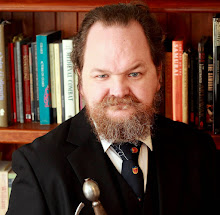
My photo
Either an author who fences, or a fencer who tends to write a lot. I found a passion for writing first, then I found fencing. I also found that the pen and the sword work very well together. The pen may be mightier than the sword but together they are much greater.

Saturday, April 13, 2019

A Sword is a Sword

Greetings,

With no surprise, especially considering the title of the article and the blog, this article is about swords. But it is not just about them as objects alone, singularly, or pointing out one type of sword. It is an examination of swords in general. People, when they discuss sword, especially if they have anything to do with them in hobbies or study, are quick to separate and isolate them by function, culture and type. This discussion is designed to break down some of those barriers, to look at swords as swords.

The discussion which follows is more curatorial than social or practical, though both social and practical elements will come into the discussion. It is difficult to discuss swords without swordsmanship. To attempt such would be like attempting to discuss cars and their performance without discussing driving. There will not be a history of the sword, nor will there be any discussion of any particular type of sword, in fact this is exactly what this discussion is trying to get away from. The purpose of this discussion is to present the similarities between swords, rather than their differences so that they can all be appreciated with equal worth.

Definition

The Oxford dictionary defines a sword as a noun, "A weapon with a long metal blade and a hilt with a hand guard, used for thrusting or striking and now typically worn as part of ceremonial dress." (https://en.oxforddictionaries.com/definition/sword). The Cambridge dictionary defines it as "a weapon with a long, sharp metal blade and a handle, used especially in the past" (https://dictionary.cambridge.org/dictionary/english/sword). Finally, the Merriam-Webster dictionary defines it as "a weapon (such as a cutlass or rapier) with a long blade for cutting or thrusting that is often used as a symbol of honor or authority" (https://www.merriam-webster.com/dictionary/sword).

All define the sword as a weapon, all define it as having a long blade. Interestingly, in two of them they specify a metal blade. Two relegate the weapon to the past, while the other attributes symbolic meaning to the weapon, thus giving it some use in the present. What will be noted in all of the definitions is that they are very rudimentary, though they do have some specificity to them. Depending if one or another of these definitions is chosen, some types of sword may actually be not included in their definition. The most extreme examples would be the non-metalic swords used by some islanders and also pre-colonial peoples. Care must be taken in a definition.

A sword, could be described as a weapon with long blade designed for cutting and/or thrusting, which has a hand grip of some fashion. However specificity in length of blade could create questions as to where a weapon crosses the line between a knife and a sword. Then there is the question of weapons such as the "messer" which was a large knife, but was the length of a short sword. It needs to be noted that the definition of the sword is not as easy as it might sound.

Sword is a Sword

All swords are swords, regardless whether it is a sabre or a rapier, katana or a schiavona, it is a sword. We are the individuals who divide them up and show them to be different in shape, or nationality, or use, or period, or whatever. In all cases all of the weapons which have been named, all six of them are swords. Obviously we divide them up so that it is easier to understand what we are talking about, but sometimes this creates confusion if a person does not understand what the other person is talking about. The most important point that needs to be made is that they are all swords. Regardless of which period of history, or from which culture, they are swords.

Similarities

"The difficulty of treating the Sword is enhanced by the peculiar individuality which characterises it, evidenced by an immense variety of physique, and resulting as much from unconscious selection as from deep design. One of the characteristics of indigenous art is that no two articles, especially no two weapons, are exactly alike; yet they vary only within narrow and measurable limits." (Burton, 1987:xxi)
Burton (1987) is describing how swords are both complex articles in which no two are exactly the same, but at the same time all fall within a certain level of variation. It is this second point which needs to be noted. There are similarities across swords which cannot be denied. They all have blades and hilts, obviously, but a person can get even deeper in the examination of the similarities. The cross-guard is also a similar item. In some cases it may be a part of the handle, but it is still present, if in a reduced form. In the case of the katana it is the tsuba, thus a circular cross-guard, which would seem somewhat contradictory. The pommel is also present, it is the part of the sword which holds the rest of it together, and in the western versions adds counter-weight. In the katana this is the kashira.

These similarities which have been pointed out, only are those in the hilts of the weapons, the blades also have similar characteristics as well. All have a strong, weak and a middle portion of the blade; these are all relative strengths in comparison to one another. The strong is most used for defending, the weak is most used for offending, and the middle is most used for controlling actions of the opponent's weapon. When it comes to the question of edges, the weapons do have at least two edges, even though one of them may be blunt. Even this blunt edge can be used for actions against the opponent, such as parrying and actions of control. These similarities in physical form need to be noted and appreciated.

Shape, Use or Culture?

Swords have been classified and organised into groups often by specific shape, function or culture. The question is what is the best method of classifying them, is it one or a combination of these methods. Burton (1987) suggests two which are common among collections being Topical and Geographical or Material and Formal, the former considers the culture, location, place and date, the latter which only considers the objects themselves (Burton, 1987:xxii). Obviously both have their advantages and disadvantages. Coe et. al. (1996) use a more combination system taking into account both the artefacts themselves along with the cultural situation in which they were found in, thus taking advantage of both approaches described by Burton (Coe et.al., 1996:6).

The combination of classification of weapons has the advantage of not only examining the objects themselves and examining them for construction, shape and manufacture, but can also look at the culture in which they were found and look at their use, which is often sorely missing in curatorial approaches to weapons. This missing approach leads these curatorial approaches to divide swords down definitive lines which are not actually there, due to misinterpretations as to how the weapons were used.

Some weapons were more specialised in a single area of use than others, this is undoubted. A perfect example of this is the estoque, or tuck, which was designed to be used by an armoured combatant against another for a thrusting attack designed to pierce through gaps in armour. The weapon had no edge, so there was no chance that there was any chance of cutting ability. Often this is claimed to be the origin of the rapier, however that it is a weapon designed for armoured combatants makes this a somewhat spurious claim.

The rapier is a classic weapon for the abuse of weapon historians about its use. For some it was a purely point-orientated weapon which could not cut at all. For others it could cut just as easily as more military-styled weapons which were its contemporaries. Neither of these is accurate. The rapier was a point-orientated weapon, meaning that it was designed more for the thrust than the cut, but it could still cut, just not as well as a military sword of the same period, it was designed for civilian duelling and self-defence.

On the other end of the scale some would attempt to have us believe that the longsword was purely designed for cutting and that it did not thrust at all. Longswords came in several different forms indeed Oakeshott numbers twenty-two different types of sword in the medieval period (Oakeshott, 1998:24), thirteen of which could be claimed to be longswords. Some of these were predominantly cutting weapons, but that is not to say they did not have a tip to thrust with, and some of them were more designed to thrust with also. So, needless to say, it depends on which form of the longsword is being spoken about.

The sabre is in a similar situation, it can also thrust as well. No doubt Oriental weapons have the same spurious claims been made about them. These arguments will not be discussed here as I do not have the expertise in this field. Needless to say, weapons need to be examined carefully before claims on their use are made, especially when it comes to specialisation.

Conclusion

Each person has their preferences. Some people prefer chocolate ice-cream over vanilla, some people just don't like ice-cream at all. Preferences for swords are much the same, just because you prefer the longsword, does not mean that you cannot appreciate the jian, katana, gladius or rapier. Each sword has something to say about it and of its use. There are many similarities between weapons which can be appreciated.

Each sword was a tool designed for its time and place, to take it out of this time and compare it to something else, to deride it is not useful. Placing a sword on a modern battlefield and trying to compare it to modern weapon systems is like trying to take an apple and compare it to an orange among other oranges. Sure, both of them are fruit, but they are simply not a good match for comparison unless the question is for preference about fruit, not the best orange.

The greatest challenge we face is to get out of our comfort zones, and in some cases these comfort zones are quite small. Have a look at some others swords and appreciate them for what they are and what they can do. Make comparisons of them with swords that you are familiar with, but not for the purposes of derision, but for the purposes of noting similarities and other positive notes. This way you will come to appreciate more weapons and also the skills that go along with these weapons. Remember that the two deciding principles of time and distance exist for all martial arts armed and unarmed, you can learn something from all different places if you really put your mind to it.

Bibliography

Burton, R. F. (1987) The Book of the Sword, Dover Publications Inc., New York, USA

Cambridge Dictionary (https://dictionary.cambridge.org/)

Coe, M. et. al. (1996) Swords and Hilt Weapons, Prion Books Limited, London

Oakeshott, E. (1998) The Sword in the Age of Chivalry, The Boydell Press, Woodbridge

Oxford Dictionary (https://en.oxforddictionaries.com/)

Merriam-Webster Dictionary (https://www.merriam-webster.com/)

Wednesday, March 13, 2019

Re-Inventing the Wheel

Greetings,

There are questions which are going to be asked about this particular post, like what is he on about? That is simple. There is the propensity for the Historical European Martial Arts (HEMA) community for re-inventing the wheel rather than taking perfectly good examples of things and either just using them or modifying them slightly to suit their purposes. This post will give three examples which seem to keep coming up as issues for the community which have been dealt with elsewhere before.

Why?

Why is it that in HEMA people seem to need to keep re-inventing the wheel? It is almost like that what has come before is just not good enough, or because it comes from another sport, or similar area and they do not want to be like them that they cannot use anything which is anything like them. There are three topics which have histories which are established which could be used as they are, or modified to purpose, yet they are not. This is, of course, causing people issues and in some cases injuries as a result because people are doing the hard work that has been done before all over again.

Armour

Armour has been around for literally thousands of years, yet when it comes to HEMA rather than looking at existing examples of armour and simply copying it or modifying the armour to suit, new armour has to be invented. The great saga of the gauntlet is the greatest example of this one that can be put up as a prime example. There were fully-articulate gauntlets manufactured and used in the medieval and Renaissance period. Why are they not just copied? Or at least the principles of their designs not copied? Its not like they did not work.

What I find really amusing about this one is that people in HEMA have been cobbling together protective gear from other sports or designing it based on other sports, and then realising that it has holes in it, which are not covered. Then these holes are being covered by examples which are found on medieval and Renaissance armours. Knee protection first just covered the front of the knee for HEMA, now it seems that fans are being added to protect the sides and give some protection to the back of the knee, which are, of course, found on medieval and Renaissance knee cops. Why go through the effort of having to find out what does not work when we already know what does?

Armour Standards

When it comes to the question of protective gear, each club or organisation will have their own ideas about what will be required for their own people. Obviously it will be dependent on the weapon that is being used, i.e. more will be required for doing longsword than smallsword. What is a little silly is that for the most part these standards are created on the spot from what the individuals think is reasonable. There is in existence an armour standard, for rapier at least, which has been around since at least the late 1990s which is an international standard, that being used by the Society for Creative Anachronisms (SCA).

Why not start with this and then add on to it? Obviously it is effective, and all of the hard work has already been done. Seems that some would rather not want to be in anyway associated with the group than use a standard which is known and works, which is ridiculous. Instead these people would rather go through the trials and issues of finding out what works and what doesn't, which puts their members at risk.

Refereeing

There has been a lot of discussion about how tournaments should be judged, whether one referee should be used and four linesmen, or one senior referee and one junior and two linesmen, or some other combination. My particular preference is to teach the combatants to call their own blows, I mean they are the ones receiving them so they would know the best if they have been hit or not. Some of this has started to filter into competitions and gradually it is beginning to hold some sway.

Again what we see is the HEMA community trying to re-invent the wheel when there is a system already available for them to use. This system is found in non-electric sport fencing. There is a presiding judge and one for each fencer. The presiding watches both competitors the others only watch their one fencer for a hit and indicate when theirs has been hit. Again, it is a recognised method with a recognised standard. It also results in using only three people and not four or five people to staff it, which has advantages when the staff are primarily volunteers.

Conclusion

Three different areas have been examined where standards or examples are have already been established, and yet in all three cases the HEMA community is trying to invent their own. The question has to be at this point in time, why? Is it an ego thing? Not willing to accept that maybe it has been done before? Or not willing to borrow from another group and thus admit that they may have some good ideas? Both of these are ridiculous reasons not to use ideas or standards used by another group and modify them to suit what is required. In most instances in the HEMA community, there is probably already an answer out there to the question which has been posed, it is a matter of finding the answer, and accepting that it is the answer. For some, it is the last bit that is the most difficult.

Wednesday, February 13, 2019

Sword and Shield: Norse Tradition

Greetings,

A previous post discussed the subject with regard to treatises and the use of the sword and shield. In this discussion it mentioned the Norse sagas. The following is a discussion about the Norse sagas and the information which can be found within them which is potentially useful when reconstructing the use of the sword and shield in the Norse fashion. It should be noted that this indicates some directions which are presented by the evidence, but does not make any wholesale claims about how a sword and shield should or should not be used. These are preliminary findings from a documentary discussion.


Norse Tradition – From the Sagas

          The first thing that should be noted is that the Norse warriors should not be thought of as mere brutes who used mere strength to bash their way to their opponents, skill was evidently present, “Grettir struck down between him and the shield, cutting off both his hands at the wrist.” (Palmer, 1999:15). Such a blow performed shows skill with the sword and demonstrates that the art of war as practiced by the Norse needs a closer look before sweeping claims are made.

Shield Construction

Norse shields evidently had shoulder straps on them, enabling the shield to be swung on to the back enabling the sword to be gripped with two hands, “When he had said this, he gripped his hilt with both hands, and, fearless of peril, swung his shield upon his back and slew many.” (Clements, 1999)
The idea that the shields of this period were weak in some fashion, even though there is evidence of them being destroyed in the same saga, should not be over-stated, the shield was still used as the prime defence, “but, distrusting his sword, parried the blows of both with his shield,” (Clements, 1999). This clearly tells us that the shields were well-made and there are quite a few mentions of shield bosses made of metal.
Further to this idea Palmer (1999) mentions a shield which was evidently passed along, “with the round target that once had belonged to Thorveig.” (Palmer, 1999:4). This means that the shield had been through one user and then proceeded to be used by another; again this disputes the weak nature of shields of this period. There is also evidence from the same source that they were bordered with iron, “his sword stuck fast in the iron border of Steinar’s shield.” (Palmer, 1999:4), a factor which would have extended the life of the shield quite a lot and made it not a disposable item.

Shield struck and damaged

          While it is true there is evidence from both Clements and Palmer of shields being destroyed by blows and also cut through, it would seem that the blows which did this were extraordinary rather than the regular blows the shield would take. Further a shield which a sword would bite into could be used to the user’s advantage, “the blow fell on his shield. Gunnar gave the shield a twist as the sword pierced it, and broke it short off at the hilt.” (Palmer, 1999:17). Thus in this case while the shield was penetrated the occurrence was used to its owner’s advantage by breaking the opponent’s sword while it was stuck. Swords sticking into a shield are evident in more than one place in these sagas.

Use of shield

          There is also evidence of swords not sticking into the edge of a shield, “Kari caught the blow sideways on his shield, and the sword would not bite;” (Palmer, 1999:22), clearly the angle at which Kari parried his opponent’s blade was not correct to catch the opponent’s weapon in the edge of it. The use of the shield to defend a warrior is evident in many places throughout the sagas, “where he defended himself, holding his shield before him, and hewing with his sword. They made little way against him.” (Palmer, 1999:15). In some cases it was holding ground, and in other cases it was merely defending, “He held his shield before him and retreated” (Palmer, 1999:15). In either case, the shield was the key to the warrior’s defence.
          Of course there is also evidence of what would happen if the warrior could not use his shield in time to block a blow of an opponent, “so he could not throw his shield before the blow,” and so was struck (Palmer, 1999:19). In this case “throwing” the shield before the blow is extending it toward the opponent. This gives evidence that the shield of the Norse warrior was not used in a passive way, but in an active one.
          The shield was not held back, but extended toward the opponent, “Thorbjorn took his shield, and held it before him, drew his sword” (Palmer, 1999:15). This would enable the warrior to have room to move, or draw their sword and presents the shield in a more active position rather than a more passive one. In most instances where the shield is used it is in an active position rather than a more passive situation, “Then Thorbjorn rushed upon Grettir and struck at him, but he parried it with the buckler [shield] in his left hand and struck with his sword” (Palmer, 1999:16). This idea of the active use of the shield culminates in the shield strike where it is used against the opponent, “Thoralf thrust his shield so hard against Eyvind that he tottered with the shock.” (Palmer, 1999:24). This shield strike could be made against the shield or directly against the opponent, either way it demonstrates a very active method of using the shield rather than a passive one as often has been assumed.

Bibliography

Clements, J. (1999) “Selected Anecdotes and Accounts of Epic Combat from Saxo Grammaticus”, http://www.thearma.org/essays/Saxo.htm#.WW2B44SGPIU

Palmer, T. (1999) “Viking Fighting Notes from 23 Sagas”, http://www.thearma.org/essays/vikingfight.htm#.WW2BgISGPIU


Tuesday, January 29, 2019

Advertising: "Un-Blogged: A Fencer's Ramblings"

Greetings,

Well, after some writing, collating, and quite a bit of editing I have created a book version of several of the posts which have been made here. Some people asked me to do this as they found that the articles were quite useful and they would be even more useful in a book format. Well, you got your wish. The book was published on 15 March 2019, you may have seen the advertisements at the bottom of some of the posts for my GoFundMe to raise money to get the book published. These will give you an idea of some of the articles which appear in this book. If you have enjoyed reading my posts you will enjoy reading my book. It includes a Foreword by Keith Farrell.
"“A Fencer’s Ramblings” is a blog which was started in May 2010 to spread knowledge about the subject of Historical European Martial Arts, and indeed fencing in general. While there is a definite bend toward particular areas, nationalities, and forms, this blog has covered many differing subjects. What is contained within this book is a selection of the articles which appear on this blog, along with some extra articles of interest by the author. These have been updated and slightly re-written to suit their normal format, but they still retain their original purpose, to inform and educate the reader about various elements of the subject of fencing, which in and of itself must be taken from a broad point of view. Some of them are conversational others are written from a more academic point of view, this selection contains something of relevance for anyone who is interested in swords or swordplay."

This book is available from Book Depository, Fishpond, Amazon, Waterstones among other retailers. At my last check, they can get the book delivered to you cheaper than I can.

An electronic version (pdf) is available also: https://buy.stripe.com/fZecP419c7CB9VKeUV

Sunday, January 13, 2019

Some Points of Fencing Etiquette

Greetings,

There is a certain flavour to swordplay, and an expected code of conduct which is seen. This is one of the things that differentiates it from just two combatants beating the snot out of one another with swords. Many of these elements of etiquette are common knowledge, but some, it would seem, are not so common and need to be brought into the light. I have previously written a rather long discussion about fencing etiquette if you're interested, it can be found here. Needless to say this is a big thing for me.

At the beginning of a bout the two combatants salute one another, this is a sign of respect and thanks for their presence. Any officiating staff or an official table can be saluted as well, this is also a sign of respect and thanks. Once the bout has concluded the two combatants should handshake at the end of the bout to thank each other for the bout, all this is usual stuff. None of these actions should display any attitude toward the opponent or how well the fencer did during the bout. More to the point, these actions should be done regardless if the officiating staff directs the fencers to do so or not. It is just being polite and keeps the bout civil. This is all expected sort of stuff, which most fencers who have been about for a while would know.

Before all of this happens, there are some important steps that need to happen. Firstly, if this is the first time that you are meeting this particular opponent. It is good fencing etiquette to go up and introduce yourself to them. This is a good way to get the measure of your opponent and also break some of the tension. Even when the tournament stakes a relatively high, they are not to the death, and when they were the two combatants knew one another by name. It also means that you will know who you are fencing next time that their name is called, and it is also more likely that you will be able to discuss the bout afterward in a friendly manner. Friendships can be made by such a simple introduction.

With regard to introductions there is another step that needs to be made. When you arrive you should go and introduce yourself to the tournament officials and thank them for running the event. This will instantly put you on their radar in a positive way. When another school is running the tournament, you should also go and find their head instructor and introduce yourself to them, this is simply being  polite.

If you are a head instructor of another school then this is even more important so that the other head instructor knows who you are. This way they know who to contact about disciplinary actions and also commendable actions performed by your students. If you merely just hang around with your students and other school members no one will know who you are, and if you then start giving instructions, offence may be given. This is an element of fencing etiquette which ensures smooth communication between participating schools at tournaments and builds a community spirit among them. It is vital to remember that fencing etiquette applies to all and that students will learn the keys of this from their teachers and thus they need to be examples for their students to follow.

There are designated safety officials at events, sometimes they are called Safety Marshals, sometimes just plain Marshals, either way, these individuals are the individuals who take the official burden of the safety of the event upon their shoulders, and it is not an easy task. What is even more important is that safety is everyone's concern, thus by default everyone is a safety official. If you see something which is of a safety concern, you are expected to call it. No one is going to complain if a bout is briefly halted due to someone being concerned about safety. Don't wait until it becomes a real issue stop it early. What is this doing in a discussion about etiquette? A person who does not assist where it is required in this area and leaves an incident to happen, which they could have stopped, breaches etiquette by their silence. There are times when staying silent is worse than standing up and saying something, and this is one of them.

Cheers,

Henry.

Thursday, December 13, 2018

Sword and Shield Treatises

Greetings,

The following is a discussion, as indicated by the title, about treatises in the discussion of the use of the sword and shield. Before any further reading is done, it should be noted that the buckler has been excluded from this discussion, thus the discussion is about larger shields which were typically used and associated with war. While this is the case, the rotella and variants has been included due to its size, and thus use characteristics. What will be noted is a distinct gap in knowledge...

Treatises

          In studying the idea of the use of sword and shield in the medieval period there is an issue as there is a large gap in knowledge. Studying the sword and shield in the Renaissance period is not so much of an issue as when the shield left the battlefield it found a place in civilian combats thus there were theorists willing to write about its use. Previous to these writings however, there is a gap in our knowledge. It would seem that the knowledge for this period was either passed from one man to another or if it was written down it was lost.

Vegetius: Roman Source Material

          One of the earliest treatises we have with regard to the use of the sword and shield is Flavius Vegetius Renatus, or as he is more commonly known, Vegetius (2008). He wrote at the end of the Western Roman Empire discussing the training methods of legionaries of the earlier periods when the Empire was at its height. It will be claimed that this particular source is not of much use because it discusses Roman methods of warfare rather than medieval forms, however, it was significant enough to be re-written and re-purposed in the medieval period as the Poem of the Pel (Neele, 1460).
          The six stanzas which are considered by most practitioners to make up the Poem which, start with the second, are an almost direct copy of the writings of Vegetius. If a comparison is made between the two documents, it will be noted that there are too many similarities between these two documents that make it unlikely that the Poem was not a paraphrasing of a selection out of Vegetius’ treatise. Unfortunately in the thousand-year gap between Vegetius and the Poem there seems to be little to go on.

Norse Sagas

          The Norse, like many people wrote great stories of the histories of their people. Within these stories there are battles which are told, these stories can tell us something of what combat was like for these people and tell us how they used their weapons. Of course being the great stories that they are, they also have to be taken with a certain degree of criticism as well as in such stories there are often exaggerations made.
          These stories cover a period in which there is not much written down which means it is useful to have them to gain some understanding of combat in this period, but they are not exactly the combat treatises that we are used to seeing from the Renaissance period. The information which is presented needs to be examined, critiqued and then experimented with for validity. The same can be said for any primary source material, but in the case of the written word where stories are concerned more care needs to be taken.
          Of course it does not mean that valuable information cannot be extracted from such sources, but it should always be validated by other sources. In some instances these sources may be other contemporary sagas, or experimental archaeological findings. In both cases the examination needs to be taken with a level of caution to avoid incorrect interpretation or personal bias.

The Medieval Gap

“anyone who might believe that there are no actual Medieval fighting manuals or that there are no real historical sources for Medieval martial arts is entirely ignorant on the subject.” (Clements, 1998:11)
           There is a large gap with regard to written sources between the Norse sagas and the Poem, mentioned previously. This leaves a gap in our written knowledge of how the sword and shield was used in the medieval period. Again, some information may be gained from eye-witness accounts and other chronicles of the period which, just like the Norse sagas, need to be critically examined before the information which they contain can be used with any authority.
          Most of the units in the medieval period were household units or units organised by a particular lord. The individuals with rank who were trained in the use of arms would have been trained by those who knew, and they would have been trained by others who knew, thus training would have been passed practically and by word of mouth rather than written down. This, of course, leaves few written sources for the historian or practitioner of martial arts to interrogate.
          What this means is that other sources have to be found to interrogate, and there are other sources available, if a person is willing to look and broaden their horizons. Rather than limiting a search to treatises, chronicles of battles can be useful where individual conflicts are described, as are individual encounters. Further, the artists of the period would paint what they had in front of them to paint or illustrate in some fashion. This gives us snapshots of situations where equipment is being used and these can be interrogated for information as well. Combined with an examination of museum pieces and accurate replicas, some experimental archaeology based on such information can discover the skills which are hidden within these sources.

The Renaissance Flourishing

          Some would claim it was firearms which sent armour and swords from the battlefield in the Renaissance period, but this is a very simplistic view, especially considering members of cavalry were still wearing breastplates and using swords in the Napoleonic Wars. What the Renaissance really did for the sword and shield was enable the information about its use to be put to print thanks to the invention of the printing press. It is true that as armour improved the shield was removed from the armoured man’s armoury, but it found a new life in that of the civilian’s, and it would also remain on the battlefield for a little while longer.
          The duelling shield as seen in Talhoffer’s (2000) manual of 1467 is a shield which is different from all others in that it could also be used as an offensive device as well, having a spike at both ends. Without using these appendages it could be utilised the same way as any other large shield of the period. This demonstrated a judicial use of the sword and shield, relatively common to the Germans.
          More common to this period was the use of the rotella of the Italians as typified by the manuals of Marozzo (1536), Agrippa (1553), di Grassi (1570 and 1594), Lovino (1580), and Capo Ferro (1610), who demonstrated the use of this round shield for civilian combats. These treatises give us detailed examinations of how these shields were used in civilian combats against others with like weapons, and while some information can be inferred about the use of previous shields caution must be taken with regard to this endeavour that personal preferences and prejudices do not interfere in this research.
          There is one final source which needs to be noted and that is Colombani (1711). This is an interesting source as it does not supply much information about how to use the shield, but places it in with other devices. The date of this treatise is also interesting in that it is so late and places it quite out of the usual range of Renaissance period instruction in this form. It does, however demonstrate a continued interest in its use.

Source Use

          In the investigation of the sword and shield it is important that rigorous investigation is made of all the available material. What has not been noted in this collection is that there are also Iberian sources which also mention the use of the shield and these need to be taken into account. Thus the researcher needs to make clear what their purpose is in their research, and also which particular area of research is being pursued.
          Further complications can arise as to whether a particular shape of shield is being used or a particular size is also being used. If, for example, the buckler is also being included in such research then treatises such as the M.S. I.33 also need to be taken into account. What will also be noted is that the buckler is a much smaller shield and thus the use of this form of shield is quite different to the much larger forms, thus some sort of focus is actually required to do the subject justice.
          A subject needs to be chosen which limits the parameters of the search, but then this search should not be limited only to the written word or only written treatises. In the case of the medieval shield, if limited to the written word, it would be severely hampered and there would be much which would have to be assumed or estimated, such things need to be taken into account. The search needs to take into account the broadest amount of materials but to keep focused on the particular subject area for efficient and effective research.

Bibliography

Agrippa (1553) Fencing: A Renaissance Treatise, Edited by Ken Mondschein (2009), Italica Press, New York

Clements, J. (1998) Medieval Swordsmanship: Illustrated Methods and Techniques, Paladin Press, Boulder, Colorado


di Grassi (1595) His True Arte of Defence: Showing how a man without other Teacher or Master may Safelie handle all Sortes of Weapons, Signe of the Hand and Starre, London, http://www.umass.edu/renaissance/lord/pdfs/DiGrassi_1594.pdf

Kirby, J. (ed)(2004) Italian Rapier Combat: Ridolfo Capo Ferro, Greenhill Books, London, UK, Stackpole Books, Pennsylvania, USA


Neele, John (1460) “Poem of the Pel” in Knyghthode and Bataile (Cotton MS Titus A xxiii), Wiktenauer (http://wiktenauer.com/wiki/Poem_of_the_Pel)

Talhoffer, H. (2000) Medieval Combat: A Fifteenth-Century Illustrated Manual of Swordfighting and Close-Quarter Combat, Greenhill Books, London, UK (Translated and Edited by Mark Rector)

Vegetius (2008) On Roman Military Matters: A 5th Century Training Manual in Organization, Weapons and Tactics, as Practiced by the Roman Legions, Red and Black Publishers, St Petersburg, Florida, Translated by Lt John Clarke (1767)


Tuesday, November 13, 2018

SCA Combat as a Living Tradition

Greetings,

For the most part when many people think of the SCA (Society for Creative Anachronisms) they think of "those people who dress up in funny clothes and do medieval stuff" rather than looking at it from any sort of idea of a martial arts tradition. For the most part SCA heavy combat is seen as two guys beating at one another with sticks until one or the other lays a blow on the other at which point in time he falls down "dead". More or less like some bad job of acting out one of the scenes of some medieval movie. It is not approached from the point of view of a combat art. This post will ask you to challenge those preconceptions of SCA heavy combat and have a look at it as a "living tradition".

So a tradition is something which is passed from one generation to another usually orally, sometimes physically. A living tradition means that it is something which has been going on for quite some time. There are claims by many oriental martial arts of living traditions which extend back hundreds of years, and even some occidental ones too. What should be noted is that SCA heavy combat has been passed down from one fighter to another for about the past fifty years or so. So in that respect it does qualify as a "living tradition".

To be more accurate, there are even some "schools" within the tradition of SCA heavy combat fighting. These are groups of heavy combatants who have been trained by the same senior fighter or fighters, usually one/s of renown and experience, who have developed a particular style and this style is reflected in the individuals who have trained under these senior combatants. Of course each will have added his own individual flavour due to differences in body-shape and movement, but the "school" of movement will definitely be there.

While some would argue against SCA heavy combat as being a martial art, it is most definitely a combat art. The practitioners are actively trying to strike one another and often there is a price that is sometimes paid for in pain when a blow strikes flesh, or simply a part of the fighter which is not armoured sufficiently. As this form of combat progresses through time it gathers more complexity and its training also develops more complexity as it is understood better, it also progresses towards the elements of a martial art that some would claim are missing. Could it be used in a self-defense situation? In the right situation, it most definitely could. Could it be used to disable an opponent to prevent them from doing harm? Again, in the right situation it could.

The next time you look at SCA heavy combatants fighting, or training, examine what they are doing. Go up and ask what they are doing and you will find a lot more complexity that you did not know existed. Ask about the history of their art and you will also find that there is a lot more there than you would have expected. While this living tradition could be seen as quite young, it is nevertheless a living tradition which is not just alive but thriving. Maybe it could do with a little less ridicule and a little more recognition for the common path which they travel.

Cheers,

Henry.