About Me

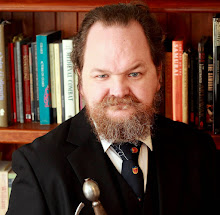
My photo
Either an author who fences, or a fencer who tends to write a lot. I found a passion for writing first, then I found fencing. I also found that the pen and the sword work very well together. The pen may be mightier than the sword but together they are much greater.
Showing posts with label relaxation. Show all posts

Wednesday, September 13, 2017

When is it Too Much: Over-Training

Greetings,

The following subject is one which I personally know a lot about as I have been there quite a few times. This is about pushing yourself hard for a long time, or indeed just pushing yourself too hard. We all push ourselves for our own reasons, but there is a breaking point and we need to be aware of it as it can lead to a real problem if we don't notice it.

Naming

There are at least two different names for this condition, one is Over-Training the other, more common name is Burn-Out. This is when your mind and often the body have had enough. You feel lethargic about going to training, and will make any excuse in the world to skip it. If you find yourself making excuses more than a couple of times a month for not going to training, put yourself on a "watch list" for this condition.

Who is Susceptible?

We are all susceptible to it, indeed all athletes are susceptible to it. The older ones of us are more susceptible to the condition because they feel that they have to push harder to keep up with the younger members of our clubs. This pushing harder, if not maintained by ourselves and our friends can lead to Burn-Out and some real negative effects.

Warning Signs

The warning signs for Over-Training are sometimes subtle and sometimes a little more overt. One of the warning signs has already been described above.

1. Giving excuses for not going to training. This has to happen more than a couple of times a month for it to be a worry. These excuses come in the form of, "I don't feel like it." or "I am not in the mood." or "I would rather do [something else].". These kind of excuses show a problem forming.

2. There are constant clashes between your personal and training schedules, which are stressful.

3. The thought of going to training does not interest you, or fill you at least with a level of interest.

4. At training the drills are not interesting for you or your attention regularly slips.

5. You feel there is no improvement in your level of skill.

If Warning Signs are Ignored...

If you ignore the warning signs and continue to train at the same rate and allow these warning signs to go unheeded you can find yourself in real trouble. Here are some of the results which can happen if you ignore the warning signs.

1. Your excuses take priority over finding reasons to go to training, so you miss more and more. This means you fall further and further behind in your class.

2. The clashes between your training and personal schedules will increase which will only increase your level of stress which will only distract you more at training. This will result in a poor performance at training leading to a feeling of lack of skill.

3. Your lack of interest and attention slips will result in a poor performance at training which will result in you missing vital information about skills. It will also result in a poor performance in drills which will mean people will be less likely to partner with you to train with meaning it is harder to find people to train with.

5. The feeling of a lack of improvement in your skill will affect your performance, which will lead to a plateau and a decrease in skill and then more negativity resulting in a downward spiral of effects.

What should be noted here is there is a distinct downward spiral to the effects of ignoring the warning signs. So in short, don't. Take note of these warning signs as there is something that you can do about it.

What to do?

1. Prevention. Prevention is the best way to deal with this. Recognise the warning signs early and think about what you can do to change what's happening. Change your perspective.
2. Talk to someone. In your class the best person to talk to is your instructor. They should be able to help you with what's going on with you. Even just talking about what's going on will help you. Your instructor should have some good advice as to how to combat your problem, or even prevent it from getting any worse.

3. Find activities outside the interest of a physical kind to relax. Find cross-training activities that will still assist you but are not directly related. Walking is a good example of one of these.

4. Rather than focussing on the physical aspects, change focus and explore other facets. The martial arts regardless of what form always has a wide mind game. Read books about the subject. Investigate the social background to the martial art.

5. Find the social experience behind the physical one. Engage with your classmates on a social level, broaden your knowledge of them and you will find that there are many interesting people out there.

Burn-Out can be more dangerous to a person and their martial arts career and their health than people often give it credit. Through this condition a person can push themselves in to severe bouts of depression and also take a severe toll on their bodies in physical ways as well. Through Over-Training people have destroyed their own martial arts careers simply because they did not know when to step back and have a break, or take a breath. Watch for the signs, get help, take care of yourself.

Cheers,

Henry.

Monday, February 13, 2017

Relax and Fence

Greetings,

We all know that muscles need oxygen, so we need to breathe when we are exercising, so this would be the reason why some time ago I wrote a post about the necessity of standing up straight in the on guard position (http://afencersramblings.blogspot.com.au/2010/06/stand-up-straight-and-relax.html). What you will notice about this post is that there is an element of the relaxation point in here as well. This element will be the focus in this post.

First point, when you are tense, your muscles tense unconsciously. This burns energy, so you are burning fuel without even doing anything. Relaxing will increase your endurance when you fence. Further, when your muscles are tense before action they move slower, when they are relaxed before action they move faster.

When people tense up one of the first things they stop doing when they make an action in fencing is breathing. When you relax, you will breathe properly, this means that your muscles will become oxygenated properly this also means that you will have more endurance. When people tense up another thing they stop doing is thinking and this is never good. The physical elements lead to the psychological elements.

Relax, take a breath and just fence. "Well that's easy for you to say." Why? What is so important? Are you going to die if your opponent hits you? Most of the pressures that are built up, we build up ourselves and it is up to us to remove them. It is not easy and it will take time.

Practice is for practice. This means that you are supposed to try new things. This means that you are supposed to make mistakes. The most important thing is that you learn from those mistakes. If you are not getting hit while bouting at practice, then you are not learning, and you are not progressing. If you have just learnt a new action or skill in a lesson, you are supposed to be trying it out in bouting. Talk to your opponent and tell them what you want to practice; maybe they will want to practice something too and then you can help them.

Release the pressure. Find out what is causing the pressure in your fencing. Find a way to release it. ...

The rest of this article can be found in Un-Blogged: A Fencer's Ramblings by Henry Walker, which is available in paperback from:

Amazon: https://www.amazon.com/Blogged-Ramblings-Henry-Leigh-Walker/dp/098764470X
Booktopia: https://www.booktopia.com.au/un-blogged-henry-leigh-walker/book/9780987644701.html
Among other places...

It is also available in electronic format (pdf) from: https://buy.stripe.com/fZecP419c7CB9VKeUV

... or direct from the author.

Thursday, June 24, 2010

Stand Up Straight and Relax

Greetings, Most of the time when we are told to stand up straight relaxing is not going through our heads. This is usually someone telling us to improve our posture or stand at attention. In these particular situations the body goes rigid and upright. For fencing the two need to be accomodated in order to achieve the most effective on guard, or ward position. Being rigid in the on guard position is detrimental to your fencing. When you are rigid, your muscles are already burning energy and are already tensed. This means that they are not ready for movement which leads you to slower movement, which can decide whether you are struck or not. In order to fight this you need to relax your body, so only those muscles that need to be working are actually working. Standing up straight means that you are standing tall. Your chest is expanded and you have an air of confidence about your stance. Both of these elements are important in the on guard stance. With the chest expanded it is much easier to breathe, this means you have more energy due to the increase in breath. Your muscles are also not tensed as much if you were slouching, this goes especially for those which are over the shoulders. So, the trick is to combine the relaxed but upright position into the on guard position. This may sound like a contradiction, but it is not. First of all, spread your feet to shoulder width, remember to keep the front foot pointed at the opponent. Bend your knees somewhat, but not so much that they become tensed. You ....

The rest of this article can be found in Un-Blogged: A Fencer's Ramblings by Henry Walker, which is available in paperback from:

Amazon: https://www.amazon.com/Blogged-Ramblings-Henry-Leigh-Walker/dp/098764470X
Booktopia: https://www.booktopia.com.au/un-blogged-henry-leigh-walker/book/9780987644701.html
Among other places...

It is also available in electronic format (pdf) from: https://buy.stripe.com/fZecP419c7CB9VKeUV

... or direct from the author.

Tuesday, September 22, 2009

Psychology of Fencing: Things to Consider

Greetings, There are many psychological factors which have a great influence on your fencing. These need to be considered when you are fencing. Before the bout there are aspects which you should take into account, but there are also factors which will impact during the bout. It is important that these things are considered. This blog is more of an introduction to the idea of the psychology of fencing and will introduce some of the aspects that should be considered. It is important to realise that not all of the aspects will be considered here, but it will touch on some important points for consideration. Before a bout there are various things that should be considered. The preparation before a bout with an opponent is important and there are advantages that can be gained before a person steps out on to the field. Some of these things are quite simple and are often overlooked by fencers. The usual thing is that people tend to throw their armour on and then go onto the field. For the more experienced fencers, these other aspects may come normally, but for others, they may not be so natural and thus must be considered as to what needs to be done, rather than just appearing on the field in a state of semi-readiness. Information can be gained about the opponent before the bout which can be of great use. Observe the opponent in previous bouts if you are able to, the skills that they use will tell you something about them. Do they rely on the same techniques each time? Is there any restriction that they have placed upon themselves due to this preference? What gaps does this leave? The handedness of the opponent is also important as this will change how the opponent should be apporached. Are they left-handed or right-handed? This is one that is often forgotten. A left-handed opponent may be able to close certain lines less easily than a right-handed opponent and will approach the opponent differently to a right-handed opponent. The weapons that the opponent chooses to take upon the field is important as this will give you some ideas about the options that they have. This needs to be considered in relation to the weapons that you have chosen to take out on the field. It is not necessary to change your choice in order to match them. This is especially the case if their combination is less comfortable with you. You should take the weapons that you are most comfortable with. What are they wearing? Will their clothing slow them down? What about footwear? Will it restrict their foot movement? Boots will tend to restrict a person's footwork, where as shoes will tend to leave them more free to be able to move about. What does their clothing tell you about them? Does it look well-fitting? This will affect how they will be able to move. The condition of their equipment can also tell you somethings about your opponent. Listen to the announcement of your opponent, are there any titles or positions that have been announced? This can give you some idea of their skill level, and sometimes how to approach the opponent. You should not be frightened if the opponent has impressive titles as everyone has the ability to beat any opponent as long as they use their skills properly. Purely physical aspects of the opponent can also tell you things about them. How tall are they? How long are their limbs? How is this in proportion to their weapon? You should go an introduce yourself to your opponent. The simple handshake can tell you something about their strength, and can also allow you to compare yourself to them physically. Warming up is useful, fencers will stretch and warm their muscles up before the bout. In some instances this is all that they will do, but this leaves a great deal that is not done. Warming up on the physical side should also be the movement of the weapons allowing you to see how they will move and how to follow from one action to another. You should also be considering how you will respond to the actions of the opponent. Pushing all of this to the forebrain will allow you much easier access to it during the bout. The movement of the weapons around will also assist in the mental preparation for the bout, which is also important. The bout before you are supposed to take the field, you should take some time to yourself in order to be able to prepare properly. This is important in order that you are able to relax and prepare properly. Relaxing in fencing has a great benefits that can be attained through its use. This particular aspect covers various things which have already been discussed, but also adds some more into the discussion. Having the ability to relax will allow you to move more freely and do a great deal more. It is important that you consider this both before you take the field and also while you are on the field and engaged with your opponent. ....

The rest of this article can be found in Un-Blogged: A Fencer's Ramblings by Henry Walker, which is available in paperback from:

Amazon: https://www.amazon.com/Blogged-Ramblings-Henry-Leigh-Walker/dp/098764470X
Booktopia: https://www.booktopia.com.au/un-blogged-henry-leigh-walker/book/9780987644701.html
Among other places...

It is also available in electronic format (pdf) from: https://buy.stripe.com/fZecP419c7CB9VKeUV

... or direct from the author.