Greetings,
Ok, I will admit with this blog I am cheating, and a lot. I am reprinting an old article that I wrote sometime ago. It is primarily designed for an SCA (Society for Creative Anachronisms) audience, but much of what is written in there applies just the same. There are quite a few references to the SCA and the way that this group does things. In some ways I hope that this will assist in clearing up some confusion about this particular group also. Anyway, here we go....
Rapier Combat within the SCA is an attempt to recreate one of the civilian forms of combat that existed in the Renaissance period. This form of combat is centred on the rapier and its companions. It is important to realise that it is the rapier that is being focused on otherwise a great deal of confusion will be created.
In recreating this form of combat we use simulated weapons in a semi-competitive combat form. The weapons only differ essentially from the real weapons in that they have a blunt edge, and a rolled tip, which has a rubber stopper over it. The metal blades are very close to the actual weapon in weight and handling characteristics. The fibreglass blades are much lighter than real ones, but can be made in such a way that they do simulate a rapier in a reasonable fashion. Importantly the fibreglass weapons are cheaper to purchase, and are great for starting students.
The combat form itself, in tournaments, is an attempt at recreating the lethality of the rapier in a combat situation, without the blood and burial costs. A win is scored by “rendering one’s opponent disinclined to continue”, this could mean a kill or disarm, or sufficient scratches. The whole body is a target, though the groin area is not deliberately targeted. We are assumed to be wearing civilian attire and as such any cut or thrust has to be judged as if the weapon was real and had hit flesh. This means that a combatant has to be really careful. It is also this reason that a lot of skill rather than brute force goes into this form of combat.
What we do is kept safe by our safety and armour standards. Most importantly amongst this is the control that we instil into our students while they are in training. The best method to keep safe is to teach and learn control. The armour standard is there just to bolster the safety of the combatants.
Where does this form of combat fit into the “medieval” period? Simply, it doesn’t. It is a Renaissance form of combat. Earlier forms of combat using thrusting weapons have been theorised as the predecessors of rapier combat. A lot of the techniques which are used in rapier combat were developed as the rapier did. Cut-and-thrust technique is one of the predecessors of the rapier’s technique and it is from this that a lot of the style was ....
The rest of this article can be found in Un-Blogged: A Fencer's Ramblings by Henry Walker, which is available in paperback from:
Amazon: https://www.amazon.com/Blogged-Ramblings-Henry-Leigh-Walker/dp/098764470X
Booktopia: https://www.booktopia.com.au/un-blogged-henry-leigh-walker/book/9780987644701.html
Among other places...
It is also available in electronic format (pdf) from: https://buy.stripe.com/fZecP419c7CB9VKeUV
... or direct from the author.
About Me
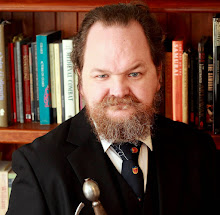
- Henry Walker
- Either an author who fences, or a fencer who tends to write a lot. I found a passion for writing first, then I found fencing. I also found that the pen and the sword work very well together. The pen may be mightier than the sword but together they are much greater.
Monday, January 17, 2011

Sunday, December 5, 2010
Murphy's Laws of Fencing - Henry Version
Greetings,
There have been many different versions of "Murphy's Laws". Each one of these is focussed on the particular topic to which it is directed. These are a way to gain some amusement from these topics while at the same time learning something about the topic. Many of the lists have some hidden truths in them as well.
There should be no surprise that for the most part each particular area will have its own and fencing is no different. There are many variants of Murphy's Laws of fencing. This is a list which I have assembled based on other lists and also on my experiences in fencing. This will have the laws as well as a little bit of an explanation about where this particular law comes from. In this way, it is hoped that these will be a source of amusement and education simultaneously.
1. If the opponent is within distance, so are you.
2. If you have a tempo, so does the opponent.
Laws one and two are about timing and distance, these are the two key concepts in fencing of all kinds. The important thing here is that they are fluid and what you have the opponent can take, or will also have at the same time. Remember to use these to your advantage.
3. The opponent will attack either when you are ready or when you are not.
4. If you are not attacking, expect your oppoenent to be.
If you are on guard in front of your opponent, expect that they will attack at their convenience, and not yours. This means you need to be prepared at all times. If you do not have the opponent on the defensive then he will take the opportunity to attack you.
5. Incoming attacks always have the right of way.
Make defence a priority against incoming attacks, the opportunity for riposte or counter should be secondary to not being struck
6. What can be seen can be hit.
If you leave an opening in your defence, expect it to be struck. Likewise even if it is covered, it can be uncovered and hit.
7. If your attack is going well, your opponent is using second intention.
8. The only plan to rely on is to strike the opponent while not being struck yourself.
9. If you have read your opponent, he has read you.
Plans are awesome in fencing, but remember that the opponent will also have a plan. Expect that your opponent will have some sort of counter to your attack, and you should plan to counter that.
10. Secret Blows, aren't.
11. Ultimate killing moves, aren't.
12. The brilliant technique you just learnt has a counter.
13. There is no complex action which cannot be countered by a simple response.
The botta secreta (secret blow) is effective until it is used, therefore it can never be used. Once it is used people will learn it and counter it. There is no technique in fencing which cannot be countered in some fashion. Usually the ....
The rest of this article can be found in Un-Blogged: A Fencer's Ramblings by Henry Walker, which is available in paperback from:
Amazon: https://www.amazon.com/Blogged-Ramblings-Henry-Leigh-Walker/dp/098764470X
Booktopia: https://www.booktopia.com.au/un-blogged-henry-leigh-walker/book/9780987644701.html
Among other places...
It is also available in electronic format (pdf) from: https://buy.stripe.com/fZecP419c7CB9VKeUV
... or direct from the author.
The rest of this article can be found in Un-Blogged: A Fencer's Ramblings by Henry Walker, which is available in paperback from:
Amazon: https://www.amazon.com/Blogged-Ramblings-Henry-Leigh-Walker/dp/098764470X
Booktopia: https://www.booktopia.com.au/un-blogged-henry-leigh-walker/book/9780987644701.html
Among other places...
It is also available in electronic format (pdf) from: https://buy.stripe.com/fZecP419c7CB9VKeUV
... or direct from the author.
Tuesday, November 9, 2010
Making Plans for Training
Greetings,
A while ago I posted about taking a hold of your training. This was designed to get people to realise that the only person who was going to make it all work was you. This is more or less a follow-up on that one, examining the next step in the process and one that should be considered by fencers at all levels.
Making plans for training is a good thing as it provides advantages, but it needs to be done right. The advantage of making a plan for your training, rather than just filling in holes where they are perceived is that it gives a plan for the future. This provides a direction for the training and a simple process to follow. This particular plan can provide a reason for going to training, and going on a regular basis especially. Where it is filling holes then there is motivation to pick something, where there is a plan, it is just the next lesson in the plan. This provides things to do at training, especially where the motivation may not be there to figure something out to do. This also means that the training is directed at a target.
Targets are important as they give us something to aim at. For some, they can be non-specific, but for most they need to be specific about where it is all going. As far as overall targets are concerned "I want to get better at my fencing." is a target which we all have as who does not want to get better at their fencing? This target does not provide particularly much direction. In order to provide direction, it is useful to be somewhat more specific, this is achieved by dividing goals up into long term and short term targets or goals.
Long term targets are those which will not happen soon and will require a lot of work, and are something to strive toward. These are often hopeful goals of where a person may want to end up sometime down the track. In many ways this is some what "cloud shooting" dreaming about the day that you will hit the top of the ranks in your particular form of fencing. Of course for some, this will be out of reach so this needs to be tempered a little with sensibility. These long term goals should not have a time limit on them anything under a year or even more.
Short term goals are those which will happen sooner than the long term goals, but they may not happen in a couple of months or possibly even a couple of years. These goals need to be realistic in order that you can work toward them in an active fashion. It is these goals that the plan for training is written to actively pursue. Each short term goal should be achieved with a plan. Each one of these short term goals should build to fulfil a long term goal. In this way there is an overall plan and more specific ones as well. The short ....
The rest of this article can be found in Un-Blogged: A Fencer's Ramblings by Henry Walker, which is available in paperback from:
Amazon: https://www.amazon.com/Blogged-Ramblings-Henry-Leigh-Walker/dp/098764470X
Booktopia: https://www.booktopia.com.au/un-blogged-henry-leigh-walker/book/9780987644701.html
Among other places...
It is also available in electronic format (pdf) from: https://buy.stripe.com/fZecP419c7CB9VKeUV
... or direct from the author.
The rest of this article can be found in Un-Blogged: A Fencer's Ramblings by Henry Walker, which is available in paperback from:
Amazon: https://www.amazon.com/Blogged-Ramblings-Henry-Leigh-Walker/dp/098764470X
Booktopia: https://www.booktopia.com.au/un-blogged-henry-leigh-walker/book/9780987644701.html
Among other places...
It is also available in electronic format (pdf) from: https://buy.stripe.com/fZecP419c7CB9VKeUV
... or direct from the author.
Monday, November 1, 2010
Musashi for the Rapier Combatant: Adventures in Cross-Training
Greetings,
Musashi for the rapier combatant? What is he on about? These are the first two questions that I would expect to be asked with regard to this particular topic. The idea of this blog is to get people thinking about other resources that they might find useful in their study of swordplay. I have actually already written an article entitled "Musashi for the Rapier Combatant" and I was tempted to simply re-print that article here. Instead I have decided to go through the approach that led me to such a conclusion and the article that resulted.
"Let the Gaze Be Broad" is one of the most used sayings found in Musashi's book Go Rin No Sho, or The Book of Five Rings. From Musashi's point of view it is about being aware of the opponent and also aware of your surroundings when facing an opponent. For the purposes of this particular discussion it is also about being aware of the resources available to you in your research.
People tend to approach the research of fencing and swordplay in general from one of two points of view, a narrow view or a broad view of things. Each one of these approaches has advantages and disadvantages. They are also useful for different things depending on the desired outcome of the particular research.
For the narrow view, people get caught up with the importance of a culturally-centric, weapon-centric, or even "school"-centric approach in their approach. The advantage of this is that they are totally focused on their material and will go into all of the finer details in their particular approach. One problem is that if they are hampered by the source material, being a translation issue or an availability, then their research will stop. Every researcher has been here, "I could really do with studying "X" but it is a) written in a language I don't speak or b) simply is not available." Another problem is that they do not experience swordplay from a broad point of view and thus miss the overall picture. For the researcher with a broad point of view, this is less of an issue.
The broad point of view looks at all of the source material that is available and thus has much more to look at. The wealth of information can be both an advantage and a disadvantage. The advantage being the quantity of material available and the disadvantage being that there is so much of it that research on a particular topic can last forever and never really finish. The advantage of the broad point of view is that this researcher is able to compare and contrast, and get a view of topics from an overall perspective rather than a focused one. The researcher with the broad point of view is able to use resources from different places in order to build his research and this can lead to using some resources of unexpected usefulness.
There are resources out there which on the surface look like that they will be of no use to the researcher of swordplay. One of the obvious examples for the researcher of rapier combat is the usefulness of sport fencing materials. The movements expressed in these texts can be quite useful, but the real value is in the drills and concepts which are most useful. From an even broader point of view, you need to look at ....
The rest of this article can be found in Un-Blogged: A Fencer's Ramblings by Henry Walker, which is available in paperback from:
Amazon: https://www.amazon.com/Blogged-Ramblings-Henry-Leigh-Walker/dp/098764470X
Booktopia: https://www.booktopia.com.au/un-blogged-henry-leigh-walker/book/9780987644701.html
Among other places...
It is also available in electronic format (pdf) from: https://buy.stripe.com/fZecP419c7CB9VKeUV
... or direct from the author.
The rest of this article can be found in Un-Blogged: A Fencer's Ramblings by Henry Walker, which is available in paperback from:
Amazon: https://www.amazon.com/Blogged-Ramblings-Henry-Leigh-Walker/dp/098764470X
Booktopia: https://www.booktopia.com.au/un-blogged-henry-leigh-walker/book/9780987644701.html
Among other places...
It is also available in electronic format (pdf) from: https://buy.stripe.com/fZecP419c7CB9VKeUV
... or direct from the author.
Monday, October 11, 2010
Dedication... too much to ask?
Greetings,
The question of dedication to something is something which will come up in every person's life. With regard to fencing, indeed in all its forms, it is an especially important one and one that needs to be addressed. Is it too much to ask for our students and teachers to be dedicated to what they are doing? What does it mean to be dedicated? This blog will investigate the idea of whether or not it is too much to ask a student or teacher to be dedicated to what they are doing.
First of all it is important to figure out what is meant by "dedication". There are many grades of this particular word and many different interpretations that may be used. For some dedication brings ideas about travelling vast distances in horrible weather in order to get somewhere. For others it simply means that they always put their mind to a single task. With regard to fencing and this blog, there is a mid-point between these two.
Dedication means putting in the effort in order to get somewhere and use the teaching that the teacher has so generously supplied. It is also about being regular to training and putting in the effort while being present at the training session. Sure, it is understood that things do not always go the way that they are supposed to. Injuries and illnesses will hamper the ability of the fencer, but aside from these there are certain things that should be expected from the student.
Most of the things that people are dedicated to in the modern world are those things which are most relevant to their existence. For example, people go to work each day and do what they need to do because this is relevant to their existence. So, with this in mind, could the fencer be on the wrong track as skill with a sword in the modern world is not particularly relevant? Can this be used as a valid reason for the student to be slack or the teacher to not give the students their full attention? This is clearly not the case. If the person has decided that fencing is what they want to do, and it is not just another hobby, then a certain level of dedication should be able to be expected.
Expectations are something which we have put on us and also are personally placed. The athletically gifted individual has a great advantage over someone who is not so gifted, it could be said that this person has a lot of potential. The same could be said of a person who picks skills up quickly and is able to put them into practice. Both of these people would be expected to do well, but only if they are willing to put in the work. Regardless of a student's potential, the student ....
The rest of this article can be found in Un-Blogged: A Fencer's Ramblings by Henry Walker, which is available in paperback from:
Amazon: https://www.amazon.com/Blogged-Ramblings-Henry-Leigh-Walker/dp/098764470X
Booktopia: https://www.booktopia.com.au/un-blogged-henry-leigh-walker/book/9780987644701.html
Among other places...
It is also available in electronic format (pdf) from: https://buy.stripe.com/fZecP419c7CB9VKeUV
... or direct from the author.
The rest of this article can be found in Un-Blogged: A Fencer's Ramblings by Henry Walker, which is available in paperback from:
Amazon: https://www.amazon.com/Blogged-Ramblings-Henry-Leigh-Walker/dp/098764470X
Booktopia: https://www.booktopia.com.au/un-blogged-henry-leigh-walker/book/9780987644701.html
Among other places...
It is also available in electronic format (pdf) from: https://buy.stripe.com/fZecP419c7CB9VKeUV
... or direct from the author.
Saturday, September 18, 2010
Taking a Hold of Your Training
Greetings,
There is a time in each person's fencing career when they need to take a hold of their own training. What this means is that the fencer needs to take hold of the direction in which the training goes. This blog is designed to address this particular concept and present some ideas about how each fencer can take a hold of their own training and thus push it in a direction which interests them.
The first thing that each fencer needs to realise is that training is actually a very personal thing and that the fencer is the real person who gets benefit out of training. Sure, the teacher or coach may get some satisfaction out of the progress made by the student, but in the end it is really up to the student. This is the most important thing and the reason why eventually each fencer needs to take ownership of their own training and give it some personal direction.
To begin with the teacher supplies the direction because the fencer does not understand those skills that he or she will require. In this particular element the teacher will supply the basic elements of training and through such the basic skills which are required of the fencer. Once these basics have been learnt then the fencer needs to have some idea about where they want to go after the basics. The new direction will always be based on the basic skills which the fencer has learnt, but will tend to go in a direction different and more personal than previously.
There are many different directions that the training can go once the basics have been learnt. For the more Renaissance oriented fencer there is the question of whether a particular school or nationality will be the focus. Or the fencer may focus toward a particular skill-set or weapon combination. Or the fencer may even decide that a particular manual may be their focus. Each one of these gives different options for the fencer and gives a slightly different direction. The important thing in this particular situation is that the fencer has to choose the direction. The teacher may suggest or encourage, but in the end it is the fencer's decision.
For the fencer who is primarily training alone the taking a hold of training has to happen a lot sooner. Firstly this is because it is only the fencer who can really motivate himself in order to do the training in the first place. In this particular situation there really is no teacher or coach that can give the direction for the fencer. Other teachers or fencers may supply suggestions, but in the end it is all up to the fencer. In this particular situation the fencer needs to decide where he is going and what to work on next as there is no one else to supply the plan of where to go.
In order to continue to progress the fencer requires some sort of direction. Even if that direction is merely to improve the skills that he has already, still this is a direction. The best direction for a fencer to go in is one which the fencer is self-motivated to go in. The teacher can supply ideas and encouragement, but in the end the fencer must make the decision and then stick to it. This requires the fencer to have the motivation to start and ....
The rest of this article can be found in Un-Blogged: A Fencer's Ramblings by Henry Walker, which is available in paperback from:
Amazon: https://www.amazon.com/Blogged-Ramblings-Henry-Leigh-Walker/dp/098764470X
Booktopia: https://www.booktopia.com.au/un-blogged-henry-leigh-walker/book/9780987644701.html
Among other places...
It is also available in electronic format (pdf) from: https://buy.stripe.com/fZecP419c7CB9VKeUV
... or direct from the author.
The rest of this article can be found in Un-Blogged: A Fencer's Ramblings by Henry Walker, which is available in paperback from:
Amazon: https://www.amazon.com/Blogged-Ramblings-Henry-Leigh-Walker/dp/098764470X
Booktopia: https://www.booktopia.com.au/un-blogged-henry-leigh-walker/book/9780987644701.html
Among other places...
It is also available in electronic format (pdf) from: https://buy.stripe.com/fZecP419c7CB9VKeUV
... or direct from the author.
Thursday, June 24, 2010
Stand Up Straight and Relax
Greetings,
Most of the time when we are told to stand up straight relaxing is not going through our heads. This is usually someone telling us to improve our posture or stand at attention. In these particular situations the body goes rigid and upright. For fencing the two need to be accomodated in order to achieve the most effective on guard, or ward position.
Being rigid in the on guard position is detrimental to your fencing. When you are rigid, your muscles are already burning energy and are already tensed. This means that they are not ready for movement which leads you to slower movement, which can decide whether you are struck or not. In order to fight this you need to relax your body, so only those muscles that need to be working are actually working.
Standing up straight means that you are standing tall. Your chest is expanded and you have an air of confidence about your stance. Both of these elements are important in the on guard stance. With the chest expanded it is much easier to breathe, this means you have more energy due to the increase in breath. Your muscles are also not tensed as much if you were slouching, this goes especially for those which are over the shoulders.
So, the trick is to combine the relaxed but upright position into the on guard position. This may sound like a contradiction, but it is not. First of all, spread your feet to shoulder width, remember to keep the front foot pointed at the opponent. Bend your knees somewhat, but not so much that they become tensed. You ....
The rest of this article can be found in Un-Blogged: A Fencer's Ramblings by Henry Walker, which is available in paperback from:
Amazon: https://www.amazon.com/Blogged-Ramblings-Henry-Leigh-Walker/dp/098764470X
Booktopia: https://www.booktopia.com.au/un-blogged-henry-leigh-walker/book/9780987644701.html
Among other places...
It is also available in electronic format (pdf) from: https://buy.stripe.com/fZecP419c7CB9VKeUV
... or direct from the author.
The rest of this article can be found in Un-Blogged: A Fencer's Ramblings by Henry Walker, which is available in paperback from:
Amazon: https://www.amazon.com/Blogged-Ramblings-Henry-Leigh-Walker/dp/098764470X
Booktopia: https://www.booktopia.com.au/un-blogged-henry-leigh-walker/book/9780987644701.html
Among other places...
It is also available in electronic format (pdf) from: https://buy.stripe.com/fZecP419c7CB9VKeUV
... or direct from the author.
Subscribe to:
Posts (Atom)