About Me

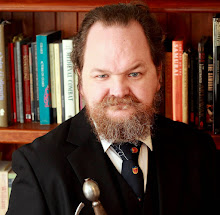
My photo
Either an author who fences, or a fencer who tends to write a lot. I found a passion for writing first, then I found fencing. I also found that the pen and the sword work very well together. The pen may be mightier than the sword but together they are much greater.
Showing posts with label time and distance. Show all posts

Wednesday, June 19, 2024

Extra-Curricular Activities: Gaming Training

 Greetings,

Yes, it has been a while since I have posted here, it's because I have been busy writing articles for my Patreon page where most of my writing goes. However, this was a thought that popped into my mind as I was doing one of my regular walks. Just a thought about some extra-curricular training I do every now and then, and it does help to keep the brain sharp-er.

Likely you have heard of the concept of "brain training." In essence this is using your brain to focus on aspects you will be doing in a physical sense to enhance your brain's pathways you will use when using those skills. There was a study of basketball players (I believe). One group trained physically, another group was told to read, think, and watch basketball, another group was told not to do anything at all. In the end both the group who were physically training and the group who were training their brains performed the best, and about equal according to the study. 

"So, get on with it. What has all of this got to do with fencing?" I am getting to that part, trust me. It's called "A Fencer's Ramblings" for a reason, you know.

Sometimes training will be called off due to weather, or I can't make it due to health reasons (chronic illness and chronic pain sucks), or several other reasons. So, do I just sit at home and veg out? No, that's just not "a thing" with me. I am always writing about fencing, or something like it. So, I am always training my brain, adding new concepts, examining new ideas, and reinforcing old ones.

I play console games in my "down-time" I have a thing for first-person shooters, and some fighting games. It is the fighting games we are going to talk about, more specifically the Soul Calibur series. Why this series in particular? Well for starters, it is a weapon-based fighting game, and I have been playing it since its first version. What has it got to do with fencing? 

Artist: Frater
Source: https://www.goodfon.com/games/wallpaper-witcher-soulcalibur-vi-soulcalibur-6-bandai-namco-entertainm.html

Time and Distance; every character's moves, and the successful use of their weapons is still based on the notions of Time and Distance. 

Yes, a lot of people get their characters and "button mash" hoping they will hit the right buttons when they are near enough to the opponent. I think this is not unlike the new fencer who simply thrusts out or does what they can when they first come out to fence. Their actions are random and the chances of success are a flip of a coin.

I look at the character and plan, based on the weapon and their moves. I use the move at the appropriate Distance for the character. I strike the button at the appropriate Time depending on how quick the character is in comparison to the opponent. I have been doing this for a while, and enjoy the game more when I can plan my moves, rather than smash the buttons and hope for the best.

What is the conclusion? Brain training is available where you find it. Individual training is available where you find it, or where you create it. The only motivation required to achieve this is yours. Take a look around, I am sure you can find something fencing related to improve your current "fencing fitness."

Cheers,

Henry.

Saturday, October 28, 2023

Let's Talk About Space

Greetings,
I am going to apologise to all the astronomers and astrologers, that's not the sort of space that I am talking about. I am talking about the space in which a person fences with another. This can be the training area, or it can be a formalised arena such as a list field.
There are considerations that need to be made concerning this concept of space, especially in regard to the concept of Distance as it relates to space in this context, as will be seen as this discussion progresses. This is because Distance occupies space. The Distance between two combatants occupies a certain amount of space, and this is contained within the overall space in which they are fencing, or training.
For simplification, and for focus, we are going to focus on the space within an arena (or a list field) as this is where this concept becomes most important. The individual who can "occupy" the space the best is the one who will dominate the space. This will give the individual the ability to move the other around the space, and by virtue of this ability, control the Distance between the two individuals. 
Now we need to break this down a little bit, isolate some of the aspects and how they apply to see how we can use this to our advantage...

Read the rest here: https://www.patreon.com/posts/lets-talk-about-91803789

Saturday, March 13, 2021

Learn Your Lessons Well

 Greetings,

The idea for this post was sparked by a student of mine, Helen Gilbert. I am writing the post, but the idea and the foundation is all hers. It is something that we should all consider, especially in approaching those parts of lessons, and techniques which we may not enjoy or prefer. The well-rounded fencer always has the advantage.

There are fencers who fight with a quick pace, fast thrusts, moving quickly all of the time.
There are fencers who fight with a slow pace, slow thrusts, moving slowly all of the time.
There are fencers who fight with variable pace, who vary the speed of their thrusts and the speed of their movement.

There are fencers who prefer to fight at distance, preferring to use long thrusts and lunges.
There are fencers who prefer to fight up close, preferring to close with the opponent and cut.
There are fencers who can fight both at distance and up close depending on what the situation requires and what is to their advantage.

In both of the cases which have been described above, the fencer who can vary their speed has the advantage because they can out-pace the slower fencer, and use Time and slowness to defeat the faster fencer. This concerns using Time, and Timing, against the opponent to put them where they are uncomfortable, likewise it does not matter what speed the opponent fences at the same fencer is comfortable at the variable speeds demonstrated. The same can be said for the use of Distance. A fencer who can just as easily fight at distance and close has the advantage over the fencer who prefers one, as they can close on the one who prefers distance and remain at distance from the one who prefers to close.

The same situation can be found with blade engagement where there are those who do not like to use blade engagement, thus prefer Absence of Blade, likewise there are those who rely on the contact of blades in blade engagement. The true advantage lies with the fencer who can use both sets of techniques and can use them to their advantage in the situation that they find themselves in.

Everyone has favourite and favoured techniques and they will use them more often than other techniques. This does not mean they should not be conversant with the other techniques which they do not prefer. The fencer should always learn all of their lessons to the same degree so they can pick and choose, using the technique which is most suitable to the situation at hand, and where they can find an advantage.

There is a rather hefty quote that you can find in Thibault's Academy of the Sword at the beginning of "Chapter Eighteen: On Cuts to the Right Arm" that I will paraphrase, in which he discusses a garden and the diversity of herbs, flowers and other plants in it. He eventually comes to the point, how one must enjoy all the different techniques that fencing has to offer and not focus on particular techniques.

The true fencer is the one who has studied all parts of their art and practised them, so they are familiar with all of their techniques. This way they can use whatever technique is required at the time. A fencer who achieves this can deal with whatever problem the opponent presents to them, and especially whatever preference the opponent presents. This fencer is marked as the most difficult and challenging fencer to face.

Cheers,

Henry.

Sunday, December 5, 2010

Murphy's Laws of Fencing - Henry Version

Greetings, There have been many different versions of "Murphy's Laws". Each one of these is focussed on the particular topic to which it is directed. These are a way to gain some amusement from these topics while at the same time learning something about the topic. Many of the lists have some hidden truths in them as well. There should be no surprise that for the most part each particular area will have its own and fencing is no different. There are many variants of Murphy's Laws of fencing. This is a list which I have assembled based on other lists and also on my experiences in fencing. This will have the laws as well as a little bit of an explanation about where this particular law comes from. In this way, it is hoped that these will be a source of amusement and education simultaneously. 1. If the opponent is within distance, so are you. 2. If you have a tempo, so does the opponent. Laws one and two are about timing and distance, these are the two key concepts in fencing of all kinds. The important thing here is that they are fluid and what you have the opponent can take, or will also have at the same time. Remember to use these to your advantage. 3. The opponent will attack either when you are ready or when you are not. 4. If you are not attacking, expect your oppoenent to be. If you are on guard in front of your opponent, expect that they will attack at their convenience, and not yours. This means you need to be prepared at all times. If you do not have the opponent on the defensive then he will take the opportunity to attack you. 5. Incoming attacks always have the right of way. Make defence a priority against incoming attacks, the opportunity for riposte or counter should be secondary to not being struck 6. What can be seen can be hit. If you leave an opening in your defence, expect it to be struck. Likewise even if it is covered, it can be uncovered and hit. 7. If your attack is going well, your opponent is using second intention. 8. The only plan to rely on is to strike the opponent while not being struck yourself. 9. If you have read your opponent, he has read you. Plans are awesome in fencing, but remember that the opponent will also have a plan. Expect that your opponent will have some sort of counter to your attack, and you should plan to counter that. 10. Secret Blows, aren't. 11. Ultimate killing moves, aren't. 12. The brilliant technique you just learnt has a counter. 13. There is no complex action which cannot be countered by a simple response. The botta secreta (secret blow) is effective until it is used, therefore it can never be used. Once it is used people will learn it and counter it. There is no technique in fencing which cannot be countered in some fashion. Usually the ....

The rest of this article can be found in Un-Blogged: A Fencer's Ramblings by Henry Walker, which is available in paperback from:

Amazon: https://www.amazon.com/Blogged-Ramblings-Henry-Leigh-Walker/dp/098764470X
Booktopia: https://www.booktopia.com.au/un-blogged-henry-leigh-walker/book/9780987644701.html
Among other places...

It is also available in electronic format (pdf) from: https://buy.stripe.com/fZecP419c7CB9VKeUV

... or direct from the author.

Wednesday, October 28, 2009

Time and Distance

Greetings, This blog is about time and distance as will be noted by the title. This will be a discussion about these concepts and will examine the various elements involved in each of them. First the importance of these concepts to fencing will be discussed. Along with an important realisation about them that must be highlighted in order to understand them properly. Following this will be a discussion of each one of the concepts in some detail in order that each one of the parts of time and distance can be understood. Time and Distance are key concepts in fencing and indeed all martial arts. Any form of martial arts which involves the engagement of two combatants with one another will involve elements of time and distance. They are so important that they should be included in some way in every lesson that is taught in fencing. They are also important to the development of the fencer as with out them their understanding of what they are doing will be severely limited. Only with a complete understanding of these concepts and how they apply to fencing will the fencer be able to excel. One of the most important realisations of these concepts is that they are relative and not concrete. This means that they cannot be measured in increments of seconds for time or metres or feet and inches for distance. Time is also known as tempo, in many ways these two terms are interchangeable, so when one is spoken about so is the other. Tempo is about the relative movements of the individual and the opponent. This is important as often time is discussed only with the movement of the individual. It is important that the moevements of the opponent must also be taken into account in order to understand this principle completely. It was stated by Di Grassi that every movement is accomplished in time. What he is stating is that each movement takes time. This is a basic understanding of the concept, but it in some way fails to bring to light that it is not only movement that must be taken into account but stillness as well. A motion of stillness, or the lack of movement is also a tempo. Thus when counting the tempos it is important that an action must be completed and there is a stillness there. For example, the parry and riposte is counted as such, there is one tempo for the start of the movement, a stillness. There is a tempo involved in the action of the parry, a movement. There is a tempo in the completion of the parry a stillness. There is a tempo involved in the movement of the riposte, and finally a tempo in the completion of the parry, a stillness. In this there will be counted five tempos used. Time is a concept, timing is the action performed in relation to an opponent. In this it must be noted that while time describes all actions in fencing, timing discusses the actions of fencing in relation to an opponent's actions. It is important that both of these are understood. Time is the overall concept but, timing is also important as it describes the movements in action against an opponent who is also moving. With regard to this time must be understood as a concept, while timing must be felt while fencing against an opponent. There are some important elements that must be understood with regard to time in order for it to be completely understood. In general for the starting student most of their actions as described by the teacher will be completed in dui tempo, or double time. This means that they will be encouraged to make a solid defence before attempting to make any sort of counter against their opponent. This ensures that the combatant is safe from their opponent's attack before any counter is made. Stesso tempo, often called single time, literally means self time. This is an action which combines the action of defence and counter-attack in a single motion, hence being referred to as single time. This motion is often developed from the smooth motion of a fencer who knows dui tempo well and is able to combine the two actions into a single one. What is important with regard to this concept is that there is a defence made, but it is done in combination with the counter-offensive action. Contra-tempo, means against time. This means that an attack is launched when the fencer should be parrying the opponent's attack. What is important in this particular concept is that the attack is not launched without any concept of defence, the defence is usually ensured by displacement of the body or the blade engagement witht the opponent. Without this defence in place it would be highly likely that both fencers will be struck. Mezzo tempo, or half time, is one of the more difficult concepts to understand. What it means is that an action is performed in the middle of the opponent's action in order to counter it. This is often confused with contra-tempo. The most common action performed in mezzo tempo is an attack to the opponent's hand or arm as it is moved forward in the attack, a stop hit to this part of the body. This effectively counters the opponent's attack before it is completed. This is the primary goal of the mezzo tempo action, to counter the action of the opponent before it is completed. The slowest form of time is dui tempo as more tempos are spent in its action, but it is also the safest from the straight attack. Stesso tempo is highly effective when used and very fast as it uses very few tempos in its execution. The same could be said of contra-tempo as a similar action is often being performed when compared to stesso tempo. Of the times mezzo tempo is actually the fastest as it counters the opponent's action before it is allowed to be completed, this in half time. What needs to be taken into account with regard to these concepts is how they affect fencing and how each of them use time to their advantage, and what each advantage gains the opponent. This is one of the keys to developing timing.

....

The rest of this article can be found in Un-Blogged: A Fencer's Ramblings by Henry Walker, which is available in paperback from:

Amazon: https://www.amazon.com/Blogged-Ramblings-Henry-Leigh-Walker/dp/098764470X
Booktopia: https://www.booktopia.com.au/un-blogged-henry-leigh-walker/book/9780987644701.html
Among other places...

It is also available in electronic format (pdf) from: https://buy.stripe.com/fZecP419c7CB9VKeUV

... or direct from the author.

Tuesday, September 1, 2009

Saviolo Part I: Principles

Greetings, First, I must offer an apology to all my modern and classical fencing readers as this particular blog is more aimed at the Renaissance fencer in the readership. Saviolo is a master of particular interest to myself as his method appealed to me. I will be presenting in this blog some of the research that I have made on Saviolo giving some information about his method and how it was applied. Various points will be made about this particular system which will be of interest to various people, and I hope that the information present will be of interest to my various readers. All of the references in this blog come straight from Saviolo's treatise. Vincentio Saviolo is a master of the Renaissance period, more specifically he is one of the Elizabethan period. He taught in London and held a school at Blackfriars, which is on the south bank of the River Thames. Of especial note is that the same region held a theatre which was sold to William Shakespeare. Of particular interest to me is that the chap who sold the property to Shakespeare was a chap named Henry Walker. Saviolo published his own Treatise "His Practice in Two Bookes" in 1595, and his name is present in the works of George Silver who was a contemporary of Saviolo. Saviolo's treatise is a composite treatise encompassing principles from three different schools of thought brought together to form a single system. This in and of itself makes Saviolo's technique interesting and of note to the Renaissance fencer. The treatise and the information contained within is presented as a discussion between a master and his student. In this particular case it is Saviolo talking with his student Luke. Unlike many manuals the principles are not presented singularly but are presented within the text as a practical representation of what a person should do against their opponent. There are some which are elicidated simply, but for the most part they are within the discussion between the master and the student. The three schools of thought from which Saviolo draws his information are the Italian, Spanish and German. Each one of these is used for a particular application and then are combined together to form the overall system. The Italian school is present in Saviolo's use of the thrust, and more to the point, the dominance of the thrust over the cut in the use of the rapier. The footwork is primarily circular in order to gain an advantage over the opponent due to the angle of one opponent to another, thus presenting principles present in the Spanish school. Finally, the method of cutting presented by Saviolo is designed to defeat the opponent while defending at the same time and also before the opponent has time to respond, thus presenting elements from the German school. This makes for what should be a very complex system. Externally the system is quite simple, but internally once deeper reading is made of it, the hidden complexity within the system is exposed. In order to understand both the simplicity and complexity of the system presented by Saviolo, it is first important to examine the general principles upon which the system is based. The first of these principles is about entropy and emotional control. Entropy is using only the amount of energy that is required in order to achieve an objective, in this particular case it is to defeat the opponent.
“this I would advise you, when you would make these passages, or put your weapon under your enemies, that you doe them not in vaine nor without some advauntage.”
This passage states that the combatant should not perform actions without gaining some advantage over the opponent. The energy of the combatant is thus maintained and not used for actions which would not gain him some advantage. In achieving this particular principle, the combatant will have a larger store of energy and thus will be able to last longer against the opponent than if he used energy to perform actions which did not achieve something. One place where this can be present is in the use of fury in order to defeat the opponent, thus Saviolo warns against this.
“Wherefore as well in this ward as in the other, take heede that you suffer not your selfe to bee blinded and carried awaie with rage and furie.”
 Bibliography Saviolo, V. (1595) His Practice in Two Books

....

The rest of this article can be found in Un-Blogged: A Fencer's Ramblings by Henry Walker, which is available in paperback from:

Amazon: https://www.amazon.com/Blogged-Ramblings-Henry-Leigh-Walker/dp/098764470X
Booktopia: https://www.booktopia.com.au/un-blogged-henry-leigh-walker/book/9780987644701.html
Among other places...

It is also available in electronic format (pdf) from: https://buy.stripe.com/fZecP419c7CB9VKeUV

... or direct from the author.

Tuesday, August 18, 2009

Sword Parry and Its Execution

Greetings,
The sword parry is one of the primary defences of the fencer in all forms of fencing, be it rapier, sport fencing, or even the katana. This is a technique which is taught in the earlier parts of a person's fencing career and it is important that the parry is done properly in order for it to be effective. This blog will be discussing the execution of the parry and some points about such. For the first time this blog will be including some diagrams in order to assist the discussion.
A sword parry is a defensive use of the weapon in order to stop or deflect an opponent's incoming attack. This technique can be used effectively against both thrusts and cuts. The technique in principle is relatively easy. It involves placing your blade in a position where you will intercept your opponent's weapon before it strikes you in order to stop or deflect their attack. The principle is relatively easy, the execution of the thrust can be somewhat more complex.
Much of the purpose of the parry has been discussed above, but we must look at it a little deeper. The primary purpose of the parry is to defend against an opponent's attack. This must be realised in its execution, that our safety against the opponent's attack is the primary purpose of the parry. The setting up for a riposte or following action needs to be a secondary consideration in comparison to the defence that the parry supplies. This needs to be realised and will affect the execution of the parry depending on what your considered primary purpose is. This will be revealed in a later part of the discussion on this particular subject.
With regard to sword parries there are many different kinds. This blog will be focussing on the simple, or standard parries. There are other parries available to us, such as hanging parries. These work on very much the same principles as the standard ones, but due to their different execution, they will not be addressed in any sort of detail. The standard parries will also be the focus due to their commonality with the various forms of fencing which are available to the fencer.
There are four lines which need to be covered, and two parries per line, one with the true edge and one with the false edge. In all cases the parry must cover the line, in order to be effective as a parry, and this relies upon proper execution of the parry. In all cases it is important to examine the position of the hand in relation to that of the parry. In the case of true edge parries the knuckles of the fingers should be facing the opponent's blade. In a false edge parry it should be the knuckle of the thumb which is facing the opponent's blade. This will ensure that you have an edge to the opponent's blade. The hand position in the parry is vital and must be considered. There is the question about whether a parry needs to be done with the edge or whether it can be done with the flat of the blade. The edge of the sword is much stronger than that of the flat, and thus makes a more secure parry. This being said, there are parries which when done with the flat are quite effective, but as a rule it is better that the parry is done with the edge.
The next question that comes up is whether the parry should be done as a beat or with opposition. Both of the methods have their advantages and disadvantages, and these will be discussed. The principle of the beat parry is that the edge of the blade is struck against the opponent's moving it away by the impact of one blade against the other. This is an effective technique because it forces the opponent's blade off-line by the shock allowing the fencer to make a counter-attack against the opponent. The disadvantage of this technique is because the blades do not remain in contact, knowledge of the location of the opponent's blade through the use of senso di ferro is lost. It is also relatively easy for the opponent to use the impact to roll the blade back on line. The parry with opposition contacts and prevents the opponent's blade from contacting its target by placing a wall against the attack, also forcing the opponent's blade off-line. The advantage of this technique is that due to remaining in contact with the opponent's blade it is easy to know exactly where the opponent's blade is. This also allows for the use of techniques which rely upon blade engagement. The greatest disadvantage of this particular technique is that it can allow for a slower riposte, and also gives the opponent some senso di ferro by the contact between the weapons. In general, while the beat parry is easier to execute and learn, the parry with opposition tends to lead to more advantages and more options for the fencer. This being said, both techniques can be used effectively.
In the execution of the parry, it is important to keep the parry small. The opponent's blade only needs to be deflected enough, and just enough to avoid striking the fencer. The blade does not have to be forced particularly far in order to be forced away from its intended target. This means that in execution the parry needs to be minimalist in its execution. There are a couple of reasons for this. The first reason is one of entropy. A smaller parry takes less energy to perform, this allows the fencer to conserve energy for future actions which require more energy. Another reason for keeping the parry small is that it will take less time to execute, thus giving the fencer more time in order to perform other actions against the opponent. The final reason that will be discussed has a great deal to do with the action that follows the parry once it is performed. If a parry is kept small, it is much easier to keep your point on line against the opponent, and thus make any counter-offensive action faster and more effective. With these reasons in place it is clearly advantageous for the parry to be made as small as possible.
....

The rest of this article can be found in Un-Blogged: A Fencer's Ramblings by Henry Walker, which is available in paperback from:

Amazon: https://www.amazon.com/Blogged-Ramblings-Henry-Leigh-Walker/dp/098764470X
Booktopia: https://www.booktopia.com.au/un-blogged-henry-leigh-walker/book/9780987644701.html
Among other places...

It is also available in electronic format (pdf) from: https://buy.stripe.com/fZecP419c7CB9VKeUV

... or direct from the author.