Greetings,
Sometime ago I mentioned that I would post something of my own rules of fencing and I have had a long think about this particular subject. Much like the Jethro Gibbs (NCIS) list mine is a work in progress and tends to grow and change somewhat as I find new things to add. In order to reduce this I have decided that I will talk about my most essential rules in this blog.
1. Don't get hit - defence is most important.
2. Hit the opponent - only real way to victory.
All the other rules that I have come up with are supplementary to these two and assist in some way to achieve them. As I have mentioned above I have a much longer list of rules also about 20 in number which I have assembled from various experiences in my fencing career to date. I use them here and there in training my students and obviously during fencing. Rather than listing all the ones that I have to date, there is a more useful purpose that can be gained from this discussion.
My personal piece of advice is that each fencer should develop their own list of rules to follow. In this at least one thing is most important, they will not be set in stone, they will change. You need to be ...
The rest of this article can be found in Un-Blogged: A Fencer's Ramblings by Henry Walker, which is available in paperback from:
Amazon: https://www.amazon.com/Blogged-Ramblings-Henry-Leigh-Walker/dp/098764470X
Booktopia: https://www.booktopia.com.au/un-blogged-henry-leigh-walker/book/9780987644701.html
Among other places...
It is also available in electronic format (pdf) from: https://buy.stripe.com/fZecP419c7CB9VKeUV
... or direct from the author.
About Me
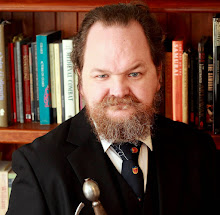
- Henry Walker
- Either an author who fences, or a fencer who tends to write a lot. I found a passion for writing first, then I found fencing. I also found that the pen and the sword work very well together. The pen may be mightier than the sword but together they are much greater.
Wednesday, February 15, 2012

Sunday, January 8, 2012
Why Do I Research?
Greetings,
Anybody who knows me at all will know that I tend to get into my research projects heavily. I tend to find big projects which are disguised as little ones and then feel that I have to complete them in order to feel that I have done the job properly. I don't tend to do things small and tend to research things to death, of course as would be expected there is a cause behind this. The reasons for this can be found in my own history and interests.
I have had a long-term interest in things historical and in order to understand where this comes from I need to explain a little of my own history. I suppose my first interest in history is a result of the influence of my parents, especially my father who is quite well-read and who have encouraged me to follow my interests in the field. My first real inspiration for history can be found in my first trip abroad.
In 1981, my parents took me and my sister over to the United Kingdom we explored England, Scotland and Ireland. We saw great and popular sites such as the Tower of London, Windsor Castle and the British Museum. What an eye-opener. The trip to Ireland was more of a personal trip and we spent some time in a graveyard scrubbing grave stones looking for ancestors. Now, sounds pretty boring, I can tell you it was quite the opposite, nothing like finding your roots to inspire a deeper love of history. So, this sewed the seeds of my interest, and it was only to be increased as I grew older.
My sixth year of primary school was also a turning point for me as I had a teacher who encouraged my interest in history so I went with it, investing time and energy in my assignments on various topics. Most male kids at this age wanted to be astronauts, policemen or in the army. Me, I decided at that point in time that history would be my thing and I decided that I wanted to become a historian. It would give me an excuse to research periods of history and have some sort of tangible result as a purpose, needless to say the following years would just increase this desire.
From my this point in time I would attempt to tailor all of my education with an historical bend to it. I took History in grade 10, and would follow this up with both Ancient and Modern History in grade 11 and 12. The other subjects were merely means to an end, to allow me to pursue my love of history even better. This was only to be advanced when I found a social group interested in medieval history.
I joined the SCA (Society for Creative Anachronism) in grade 12. This group is focused on the years 500 to 1600AD or thereabouts so suited me down to the ground. Now not only could I study history but I could go about putting some of my research into practice. Talk about finding a niche. I am still in this group and am really enjoying it, the practical aspects of the research really adds something to it.
Needless to say my venture into higher education would result in me studying a Bachelor of Arts (BA), with majors in History and Anthropology. More chances to put my zeal into subjects that I enjoyed and further myself to my goal of becoming a historian. It also allowed even more research into areas of interest and allowed me to gain even more tools with which to do so. It would also result in the reason that I tend to research things to death as my training in research would tend to a bend where it was to be done properly. Eventually after graduating with my BA I would eventually get to pursue Honours in ...
The rest of this article can be found in Un-Blogged: A Fencer's Ramblings by Henry Walker, which is available in paperback from:
Amazon: https://www.amazon.com/Blogged-Ramblings-Henry-Leigh-Walker/dp/098764470X
Booktopia: https://www.booktopia.com.au/un-blogged-henry-leigh-walker/book/9780987644701.html
Among other places...
It is also available in electronic format (pdf) from: https://buy.stripe.com/fZecP419c7CB9VKeUV
... or direct from the author.
Anybody who knows me at all will know that I tend to get into my research projects heavily. I tend to find big projects which are disguised as little ones and then feel that I have to complete them in order to feel that I have done the job properly. I don't tend to do things small and tend to research things to death, of course as would be expected there is a cause behind this. The reasons for this can be found in my own history and interests.
I have had a long-term interest in things historical and in order to understand where this comes from I need to explain a little of my own history. I suppose my first interest in history is a result of the influence of my parents, especially my father who is quite well-read and who have encouraged me to follow my interests in the field. My first real inspiration for history can be found in my first trip abroad.
In 1981, my parents took me and my sister over to the United Kingdom we explored England, Scotland and Ireland. We saw great and popular sites such as the Tower of London, Windsor Castle and the British Museum. What an eye-opener. The trip to Ireland was more of a personal trip and we spent some time in a graveyard scrubbing grave stones looking for ancestors. Now, sounds pretty boring, I can tell you it was quite the opposite, nothing like finding your roots to inspire a deeper love of history. So, this sewed the seeds of my interest, and it was only to be increased as I grew older.
My sixth year of primary school was also a turning point for me as I had a teacher who encouraged my interest in history so I went with it, investing time and energy in my assignments on various topics. Most male kids at this age wanted to be astronauts, policemen or in the army. Me, I decided at that point in time that history would be my thing and I decided that I wanted to become a historian. It would give me an excuse to research periods of history and have some sort of tangible result as a purpose, needless to say the following years would just increase this desire.
From my this point in time I would attempt to tailor all of my education with an historical bend to it. I took History in grade 10, and would follow this up with both Ancient and Modern History in grade 11 and 12. The other subjects were merely means to an end, to allow me to pursue my love of history even better. This was only to be advanced when I found a social group interested in medieval history.
I joined the SCA (Society for Creative Anachronism) in grade 12. This group is focused on the years 500 to 1600AD or thereabouts so suited me down to the ground. Now not only could I study history but I could go about putting some of my research into practice. Talk about finding a niche. I am still in this group and am really enjoying it, the practical aspects of the research really adds something to it.
Needless to say my venture into higher education would result in me studying a Bachelor of Arts (BA), with majors in History and Anthropology. More chances to put my zeal into subjects that I enjoyed and further myself to my goal of becoming a historian. It also allowed even more research into areas of interest and allowed me to gain even more tools with which to do so. It would also result in the reason that I tend to research things to death as my training in research would tend to a bend where it was to be done properly. Eventually after graduating with my BA I would eventually get to pursue Honours in ...
The rest of this article can be found in Un-Blogged: A Fencer's Ramblings by Henry Walker, which is available in paperback from:
Amazon: https://www.amazon.com/Blogged-Ramblings-Henry-Leigh-Walker/dp/098764470X
Booktopia: https://www.booktopia.com.au/un-blogged-henry-leigh-walker/book/9780987644701.html
Among other places...
It is also available in electronic format (pdf) from: https://buy.stripe.com/fZecP419c7CB9VKeUV
... or direct from the author.
Monday, January 2, 2012
The Other Project: A Gentleman's Handbook
Greetings,
For those who are used to my more formal manner of writing, they will have to excuse me for this particular edition as this is a discussion of a more personal nature. I have mentioned previously about my project to create a fencing manual in the style of the Elizabethan period, and made some discussion of it. It is still proceeding and as I get further along I will give another update. At the same time I have been working on a second project and it is this one which I will be discussing here.
Before I go any further, I will apologise to my female readership as this project is aimed at the male fencer rather than the female fencer. This does not imply or suggest that the female is not suited to fencing, or cannot learn something from what is contained within this project, simply that it is aimed more at the male fencer. This is simply due to my own knowledge on the subject, the data which has been collected along with my own proximity to the subject being of the male gender. Once again I apologise for any offence taken in any form as it is totally unintended.
The project is what I originally called "supplementary education" and is designed to fill in those parts of the education of the fencer which are not usually filled in the usual aspects of fencing instruction. Since this time it has changed its name to "A Gentleman's Handbook" which more suits its contents, being aimed at the male fencer. With the simple aim of changing the fencer into a gentleman. In order to understand this particular project some information will have to be filled in. This will present an approach and reasons for the project.
I have had an interest in those aspects of fencing which occur both on and off the field for sometime. These are not the simple interactions of two fencers crossing blades with one another but the more social aspects of this encounter. I have already put some of my thoughts into words in an article that I wrote on fencing etiquette a while ago. If you are interested this can be found here: http://www.sca.org.au/rapier/index.php/Henry-Fencing-Etiquette. The writing of this particular article got me thinking about the less martial aspects of the art which is practiced and what the difference between a gentleman and a fencer is.
Before I can explain the thought processes some terms need to be explained. A fencer is someone who is interested and learns how to use a sword and then crosses swords with other like-minded individuals. Hopefully this individual is taught some respect for what he does and the others he does it with. When the gentleman is thought of in the modern conception he is polite and does nice things for people and is an example of good etiquette. This pales in comparison to the character that my project is attempting to inspire the reader to become. The goal in order for this achievement is to bring up the image of the fencer in general and also as a result fencing in general.
For my readers who are of a more sport or classical fencing bend this approach can still apply to you, but it is more aimed at my Renaissance fencing colleagues. This is not in order that a person can become more of their persona, though it will help with this, it is more so that they can more understand the type of individual who wielded a rapier in the Renaissance period, and who they emulate in the process of doing this themselves. It is the finer points of the gentleman of the period and the etiquette associated which gives the sword arts of the period their flavour, and also provides one of the reasons why we engage in combats on a "level playing field" and with courtesy.
There will be two versions for this particular project, one which is a discussion paper presenting theories and points of view in a more formal manner. This is the intellectual discussion of the material presented in the manual. This version of the handbook is singular and succinct and can be found for your perusal, should you be interested, here: http://dl.dropbox.com/u/32538238/A%20Gentleman%27s%20Handbook%20-%20Discussion.pdf. This will form the basis for the second version of the handbook which will be more practical in nature.
The second version of the handbook will see the chapters and discussions presented in the discussion version turned into lessons allowing for more practical application of what is presented in them. This will hopefully allow the reader to take the knowledge presented and then be able to apply the knowledge in appropriate situation and as a process be able to grow as a fencer, hopefully toward the ideal which is presented in the handbook. This version of the book will have a more evolutionary nature in that there will no doubt be supplementary lessons which will be added on to it as time goes along. This is in order to enhance the reader of the handbook and increase his abilities to perform at his best furthering him along the path to the true gentleman. I had thought that I may have to create a website or another blog for the dissimulation of the lessons as they are created, an appropriate method will be found in order to do this. Any thoughts my readers my have about this would be greatly appreciated.
While this has been named the "other" project, I actually find that both projects are important as one another while they serve different purposes. In one way the information from one can be used to enhance the other and vice versa
Cheers,
Henry.
For those who are used to my more formal manner of writing, they will have to excuse me for this particular edition as this is a discussion of a more personal nature. I have mentioned previously about my project to create a fencing manual in the style of the Elizabethan period, and made some discussion of it. It is still proceeding and as I get further along I will give another update. At the same time I have been working on a second project and it is this one which I will be discussing here.
Before I go any further, I will apologise to my female readership as this project is aimed at the male fencer rather than the female fencer. This does not imply or suggest that the female is not suited to fencing, or cannot learn something from what is contained within this project, simply that it is aimed more at the male fencer. This is simply due to my own knowledge on the subject, the data which has been collected along with my own proximity to the subject being of the male gender. Once again I apologise for any offence taken in any form as it is totally unintended.
The project is what I originally called "supplementary education" and is designed to fill in those parts of the education of the fencer which are not usually filled in the usual aspects of fencing instruction. Since this time it has changed its name to "A Gentleman's Handbook" which more suits its contents, being aimed at the male fencer. With the simple aim of changing the fencer into a gentleman. In order to understand this particular project some information will have to be filled in. This will present an approach and reasons for the project.
I have had an interest in those aspects of fencing which occur both on and off the field for sometime. These are not the simple interactions of two fencers crossing blades with one another but the more social aspects of this encounter. I have already put some of my thoughts into words in an article that I wrote on fencing etiquette a while ago. If you are interested this can be found here: http://www.sca.org.au/rapier/index.php/Henry-Fencing-Etiquette. The writing of this particular article got me thinking about the less martial aspects of the art which is practiced and what the difference between a gentleman and a fencer is.
Before I can explain the thought processes some terms need to be explained. A fencer is someone who is interested and learns how to use a sword and then crosses swords with other like-minded individuals. Hopefully this individual is taught some respect for what he does and the others he does it with. When the gentleman is thought of in the modern conception he is polite and does nice things for people and is an example of good etiquette. This pales in comparison to the character that my project is attempting to inspire the reader to become. The goal in order for this achievement is to bring up the image of the fencer in general and also as a result fencing in general.
For my readers who are of a more sport or classical fencing bend this approach can still apply to you, but it is more aimed at my Renaissance fencing colleagues. This is not in order that a person can become more of their persona, though it will help with this, it is more so that they can more understand the type of individual who wielded a rapier in the Renaissance period, and who they emulate in the process of doing this themselves. It is the finer points of the gentleman of the period and the etiquette associated which gives the sword arts of the period their flavour, and also provides one of the reasons why we engage in combats on a "level playing field" and with courtesy.
There will be two versions for this particular project, one which is a discussion paper presenting theories and points of view in a more formal manner. This is the intellectual discussion of the material presented in the manual. This version of the handbook is singular and succinct and can be found for your perusal, should you be interested, here: http://dl.dropbox.com/u/32538238/A%20Gentleman%27s%20Handbook%20-%20Discussion.pdf. This will form the basis for the second version of the handbook which will be more practical in nature.
The second version of the handbook will see the chapters and discussions presented in the discussion version turned into lessons allowing for more practical application of what is presented in them. This will hopefully allow the reader to take the knowledge presented and then be able to apply the knowledge in appropriate situation and as a process be able to grow as a fencer, hopefully toward the ideal which is presented in the handbook. This version of the book will have a more evolutionary nature in that there will no doubt be supplementary lessons which will be added on to it as time goes along. This is in order to enhance the reader of the handbook and increase his abilities to perform at his best furthering him along the path to the true gentleman. I had thought that I may have to create a website or another blog for the dissimulation of the lessons as they are created, an appropriate method will be found in order to do this. Any thoughts my readers my have about this would be greatly appreciated.
While this has been named the "other" project, I actually find that both projects are important as one another while they serve different purposes. In one way the information from one can be used to enhance the other and vice versa
Cheers,
Henry.
Saturday, December 10, 2011
Lexicon for Swordplay, Or He Did What?
Greetings,
It has been a while since I have made any posts here as I have been busy with other things, and searching for suitable subjects for writing about. This is one which came up sometime ago, but I had not written about it as I thought I would leave it for a while. The blog following is about swordplay and the terminologies associated with such. It will also dig a little into the issues of not having a suitable lexicon of swordplay, or indeed having several in different languages.
Now we have all been at an event where we have seen two people get into a discussion about what happened during the fencing that day and often it will result in fingers being pointed in order for the action used to be expressed accurately. This is the result of not having a common language or suitable terms in which to discuss what they are talking about. On the other end one fencer will use an Italian term and the other will look at him strangely because all his study has been in German. In this particular case it comes out as having suitable terms but not a common language both of these can cause issues when expressing an action performed with a weapon.
To give an example of what is being discussed here. A beat is a simple action designed to remove the opponent's blade with force in order to open a line. In French it is called battement, in German it is called Klingenschlag, in Spanish it is called batimiento, and in Italian it is called battuta. Four different languages which is four different words for the same thing, they just happen to be in a different language. Things only get more confusing for the new person when a discussion of cuts comes in.
In order to avoid such confusions, either deliberately or accidentally, some organisations have developed their own language for the various actions with a sword, one example of this is from the armoured combatants of the Society for Creative Anachronism (SCA). Terms have been developed in order to describe the action of delivering a blow against an opponent, for example the snap, and the wrap. To an uninformed audience these would not make particularly much sense, but the same could be said of many early Italian terms such as the Iron Gate Guard. So in some ways the language is
It has been a while since I have made any posts here as I have been busy with other things, and searching for suitable subjects for writing about. This is one which came up sometime ago, but I had not written about it as I thought I would leave it for a while. The blog following is about swordplay and the terminologies associated with such. It will also dig a little into the issues of not having a suitable lexicon of swordplay, or indeed having several in different languages.
Now we have all been at an event where we have seen two people get into a discussion about what happened during the fencing that day and often it will result in fingers being pointed in order for the action used to be expressed accurately. This is the result of not having a common language or suitable terms in which to discuss what they are talking about. On the other end one fencer will use an Italian term and the other will look at him strangely because all his study has been in German. In this particular case it comes out as having suitable terms but not a common language both of these can cause issues when expressing an action performed with a weapon.
To give an example of what is being discussed here. A beat is a simple action designed to remove the opponent's blade with force in order to open a line. In French it is called battement, in German it is called Klingenschlag, in Spanish it is called batimiento, and in Italian it is called battuta. Four different languages which is four different words for the same thing, they just happen to be in a different language. Things only get more confusing for the new person when a discussion of cuts comes in.
In order to avoid such confusions, either deliberately or accidentally, some organisations have developed their own language for the various actions with a sword, one example of this is from the armoured combatants of the Society for Creative Anachronism (SCA). Terms have been developed in order to describe the action of delivering a blow against an opponent, for example the snap, and the wrap. To an uninformed audience these would not make particularly much sense, but the same could be said of many early Italian terms such as the Iron Gate Guard. So in some ways the language is
...
The rest of this article can be found in Un-Blogged: A Fencer's Ramblings by Henry Walker, which is available in paperback from:
Amazon: https://www.amazon.com/Blogged-Ramblings-Henry-Leigh-Walker/dp/098764470X
Booktopia: https://www.booktopia.com.au/un-blogged-henry-leigh-walker/book/9780987644701.html
Among other places...
It is also available in electronic format (pdf) from: https://buy.stripe.com/fZecP419c7CB9VKeUV
... or direct from the author.
The rest of this article can be found in Un-Blogged: A Fencer's Ramblings by Henry Walker, which is available in paperback from:
Amazon: https://www.amazon.com/Blogged-Ramblings-Henry-Leigh-Walker/dp/098764470X
Booktopia: https://www.booktopia.com.au/un-blogged-henry-leigh-walker/book/9780987644701.html
Among other places...
It is also available in electronic format (pdf) from: https://buy.stripe.com/fZecP419c7CB9VKeUV
... or direct from the author.
Thursday, August 11, 2011
Fencing Fest - The Keys to a Great Fencing Event
Greetings,
Well, for all my non-SCA readers, you will ask "What is Fencing Fest?" for all the ones who know about this event some of this is going to be pretty obvious/dull, but I hope that there will be at least some information useful to all. This blog is about an event that I have been running for a while and some of the keys that have made it a success in those years. I hope that my readership will learn from what is placed here and go on to have their own great events.
First, of all I must say thank you to all who made Fencing Fest VIII (5 -7 August 2011) the success it was. I could not have done it without you. In this I mean my priceless crew and also all of those wonderful people who chose to come along to the event as well. The event would not have been what it was without both of you. Yes, you can expect more praises in other mediums as well. Anyway, on to
the subject at hand.
Before I get on to the nitty-gritty of the event, I need to make something clear. I am not "letting the secrets out" in order to beat my own drum and show how great I am. The hope is that armed with the information presented here others may learn from it and be able to create great fencing events of their own. This can only be of benefit to the fencing community at large.
What is Fencing Fest?
Fencing Fest is an event which I have been running, or at least been involved in some part, now for eight years. It is an event which is primarily focused around the arts of defence as they are taught within the Society for Creative Anachronism (SCA) and to be more precise within Lochac (which includes Australia and New Zealand). The event itself started as a small local event designed to get fencers together for an event which was focused on fencing rather than any other aspect of the SCA. Over the intervening years the event has grown, dare I say it, to become the primary pure fencing event in Lochac.
Where did the idea come from?
Some years ago I looked about, there were events for every martial endeavour within the SCA, including fencing, it is true, but when it came to events with a focus on one of these arts, this is where it was different. Until Fencing Fest came about there was no event that could be found on the calendar which was totally focused on fencing. There were armoured events and archery events, but nothing for fencers of that kind. This is where the seed was planted.
The origins of Fencing Fest lay in an event which was purely focused on the unarmoured combatants of my local groups, to start with. This would enable the local fencers to get together and fence and learn what they could without any chance of possible interference from anyone else. This is where the "give people what they want comes in". The event was planned around giving people as much fencing as they could handle in the time-frame allowed for the event. With the foundation stone laid, it was time to move on to the other things that held the event together. It is these things, these keys, which have enabled Fencing Fest to grow to the event that it has become.
Key 1: Fencing
For Fencing Fest it is the fencing that people come along for more than anything else and as such this must be put first on the priorities above everything else. Fencing Fest has ended up being a success because the event has lots of fencing and that is what people come along for primarily. What kind of fencing? Teaching? Competition? Either? Both? This depends on your audience.
The early events had a semi-fluid program that was finalised on the first day of the event in order to give people what they wanted. As the event developed and more and more people started to attend a pattern formed where the first day was primarily teaching oriented and the second was more competition oriented. In this way people get a taste of both through the event and thus most are satisfied with the outcome. The balance between the two options should be determined by the people attending the event and what they want, but the organiser should have some at least rough idea of how it all should be planned out.
Importantly keep the program as fluid as you can so that things starting late do not totally throw out the entire program. There will be delays that you cannot predict and it is important that the program is flexible enough to work with these delays. In a rigid program a delay of a mere half an hour, or even less can cause all sorts of issues. The most important thing with the program is to give the people attending the event what they want above all else, and that is fencing.
Key 2: Costs
Contrary to some thoughts about, the price of the event does not guarantee or determine the quality of the event. Some of the best I have been to have been cheap, and some of the most disappointing have been rather expensive. There are some good reasons to keep an event price low, but the best is the simplest. The lower the price of the event for people coming to it, the more people you will get along to the event. In the end this will actually result in the money being made rather than being lost.
....
The rest of this article can be found in Un-Blogged: A Fencer's Ramblings by Henry Walker, which is available in paperback from:
Amazon: https://www.amazon.com/Blogged-Ramblings-Henry-Leigh-Walker/dp/098764470X
Booktopia: https://www.booktopia.com.au/un-blogged-henry-leigh-walker/book/9780987644701.html
Among other places...
It is also available in electronic format (pdf) from: https://buy.stripe.com/fZecP419c7CB9VKeUV
... or direct from the author.
Well, for all my non-SCA readers, you will ask "What is Fencing Fest?" for all the ones who know about this event some of this is going to be pretty obvious/dull, but I hope that there will be at least some information useful to all. This blog is about an event that I have been running for a while and some of the keys that have made it a success in those years. I hope that my readership will learn from what is placed here and go on to have their own great events.
First, of all I must say thank you to all who made Fencing Fest VIII (5 -7 August 2011) the success it was. I could not have done it without you. In this I mean my priceless crew and also all of those wonderful people who chose to come along to the event as well. The event would not have been what it was without both of you. Yes, you can expect more praises in other mediums as well. Anyway, on to
the subject at hand.
Before I get on to the nitty-gritty of the event, I need to make something clear. I am not "letting the secrets out" in order to beat my own drum and show how great I am. The hope is that armed with the information presented here others may learn from it and be able to create great fencing events of their own. This can only be of benefit to the fencing community at large.
What is Fencing Fest?
Fencing Fest is an event which I have been running, or at least been involved in some part, now for eight years. It is an event which is primarily focused around the arts of defence as they are taught within the Society for Creative Anachronism (SCA) and to be more precise within Lochac (which includes Australia and New Zealand). The event itself started as a small local event designed to get fencers together for an event which was focused on fencing rather than any other aspect of the SCA. Over the intervening years the event has grown, dare I say it, to become the primary pure fencing event in Lochac.
Where did the idea come from?
Some years ago I looked about, there were events for every martial endeavour within the SCA, including fencing, it is true, but when it came to events with a focus on one of these arts, this is where it was different. Until Fencing Fest came about there was no event that could be found on the calendar which was totally focused on fencing. There were armoured events and archery events, but nothing for fencers of that kind. This is where the seed was planted.
The origins of Fencing Fest lay in an event which was purely focused on the unarmoured combatants of my local groups, to start with. This would enable the local fencers to get together and fence and learn what they could without any chance of possible interference from anyone else. This is where the "give people what they want comes in". The event was planned around giving people as much fencing as they could handle in the time-frame allowed for the event. With the foundation stone laid, it was time to move on to the other things that held the event together. It is these things, these keys, which have enabled Fencing Fest to grow to the event that it has become.
Key 1: Fencing
For Fencing Fest it is the fencing that people come along for more than anything else and as such this must be put first on the priorities above everything else. Fencing Fest has ended up being a success because the event has lots of fencing and that is what people come along for primarily. What kind of fencing? Teaching? Competition? Either? Both? This depends on your audience.
The early events had a semi-fluid program that was finalised on the first day of the event in order to give people what they wanted. As the event developed and more and more people started to attend a pattern formed where the first day was primarily teaching oriented and the second was more competition oriented. In this way people get a taste of both through the event and thus most are satisfied with the outcome. The balance between the two options should be determined by the people attending the event and what they want, but the organiser should have some at least rough idea of how it all should be planned out.
Importantly keep the program as fluid as you can so that things starting late do not totally throw out the entire program. There will be delays that you cannot predict and it is important that the program is flexible enough to work with these delays. In a rigid program a delay of a mere half an hour, or even less can cause all sorts of issues. The most important thing with the program is to give the people attending the event what they want above all else, and that is fencing.
Key 2: Costs
Contrary to some thoughts about, the price of the event does not guarantee or determine the quality of the event. Some of the best I have been to have been cheap, and some of the most disappointing have been rather expensive. There are some good reasons to keep an event price low, but the best is the simplest. The lower the price of the event for people coming to it, the more people you will get along to the event. In the end this will actually result in the money being made rather than being lost.
....
The rest of this article can be found in Un-Blogged: A Fencer's Ramblings by Henry Walker, which is available in paperback from:
Amazon: https://www.amazon.com/Blogged-Ramblings-Henry-Leigh-Walker/dp/098764470X
Booktopia: https://www.booktopia.com.au/un-blogged-henry-leigh-walker/book/9780987644701.html
Among other places...
It is also available in electronic format (pdf) from: https://buy.stripe.com/fZecP419c7CB9VKeUV
... or direct from the author.
Wednesday, July 6, 2011
Reading Period Texts - A Question of Language
Greetings,
In the pursuit of swordplay from the past it is necessary at some point in time to consult texts of that period. Sure, we can use secondary sources and other's interpretations but in the end if we really want to get at what the masters and practitioners of the period were getting at then we really need to look at some primary source material, or at least translations of primary source material where the language barrier exists. It is this language barrier which will be the focus of this blog as it is easy to get caught up in the language of the period, or indeed the translation and/or interpretation of the author of the current form.
Language is important and so are the rules associated with that language as it is the rules which hold the language together. Aside from the usual rules of grammar and spelling which need to be interpreted sometimes especially when looking at period texts, there is also the flow and format of the language which is also important to be examined. When examining fencing manuals there is also an extra set of guidelines which become important in order to read and gain a useful output from the study of the manual.
Manuals often have their actions written in tempos rather than individual actions. The misreading of this will result in the misreading of actions and results in a misinterpretation of the intent of the author. Reading in tempos changes the time of the action and thus also the tempo of the action. Thus this will affect the resulting sequence of actions.
To read it in a modern manner it may seem that a person makes an action and their opponent replies to that action and the person makes another action in reply to that an so forth. For some sequences this will be appropriate and will apply with no problems, however this is not always the case. This especially so for the later period manuals where the use of time becomes increasingly important to the method which is being used.
To read in tempos is to realise that the action of one fencer may occur at the same time and thus in the same tempo as their opponent. This will speed up the actions and also allow for more smaller actions to ...
The rest of this article can be found in Un-Blogged: A Fencer's Ramblings by Henry Walker, which is available in paperback from:
Amazon: https://www.amazon.com/Blogged-Ramblings-Henry-Leigh-Walker/dp/098764470X
Booktopia: https://www.booktopia.com.au/un-blogged-henry-leigh-walker/book/9780987644701.html
Among other places...
It is also available in electronic format (pdf) from: https://buy.stripe.com/fZecP419c7CB9VKeUV
... or direct from the author.
In the pursuit of swordplay from the past it is necessary at some point in time to consult texts of that period. Sure, we can use secondary sources and other's interpretations but in the end if we really want to get at what the masters and practitioners of the period were getting at then we really need to look at some primary source material, or at least translations of primary source material where the language barrier exists. It is this language barrier which will be the focus of this blog as it is easy to get caught up in the language of the period, or indeed the translation and/or interpretation of the author of the current form.
Language is important and so are the rules associated with that language as it is the rules which hold the language together. Aside from the usual rules of grammar and spelling which need to be interpreted sometimes especially when looking at period texts, there is also the flow and format of the language which is also important to be examined. When examining fencing manuals there is also an extra set of guidelines which become important in order to read and gain a useful output from the study of the manual.
Manuals often have their actions written in tempos rather than individual actions. The misreading of this will result in the misreading of actions and results in a misinterpretation of the intent of the author. Reading in tempos changes the time of the action and thus also the tempo of the action. Thus this will affect the resulting sequence of actions.
To read it in a modern manner it may seem that a person makes an action and their opponent replies to that action and the person makes another action in reply to that an so forth. For some sequences this will be appropriate and will apply with no problems, however this is not always the case. This especially so for the later period manuals where the use of time becomes increasingly important to the method which is being used.
To read in tempos is to realise that the action of one fencer may occur at the same time and thus in the same tempo as their opponent. This will speed up the actions and also allow for more smaller actions to ...
The rest of this article can be found in Un-Blogged: A Fencer's Ramblings by Henry Walker, which is available in paperback from:
Amazon: https://www.amazon.com/Blogged-Ramblings-Henry-Leigh-Walker/dp/098764470X
Booktopia: https://www.booktopia.com.au/un-blogged-henry-leigh-walker/book/9780987644701.html
Among other places...
It is also available in electronic format (pdf) from: https://buy.stripe.com/fZecP419c7CB9VKeUV
... or direct from the author.
Monday, June 13, 2011
Cross-Training and Other Groups
Greetings,
I have spent some time in a single group following their rules and guidelines as to how I should fence. In more recent years I have begun to engage with other groups who have similar but differing perspectives on the same activities. This has resulted in some interesting scenarios and some opening of my mind as to how swordplay works. This blog is focussed on the idea of cross-training with other groups and how this can benefit the swordsman regardless of the weapon form which is chosen.
The most useful benefit in engaging with other groups in swordplay is experience. It introduces the fencer to another approach to the same or similar weapons that the individual may not have experienced before. All which is learnt in this particular scenario is useful for the future of the fencer regardless of whether any blades are actually crossed. This leads to another aspect of the experience in that not all groups will have the same approach in their training or their goals and seeing swordplay from a different perspective can also be useful for a different approach in their own dealings. No group should be judged from the outside, all have something to share with regard to this, and the experience of engaging with these other groups can only be of benefit to the fencer and the wider fencing community.
In that even sword groups who share the same weapons do not train the same and sometimes they do not even have the same overriding principles behind their swordplay, the experience of crossing blades with different schools can show the fencer different problems and approaches which can be presented in the actual form and conduct of combat. This can only benefit the fencer as it may give them some ideas about how to solve similar problems in future encounters with other fencers as well.
Experience in crossing blades with other schools gives some idea about how they approach the combat form and this can be intellectually stimulating in a big way, especially if the system being used is different from the system that the fencer is most commonly used to. This experience can open new ideas about how the weapon can be moved and also how the body can be moved in concert with the weapon.
Elements from other schools can even be incorporated into our own fencing allowing a broadening of the style being used and this is most useful. It is useful as it increases the knowledge of the weapon and also gives the fencer the benefit of a different point of view. All this can be useful if the fencer is willing to use it.
There are some schools of swordplay which have a very rigid approach and there are others which are much more relaxed and fluid in their styles. Both types of school have benefit to the fencer and the wider community. A school may have chosen to focus only on one weapon form or even a single teacher in a single weapon form. Regardless of how rigid the school is knowledge can be gained about ....
The rest of this article can be found in Un-Blogged: A Fencer's Ramblings by Henry Walker, which is available in paperback from:
Amazon: https://www.amazon.com/Blogged-Ramblings-Henry-Leigh-Walker/dp/098764470X
Booktopia: https://www.booktopia.com.au/un-blogged-henry-leigh-walker/book/9780987644701.html
Among other places...
It is also available in electronic format (pdf) from: https://buy.stripe.com/fZecP419c7CB9VKeUV
... or direct from the author.
I have spent some time in a single group following their rules and guidelines as to how I should fence. In more recent years I have begun to engage with other groups who have similar but differing perspectives on the same activities. This has resulted in some interesting scenarios and some opening of my mind as to how swordplay works. This blog is focussed on the idea of cross-training with other groups and how this can benefit the swordsman regardless of the weapon form which is chosen.
The most useful benefit in engaging with other groups in swordplay is experience. It introduces the fencer to another approach to the same or similar weapons that the individual may not have experienced before. All which is learnt in this particular scenario is useful for the future of the fencer regardless of whether any blades are actually crossed. This leads to another aspect of the experience in that not all groups will have the same approach in their training or their goals and seeing swordplay from a different perspective can also be useful for a different approach in their own dealings. No group should be judged from the outside, all have something to share with regard to this, and the experience of engaging with these other groups can only be of benefit to the fencer and the wider fencing community.
In that even sword groups who share the same weapons do not train the same and sometimes they do not even have the same overriding principles behind their swordplay, the experience of crossing blades with different schools can show the fencer different problems and approaches which can be presented in the actual form and conduct of combat. This can only benefit the fencer as it may give them some ideas about how to solve similar problems in future encounters with other fencers as well.
Experience in crossing blades with other schools gives some idea about how they approach the combat form and this can be intellectually stimulating in a big way, especially if the system being used is different from the system that the fencer is most commonly used to. This experience can open new ideas about how the weapon can be moved and also how the body can be moved in concert with the weapon.
Elements from other schools can even be incorporated into our own fencing allowing a broadening of the style being used and this is most useful. It is useful as it increases the knowledge of the weapon and also gives the fencer the benefit of a different point of view. All this can be useful if the fencer is willing to use it.
There are some schools of swordplay which have a very rigid approach and there are others which are much more relaxed and fluid in their styles. Both types of school have benefit to the fencer and the wider community. A school may have chosen to focus only on one weapon form or even a single teacher in a single weapon form. Regardless of how rigid the school is knowledge can be gained about ....
The rest of this article can be found in Un-Blogged: A Fencer's Ramblings by Henry Walker, which is available in paperback from:
Amazon: https://www.amazon.com/Blogged-Ramblings-Henry-Leigh-Walker/dp/098764470X
Booktopia: https://www.booktopia.com.au/un-blogged-henry-leigh-walker/book/9780987644701.html
Among other places...
It is also available in electronic format (pdf) from: https://buy.stripe.com/fZecP419c7CB9VKeUV
... or direct from the author.
Subscribe to:
Posts (Atom)