About Me
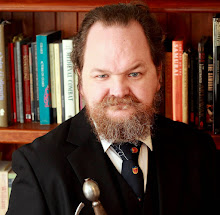
- Henry Walker
- Either an author who fences, or a fencer who tends to write a lot. I found a passion for writing first, then I found fencing. I also found that the pen and the sword work very well together. The pen may be mightier than the sword but together they are much greater.
Tuesday, September 13, 2016
On Practice
Greetings,
Practice is important. It is something which we hear and something which we are told again and again. This post is going to examine some of the details with regard to practice, how it is performed and why it is performed. Many will just skip over this one, but I suggest that you do not, as practice really is that important.
1. Importance
Everyone needs to practice. It does not matter if you are the newest swordsman or the most aged practitioner. Skills decay if you do not use them and thus practice is important. This also means that you should also practice everything. When you do not use a skill, it will decay and will not be as sharp the next time you try to use it.
2. Regularity
A post has already done a blog on this one, so why are we back here again? Simply because it relates to the subject at hand. More to the point it is important. You should practice every day, an hour is best, 30 minutes if it is all you can squeeze in. It does not have to be anything complex merely using some footwork and making some attacks will do.
3. Muscle Memory
There is a thing called "muscle memory". When you practice something enough, you will get to a stage where you can do the action without thinking about it, naturally this is a great advantage in any form of swordplay. It takes about 500 repetitions of an action to put it into your muscle memory, but you must practice it accurately. Any mistake you make in the action will also be practiced into muscle memory as well and it will take 50,000 repetitions to remove a mistake from muscle memory, so it is best to do it right the first time.
4. What to Practice
In a word everything. This being said some elements need more focus than others. Foundation elements ...
The rest of this article can be found in Un-Blogged: A Fencer's Ramblings by Henry Walker, which is available in paperback from:
Amazon: https://www.amazon.com/Blogged-Ramblings-Henry-Leigh-Walker/dp/098764470X
Booktopia: https://www.booktopia.com.au/un-blogged-henry-leigh-walker/book/9780987644701.html
Among other places...
It is also available in electronic format (pdf) from: https://buy.stripe.com/fZecP419c7CB9VKeUV
... or direct from the author.

Saturday, August 13, 2016
Fencing and Music
Greetings,
There is no doubt that music has an effect on us all. Indeed that one odd body fact that I read somewhere, and have been meaning to fact-check, is that the human heart will beat alongside with the base of the music which is being played, or something similar. Music can inspire us toward different feelings and also emotional states, this particular effect is used in movies all of the time. So, I did some reading and had some thoughts and decided that it was time to look at it in relation to fencing.
Conveniently, not long after this little gem popped into my head I came across an article entitled, "Western Composers and Western Martial Arts" in Encased in Steel Anthology I. Interestingly enough there were aspects of what was said in here which lined up quite well with what I was going toward. While Keith Farrel's article deals more with the comparison of the dates of music with the dates of treatises to understand their social context and also for a better understanding of their footwork and movement (Farrel, 2015:87), mine was more toward asking questions of how peoples bouts compare to music and what influences it can have on training.
Toward the avenue of my own thoughts I stumbled across an article in Australasian Scientist called "Turn Down the Volume?" which studied the effect of music on study and the performance of students. Needless to say, this article was more along my own lines of thinking as I was also wondering if the playing of music would enhance my students' training or detract from it. Some of it was most helpful with regard to this, as it stated with regard to gene expression and "changes also inferred potential benefits relating to memory, learning and general brain health." music possibly aids in protecting and improving the brain (Flavel, 2015:15).
Clearly there is evidence that music being played is a good thing and can be an aid toward the student's learning. The question next was what music should be played during the practice? Going back to the two useful sources of information there is an examination of the relationship between the manuals and the music in Farrel (2015) as indicated above, Medieval Music is reflected in style of fighting, rhyming method presented in manuals and in music as well (Farrel, 2015:89). This would make medieval music perfect for this kind of fighting. Similarly, Renaissance Music was more complicated also found in music, repetition found in manuals also found in music (Farrel, 2015:90). This meant that the first ...
The rest of this article can be found in Un-Blogged: A Fencer's Ramblings by Henry Walker, which is available in paperback from:
Amazon: https://www.amazon.com/Blogged-Ramblings-Henry-Leigh-Walker/dp/098764470X
Booktopia: https://www.booktopia.com.au/un-blogged-henry-leigh-walker/book/9780987644701.html
Among other places...
It is also available in electronic format (pdf) from: https://buy.stripe.com/fZecP419c7CB9VKeUV
... or direct from the author.
There is no doubt that music has an effect on us all. Indeed that one odd body fact that I read somewhere, and have been meaning to fact-check, is that the human heart will beat alongside with the base of the music which is being played, or something similar. Music can inspire us toward different feelings and also emotional states, this particular effect is used in movies all of the time. So, I did some reading and had some thoughts and decided that it was time to look at it in relation to fencing.
Conveniently, not long after this little gem popped into my head I came across an article entitled, "Western Composers and Western Martial Arts" in Encased in Steel Anthology I. Interestingly enough there were aspects of what was said in here which lined up quite well with what I was going toward. While Keith Farrel's article deals more with the comparison of the dates of music with the dates of treatises to understand their social context and also for a better understanding of their footwork and movement (Farrel, 2015:87), mine was more toward asking questions of how peoples bouts compare to music and what influences it can have on training.
Toward the avenue of my own thoughts I stumbled across an article in Australasian Scientist called "Turn Down the Volume?" which studied the effect of music on study and the performance of students. Needless to say, this article was more along my own lines of thinking as I was also wondering if the playing of music would enhance my students' training or detract from it. Some of it was most helpful with regard to this, as it stated with regard to gene expression and "changes also inferred potential benefits relating to memory, learning and general brain health." music possibly aids in protecting and improving the brain (Flavel, 2015:15).
Clearly there is evidence that music being played is a good thing and can be an aid toward the student's learning. The question next was what music should be played during the practice? Going back to the two useful sources of information there is an examination of the relationship between the manuals and the music in Farrel (2015) as indicated above, Medieval Music is reflected in style of fighting, rhyming method presented in manuals and in music as well (Farrel, 2015:89). This would make medieval music perfect for this kind of fighting. Similarly, Renaissance Music was more complicated also found in music, repetition found in manuals also found in music (Farrel, 2015:90). This meant that the first ...
The rest of this article can be found in Un-Blogged: A Fencer's Ramblings by Henry Walker, which is available in paperback from:
Amazon: https://www.amazon.com/Blogged-Ramblings-Henry-Leigh-Walker/dp/098764470X
Booktopia: https://www.booktopia.com.au/un-blogged-henry-leigh-walker/book/9780987644701.html
Among other places...
It is also available in electronic format (pdf) from: https://buy.stripe.com/fZecP419c7CB9VKeUV
... or direct from the author.
Bibliography
Farrel, K. (2015) "Western Composers and Western Martial Arts" in Farrel, K. (ed) (2015) Encased in Steel Anthology I, Fallen Rook Publishing, Triquetra Services (Scotland), Glasgow
Flavel, M. (2015) "Turn Down the Volume?" in Australasian Scientist (Vol. 36, No. 7, Sept. 2015) Central Publications Pty Ltd, Wattletree Rd, Australia, pp 14-15
Flavel, M. (2015) "Turn Down the Volume?" in Australasian Scientist (Vol. 36, No. 7, Sept. 2015) Central Publications Pty Ltd, Wattletree Rd, Australia, pp 14-15
Wednesday, July 13, 2016
Brutal Fencing II: Aggressive Versus Assertive
Greetings,
A long while ago I wrote a post on Aggressive and Brutal Fencing. At that point in time I really was not able to explain what I meant. Well, I was able to explain what I didn't mean, but I was not able to explain what I thought was suitable. This post is an attempt to address this particular issue and hopefully clear up some meaning. This was greatly helped by reading one of the articles in the Encased in Steel: Anthology I, which I reviewed.
The Oxford dictionary (http://www.oxforddictionaries.com/) defines the terms as follows:
Assertive: "having or showing a confident and forceful personality"
Aggressive: "Ready or likely to confront; characterized by or resulting from aggression"
One is an expression of confidence, the other is an expression of confrontation. While they could be seen as being quite similar they are actually different. The assertive may attack because he is confident about himself and is thus assured of the result, but he will choose when. The aggressive must attack because he must because that is his way, he has no choice.
So, a person in their fencing when facing and bouting or even competing against another opponent should be assertive rather than aggressive. To be aggressive in this instance is to use power and force where it is not required, to overtly over-power the opponent much as any thug would. To be assertive on ...
The rest of this article can be found in Un-Blogged: A Fencer's Ramblings by Henry Walker, which is available in paperback from:
Amazon: https://www.amazon.com/Blogged-Ramblings-Henry-Leigh-Walker/dp/098764470X
Booktopia: https://www.booktopia.com.au/un-blogged-henry-leigh-walker/book/9780987644701.html
Among other places...
It is also available in electronic format (pdf) from: https://buy.stripe.com/fZecP419c7CB9VKeUV
... or direct from the author.
Monday, June 13, 2016
Book Review: Fencing Through the Ages
Greetings,
What? Another book review? Yes, it is. This one is of a similar nature to my last in that I bought this book at Swordplay last year and have been horribly slack about getting around to doing a book review on it. This is one that I am actually going to really enjoy telling you about as it will reveal a book and an author who, for the most part had been pushed aside for others.
Corthey, Adolphe (2015) Fencing Through the Ages, LongEdge Press, Brisbane, First Edition 1898, Translated by Chris Slee
So, the bibliographical details have been presented above, and should provide everything you should need to search for this book online for you to buy it. Why would you buy it? Well the book presents some very interesting material which has otherwise been shoved aside by the English-speaking world.
This book was translated into English from French by Chris Slee in a literal fashion. In this he attempted to stay as true to the language as possible. The advantage of this, while meaning that the result is less smooth than it could be, means that it is closer to the original as possible for the English-speaking reader. Slee supplies notes with regard to his translation of particular words throughout the book to inform the reader of his choices.
Adolphe Corthey is the French equivalent to Captain Alfred Hutton and Egerton Castle and is of as much importance to the revival of Historical European Martial Arts. His book Fencing Through the Ages presents an account of various masters of fencing, much as Castle's Schools and Masters of Defence. While it was Hutton and Castle on one side of the English Channel, it was Corthey on the other side.
The book presents an interesting discussion of the history of fencing from the very beginning all the way up to the eighteenth century. His discussion of the very early periods is, of course, very brief whereas his discussion of Renaissance and later period weaponry is much longer. The first weapon he discusses in detail is the two-handed sword, and the last is the smallsword. In this discussion he mentions the works of various masters in the same sort of fashion as is found in Castle's. This is the primary part of the book, and the actual book written by Corthey. As expected, of course, there are present many of the historical biases of the period with the "development" toward the dominance of the point and so forth, but as an historical document, this makes it still useful.
The fact that the above is the primary part of the book does not mean that the sundry materials should be skipped over in any way whatsoever. There is the presentation of contemporary media information also included demonstrates significance of author and work. Thus the presentation of such work was placed in the public eye, much as HEMA practitioners are attempting to do now.
One of the most interesting documents contained within this volume actually resides in the back pages. It is entitled "On the Subject of the Transformation of the Combat Sword" and discusses the transformation from combat weapon to weapon usable for practice. This is a document which should be of great interest to all practitioners of revivalist martial arts, but especially HEMA with regard to examining how to get weapons at least resembling their historical counter-parts.
In the end I found that this book, understated by its size and weight, was a most interesting read from cover to cover and I would recommend it for all with an interest in history and HEMA. The wide areas of knowledge which Corthey points toward should at least indicate to the reader other areas in which research may be made, and other areas in which maybe they had not thought to cover.
Cheers,
Henry.
What? Another book review? Yes, it is. This one is of a similar nature to my last in that I bought this book at Swordplay last year and have been horribly slack about getting around to doing a book review on it. This is one that I am actually going to really enjoy telling you about as it will reveal a book and an author who, for the most part had been pushed aside for others.
Corthey, Adolphe (2015) Fencing Through the Ages, LongEdge Press, Brisbane, First Edition 1898, Translated by Chris Slee
So, the bibliographical details have been presented above, and should provide everything you should need to search for this book online for you to buy it. Why would you buy it? Well the book presents some very interesting material which has otherwise been shoved aside by the English-speaking world.
This book was translated into English from French by Chris Slee in a literal fashion. In this he attempted to stay as true to the language as possible. The advantage of this, while meaning that the result is less smooth than it could be, means that it is closer to the original as possible for the English-speaking reader. Slee supplies notes with regard to his translation of particular words throughout the book to inform the reader of his choices.
Adolphe Corthey is the French equivalent to Captain Alfred Hutton and Egerton Castle and is of as much importance to the revival of Historical European Martial Arts. His book Fencing Through the Ages presents an account of various masters of fencing, much as Castle's Schools and Masters of Defence. While it was Hutton and Castle on one side of the English Channel, it was Corthey on the other side.
The fact that the above is the primary part of the book does not mean that the sundry materials should be skipped over in any way whatsoever. There is the presentation of contemporary media information also included demonstrates significance of author and work. Thus the presentation of such work was placed in the public eye, much as HEMA practitioners are attempting to do now.
One of the most interesting documents contained within this volume actually resides in the back pages. It is entitled "On the Subject of the Transformation of the Combat Sword" and discusses the transformation from combat weapon to weapon usable for practice. This is a document which should be of great interest to all practitioners of revivalist martial arts, but especially HEMA with regard to examining how to get weapons at least resembling their historical counter-parts.
In the end I found that this book, understated by its size and weight, was a most interesting read from cover to cover and I would recommend it for all with an interest in history and HEMA. The wide areas of knowledge which Corthey points toward should at least indicate to the reader other areas in which research may be made, and other areas in which maybe they had not thought to cover.
Cheers,
Henry.
Friday, May 13, 2016
Are You Using or Teaching a System?
Greetings,
Every now and then we must look back at what we are teaching and what it is based upon. In some cases this may not be as pretty a picture as what we may like it to be but it still must be done. The question remains especially for us looking into the fields of Historical European Martial Arts (HEMA) are we really practicing what we set out to? Are we really teaching what we are studying? Are we teaching a system or merely tips and tricks?
A system is has a foundation based on the principles of fence. This means that the actions make sense according to the rules of Time and Distance. It means that what we are teaching, when performed purely according to these rules will work. This system does not have to be based in any one "School" or based on the works of any one "Master". Indeed, what I teach is based upon the works of several theorists from at least two different "Schools". What needs to be present are the principles upon which the actions are based upon and these need to be based on the principles of fence.
A system has essential mechanics. These are foundation mechanics which every student knows and every student must learn to progress through to the next stage. The progression of the students must be based upon the training method which is set in place. Each one of the lessons should build upon some part of the lessons which came before it. Every student should progress through these lessons in some form or another. At the end of these lessons, indeed part way through some of these lessons there should be a system of evaluation of progression. You should be able to evaluate the students and see where they are in their progression to see what they have learnt and what they need to re-learn. This does not ...
The rest of this article can be found in Un-Blogged: A Fencer's Ramblings by Henry Walker, which is available in paperback from:
Amazon: https://www.amazon.com/Blogged-Ramblings-Henry-Leigh-Walker/dp/098764470X
Booktopia: https://www.booktopia.com.au/un-blogged-henry-leigh-walker/book/9780987644701.html
Among other places...
It is also available in electronic format (pdf) from: https://buy.stripe.com/fZecP419c7CB9VKeUV
... or direct from the author.
Every now and then we must look back at what we are teaching and what it is based upon. In some cases this may not be as pretty a picture as what we may like it to be but it still must be done. The question remains especially for us looking into the fields of Historical European Martial Arts (HEMA) are we really practicing what we set out to? Are we really teaching what we are studying? Are we teaching a system or merely tips and tricks?
A system is has a foundation based on the principles of fence. This means that the actions make sense according to the rules of Time and Distance. It means that what we are teaching, when performed purely according to these rules will work. This system does not have to be based in any one "School" or based on the works of any one "Master". Indeed, what I teach is based upon the works of several theorists from at least two different "Schools". What needs to be present are the principles upon which the actions are based upon and these need to be based on the principles of fence.
A system has essential mechanics. These are foundation mechanics which every student knows and every student must learn to progress through to the next stage. The progression of the students must be based upon the training method which is set in place. Each one of the lessons should build upon some part of the lessons which came before it. Every student should progress through these lessons in some form or another. At the end of these lessons, indeed part way through some of these lessons there should be a system of evaluation of progression. You should be able to evaluate the students and see where they are in their progression to see what they have learnt and what they need to re-learn. This does not ...
The rest of this article can be found in Un-Blogged: A Fencer's Ramblings by Henry Walker, which is available in paperback from:
Amazon: https://www.amazon.com/Blogged-Ramblings-Henry-Leigh-Walker/dp/098764470X
Booktopia: https://www.booktopia.com.au/un-blogged-henry-leigh-walker/book/9780987644701.html
Among other places...
It is also available in electronic format (pdf) from: https://buy.stripe.com/fZecP419c7CB9VKeUV
... or direct from the author.
Wednesday, April 13, 2016
Book Review: Encased In Steel: Anthology I
Greetings,
This is a book review that I should have done not long after Swordplay 2015. What can I say? I took the book home, I had other stuff to research, I read it, I then almost instantly passed it on to a student, and now I have actually had time to sit down and do a book review of it. This in some way alludes to my attraction to the book once I finally managed to open the cover and actually start reading.
Farrel, K. (ed) (2015) Encased in Steel Anthology I, Fallen Rook Publishing, Triquetra Services (Scotland), Glasgow
First bibliographical details, above and, the book is a soft cover, just over 200 pages long. It is about the size of a large novel in area (15 x 23-cm). All in all the book is quite unremarkable by its outside. This is one of those cases where the book should not be judged by the cover.
The book is filled with great articles covering many different subjects. Many of these subjects would not even be considered by some members of the HEMA (Historical European Martial Arts) community to be relevant to their studies. I would suggest this is because that their focus is more on the physical aspects of what they are studying rather than an holistic examination of the arts.
The editor, states that this is a selection of articles from the "Encased in Steel" weblog, plus some extra articles which have been added in. As stated previously it covers a wide variety of subjects clearly divided into five general areas: Chivalry & Christian Values, HEMA History & Research, Weapon History & Research, The Practice of Cutting and Practical Concerns for HEMA Clubs. All of these areas are pertinent to HEMA and also the wider sword-wielding communities.
The articles themselves are very well written and easy to read. Jargon is in most cases explained so that the reader does not get confused. All of the articles are well documented and researched and each one has a bibliography supplied at the end of the article for further examination of the sources for further research. While the manner of writing is more scholarly in approach, bringing up relevant details in the appropriate manner and also forming arguments based on the evidence presented, the articles are also presented in a way which is engaging. The multiple authors are respected in their various fields in the HEMA community.
Rather than focusing on the purely martial art and physical aspects of HEMA, it also has some especially interesting articles on the ethics of swordsmanship and other social aspects which are integrally related with the wielding of a sword and indeed other weapons. Needless to say this collection of writings, while not wholly may in single appeal to a much wider community, as such this book is recommended for reading by all those interesting in swordsmanship, regardless of their interest or skill level.
Cheers,
Henry.
This is a book review that I should have done not long after Swordplay 2015. What can I say? I took the book home, I had other stuff to research, I read it, I then almost instantly passed it on to a student, and now I have actually had time to sit down and do a book review of it. This in some way alludes to my attraction to the book once I finally managed to open the cover and actually start reading.
Farrel, K. (ed) (2015) Encased in Steel Anthology I, Fallen Rook Publishing, Triquetra Services (Scotland), Glasgow
First bibliographical details, above and, the book is a soft cover, just over 200 pages long. It is about the size of a large novel in area (15 x 23-cm). All in all the book is quite unremarkable by its outside. This is one of those cases where the book should not be judged by the cover.
The book is filled with great articles covering many different subjects. Many of these subjects would not even be considered by some members of the HEMA (Historical European Martial Arts) community to be relevant to their studies. I would suggest this is because that their focus is more on the physical aspects of what they are studying rather than an holistic examination of the arts.
The editor, states that this is a selection of articles from the "Encased in Steel" weblog, plus some extra articles which have been added in. As stated previously it covers a wide variety of subjects clearly divided into five general areas: Chivalry & Christian Values, HEMA History & Research, Weapon History & Research, The Practice of Cutting and Practical Concerns for HEMA Clubs. All of these areas are pertinent to HEMA and also the wider sword-wielding communities.
The articles themselves are very well written and easy to read. Jargon is in most cases explained so that the reader does not get confused. All of the articles are well documented and researched and each one has a bibliography supplied at the end of the article for further examination of the sources for further research. While the manner of writing is more scholarly in approach, bringing up relevant details in the appropriate manner and also forming arguments based on the evidence presented, the articles are also presented in a way which is engaging. The multiple authors are respected in their various fields in the HEMA community.
Rather than focusing on the purely martial art and physical aspects of HEMA, it also has some especially interesting articles on the ethics of swordsmanship and other social aspects which are integrally related with the wielding of a sword and indeed other weapons. Needless to say this collection of writings, while not wholly may in single appeal to a much wider community, as such this book is recommended for reading by all those interesting in swordsmanship, regardless of their interest or skill level.
Cheers,
Henry.
Sunday, March 13, 2016
Virtues Gained From Swordsmanship
Greetings,
Based on some of what I said in a previous post on the ethics of swordsmanship, I had a request from one of my readers to write something about what virtues are gained from studying and performing swordsmanship. For your interest, the original post called "A Question of Ethics" can be found here: http://afencersramblings.blogspot.com.au/2015/11/a-question-of-ethics.html. So, what I am going to do is have a little chat about these virtues gained from swordsmanship. To begin with I will have a look at some primary sources. Then I will have a look at some of the things from my own point of view, some of which will refer back to the post indicated above.
"For this cause I beseech the gentle Reader to show himself such a one in the reading of this my present work, assuring himself by so reading it, to reap profit and honour thereby. And not doubting but that he (who is sufficiently furnished with this knowledge, and has his body proportionally exercised thereunto) shall far surmount any other although he be imbued with equal force and swiftness."
In essence, first thing that Giacomo di Grassi focuses on is profit and honour from following what is written in his book. This is the result of training. Further that the reader will be able to defeat any other opponent who is of equal physical ability. So, in essence, di Grassi claims that his method will give you honour through defeating your opponents if you study hard and this will result in profit of some kind. This is not particularly specific.
"I speak not against Masters of Defence indeed, they are to be honored, nor against the Science, it is noble, and in my opinion to be preferred next to Divinity, for as Divinity preserves the soul from Hell and the Devil, so does this Noble Science defend the body from wounds and slaughter. And moreover, the exercising of weapons puts away aches, griefs, and diseases, it increases strength, and sharpens the wits. It gives a perfect judgement, it expels melancholy, choleric and evil conceits, it keeps a man in breath, perfect health, and long life. It is unto him that has the perfection thereof, a most friendly and comfortable companion when he is alone, having but only his weapon about him. It puts him out of fear, & in the wars and places of most danger, it makes him bold, hardy and valiant.
George Silver 1599 Paradoxes of Defence
“This
irresistible power of practice does not only master and overcome the
unflexibleness of our bodily members, but also affects and prevails very much,
even over our more dull and ignorant judgements.”
Sir William Hope, much like Silver also highlights the benefits of swordsmanship to the swordsman as being to both the mind and the body. This idea of swordsmanship being as much a mental pursuit as a physical one is something which must be realised for the greatest benefits of it to be attained.
“[Fencing] which justly forms part of the education of persons of rank; giving them additional strength of body, proper confidence, grace, activity and address; enabling them, likewise, to pursue other exercises with greater facility.”
Domenico Angelo 1787 The School of Fencing With a General Explanation of the Principle Attitudes and Positions Peculiar to the Art
Domenico Angelo, is focusing on an address to a particular clientèle, thus insisting that it is an important part of their education. Further to this he also explains further health benefits much like the previous examples which have been presented. Angelo expands his list to include benefits to the social sphere and interactions with others.
The rest of this article can be found in Un-Blogged: A Fencer's Ramblings by Henry Walker, which is available in paperback from:
Amazon: https://www.amazon.com/Blogged-Ramblings-Henry-Leigh-Walker/dp/098764470X
Booktopia: https://www.booktopia.com.au/un-blogged-henry-leigh-walker/book/9780987644701.html
Among other places...
It is also available in electronic format (pdf) from: https://buy.stripe.com/fZecP419c7CB9VKeUV
... or direct from the author.
Based on some of what I said in a previous post on the ethics of swordsmanship, I had a request from one of my readers to write something about what virtues are gained from studying and performing swordsmanship. For your interest, the original post called "A Question of Ethics" can be found here: http://afencersramblings.blogspot.com.au/2015/11/a-question-of-ethics.html. So, what I am going to do is have a little chat about these virtues gained from swordsmanship. To begin with I will have a look at some primary sources. Then I will have a look at some of the things from my own point of view, some of which will refer back to the post indicated above.
Primary Sources
Call me biased, I am only going to be using manuals and masters which are written in English because I only speak/read English. This makes for much easier translation on my part. First we start with one of my own favourites, di Grassi.
In essence, first thing that Giacomo di Grassi focuses on is profit and honour from following what is written in his book. This is the result of training. Further that the reader will be able to defeat any other opponent who is of equal physical ability. So, in essence, di Grassi claims that his method will give you honour through defeating your opponents if you study hard and this will result in profit of some kind. This is not particularly specific.
George Silver 1599 Paradoxes of Defence
George Silver, as I have noted previously, is a character and a half, and his claims about his method are just as characteristic. He claims that the swordsmanship will "defend the body from wounds and slaughter", as one would expect, but then he goes on to list a long list of health benefits of swordsmanship. These health benefits which he lists are not just physical, as one might expect, but they are also mental. The significance of the idea of the benefit to both mind and body is often passed over by many.
Sir William Hope 1707 A New Short, and Easy Method of Fencing: Or the Art of the Broad and Small sword Rectified and Compendiz’d
Sir William Hope, much like Silver also highlights the benefits of swordsmanship to the swordsman as being to both the mind and the body. This idea of swordsmanship being as much a mental pursuit as a physical one is something which must be realised for the greatest benefits of it to be attained.
“[Fencing] which justly forms part of the education of persons of rank; giving them additional strength of body, proper confidence, grace, activity and address; enabling them, likewise, to pursue other exercises with greater facility.”
Domenico Angelo 1787 The School of Fencing With a General Explanation of the Principle Attitudes and Positions Peculiar to the Art
My Stuff
Physical
The first thing that will be easily noted is that fencing does supply health benefits. It does improve ...The rest of this article can be found in Un-Blogged: A Fencer's Ramblings by Henry Walker, which is available in paperback from:
Amazon: https://www.amazon.com/Blogged-Ramblings-Henry-Leigh-Walker/dp/098764470X
Booktopia: https://www.booktopia.com.au/un-blogged-henry-leigh-walker/book/9780987644701.html
Among other places...
It is also available in electronic format (pdf) from: https://buy.stripe.com/fZecP419c7CB9VKeUV
... or direct from the author.
Subscribe to:
Posts (Atom)