Greetings,
The written word has been the most effective method for transmitting information about fencing through time. True these documents do often come with pictures, but without the words it is much more difficult to understand what the author is discussing. Fencing manuals have been written by both professionals and gifted amateurs, regardless, each one teaches something about fencing from a particular point of view.
This blog is to do with some of the changes which have happened with regard to the transmission of such information over time, highlighting some interesting points with regard to this. For the purposes of ease of presentation of the information, the discussion will be broadly broken into four sections. The first is about theory content and deals with the presentation of elements of fencing theory. The second will deal with any social elements which may be present in the manual. The third will deal with the method used to convey the information. Some of these will overlap and all will be noted to be related to one another. It is not the purpose of this blog to delve into specifics of fencing theory or method, this needs to be done on a case-by-case basis rather than in such a general method.
Regardless of whether the theory is explicitly presented or whether it is more hidden within the actions presented all fencing manuals have elements of fencing theory present in them. It is these elements of theory which the physical aspects of fencing are hung upon. If the practical element is the meat of the discussion, the theory is most definitely the skeleton upon which this hangs.
In the manuals of the Renaissance period, or at least the later Renaissance period, there were entire sections of the manual which were devoted to the various elements of fencing theory. These would be specifically laid out and detailed before any mention of the practical was made. This was the case even in the later period of the eighteenth century, the same sort of idea was made. This highlighted the importance of the reader understanding what the practical elements of fencing were based upon, and thus the importance of theory to the system. It was through such discussions that fencing was demonstrated to be science as well as art.
In the modern age, fencing theory seems to be something that only the fencing masters need to know. Something that the individual fencer will only pick up through specific studies of fencing theory or through tuition with a fencing master. The theoretical elements seem to be absent from modern fencing manuals, or at least those which are commonly available. If a fencer wants to know about fencing theory then he has to go to specific texts in order to find the information he seeks. Only the practical elements are present in modern fencing books, the theoretical is assumed to be learnt through the repetition of actions and their learning.
The social element is something which seems to be somewhat odd to find in a fencing manual, but it is present in much the same way as the theoretical elements. Many may ask what purpose there is for social elements to be in a sport manual, and this is one place which demonstrates the difference in attitude to fencing over time. The social element and its presence or absence also describes the change in fencing from martial art with sharp weapons to the commonly known sport of fencing.
In the Renaissance period the weapons were real and the potential for injury was high. The social aspects of a person's life dictated what sort of life a person would have and with whom they could associate. The social element found in fencing affected more than just their conduct on the field of combat. Needless to say that for the fencer of the Renaissance, social issues were more important. This resulted in these elements being highly prevalent in the manuals of the Renaissance period. This increased even more with the presence of the phenomenon of duelling. The Renaissance author thus ....
The rest of this article can be found in Un-Blogged: A Fencer's Ramblings by Henry Walker, which is available in paperback from:
Amazon: https://www.amazon.com/Blogged-Ramblings-Henry-Leigh-Walker/dp/098764470X
Booktopia: https://www.booktopia.com.au/un-blogged-henry-leigh-walker/book/9780987644701.html
Among other places...
It is also available in electronic format (pdf) from: https://buy.stripe.com/fZecP419c7CB9VKeUV
... or direct from the author.
About Me
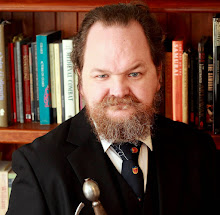
- Henry Walker
- Either an author who fences, or a fencer who tends to write a lot. I found a passion for writing first, then I found fencing. I also found that the pen and the sword work very well together. The pen may be mightier than the sword but together they are much greater.
Sunday, April 10, 2011

Wednesday, March 30, 2011
Re-enactment and Its Decline
Greetings,
While this particular subject is not directly relevant to the subject of fencing, it does apply if examined from a certain point of view. For many their swordsmanship actually revolves around one reenacting group or another, thus the decline of the groups associated has an effect on the availability of being able to participate in the fencing. Thus this question forms somewhat of a backdrop of importance to fencing, and indeed different forms of fencing.
While this particular subject is not directly relevant to the subject of fencing, it does apply if examined from a certain point of view. For many their swordsmanship actually revolves around one reenacting group or another, thus the decline of the groups associated has an effect on the availability of being able to participate in the fencing. Thus this question forms somewhat of a backdrop of importance to fencing, and indeed different forms of fencing.
In more recent years it would seem that there has been a decline in re-enactment. This would be pointing at a decline in numbers rather than a decline in the quality of the re-enactment. Indeed it is quite the opposite the quality of the re-enactment has increased as more and more information and equipment has become available to the re-enactor, and thus is part of the problem as to why the numbers are dropping. Interestingly, this has come at the same time that Western Martial Arts has seen an increase in numbers and interest. When I started in re-enactment some 20 years ago, it was reasonably easy for the average person of the street to join a re-enactment group and start participating.
In my case the group was the SCA (Society for Creative Anachronisms). All that was expected of me at my first event was an attempt at clothing from pre-1600. I managed to rustle up a tunic from a costume set that the family had and a pair of track-suit pants for my legs. All in all the outfit passed as being "medieval" from a distance, and no one batted an eyelid. It would seem that things have changed quite a bit even in the SCA.
As the ability to construct and availability to gain the equipment has increased, so has the expectations of those within the groups. In my opinion it is partially this set-up cost which is causing people problems in joining the various groups and also maintaining their membership and activity within the groups. Where there is a large initial set-up cost for the group, and an expectation for the purchase of certain equipment to a certain standard, there will be those who simply cannot afford this set-up cost. This instantly restricts who can join and participate within the groups.
Using the SCA as an example, the first thing that is going to be said is that in recent years the membership cost has actually dropped and this should enable people to more easily be able to join the organisation. This is true enough, to become a financial member of the SCA it has become much easier, but why would a person be willing to pay such membership if they cannot afford to feel like they belong? This comes down to the expectations of those within the group more than anything.
....
The rest of this article can be found in Un-Blogged: A Fencer's Ramblings by Henry Walker, which is available in paperback from:
Amazon: https://www.amazon.com/Blogged-Ramblings-Henry-Leigh-Walker/dp/098764470X
Booktopia: https://www.booktopia.com.au/un-blogged-henry-leigh-walker/book/9780987644701.html
Among other places...
It is also available in electronic format (pdf) from: https://buy.stripe.com/fZecP419c7CB9VKeUV
... or direct from the author.
As the ability to construct and availability to gain the equipment has increased, so has the expectations of those within the groups. In my opinion it is partially this set-up cost which is causing people problems in joining the various groups and also maintaining their membership and activity within the groups. Where there is a large initial set-up cost for the group, and an expectation for the purchase of certain equipment to a certain standard, there will be those who simply cannot afford this set-up cost. This instantly restricts who can join and participate within the groups.
Using the SCA as an example, the first thing that is going to be said is that in recent years the membership cost has actually dropped and this should enable people to more easily be able to join the organisation. This is true enough, to become a financial member of the SCA it has become much easier, but why would a person be willing to pay such membership if they cannot afford to feel like they belong? This comes down to the expectations of those within the group more than anything.
....
The rest of this article can be found in Un-Blogged: A Fencer's Ramblings by Henry Walker, which is available in paperback from:
Amazon: https://www.amazon.com/Blogged-Ramblings-Henry-Leigh-Walker/dp/098764470X
Booktopia: https://www.booktopia.com.au/un-blogged-henry-leigh-walker/book/9780987644701.html
Among other places...
It is also available in electronic format (pdf) from: https://buy.stripe.com/fZecP419c7CB9VKeUV
... or direct from the author.
Thursday, February 3, 2011
Buying a Sword
Greetings,
The purchase of a sword is something which is often not talked about very much. Usually the only concern for people is the potential financial burden that may occur in the purchase. What this does not take into account is the other aspects of the purchase of a sword that the swordsman should take into account. This blog will address the concept of buying a sword and present some considerations that should be made by the buyer.
Buying a sword is an investment, but it is one that many fencers take quite lightly. This should not actually be the case. The purchase of a sword is also something which should signify something to both the purchaser of the weapon and also to the teacher and club to which they belong. No one is ever expected that they will turn up to their first fencing practice with a weapon and other gear already bought. The opposite is a very rare occurrence. What this means is that for a period of time the fencer will borrow a weapon. It may belong to a club, or it may belong to another fencer. The purchase of a sword should signify that the person is ready to commit to the enterprise to which they have taken, of course this is not the only thing that a fencer should be concerned about when buying a sword.
In previous centuries, and even relatively recently. A sword was not simply purchased "off the rack" or out of a collection of examples present, as is mostly the case these days. The fencer was measured for a sword. This was because the swordsman would be relying on that particular weapon to save their life in an armed encounter. For the fencer today fighting someone where there is the potential for serious injury or death is not so much of a concern. In these previous days the make of the sword would also give some indication of the wealth of the owner of the weapon and also their taste as it was worn as a piece of costume jewellery. Once again, this is not the case today. However, some of the considerations made in these previous days should be made by the modern swordsman.
There are examples in treatises by various masters and theorists of the Renaissance and middle ages about the correct length of a sword. Ridolfo Capo Ferro, for example, determined that the correct length of the sword should be twice the length of the arm, and there were others who proposed that the weapon should be longer, or shorter. Needless to say the length of the weapon was proportional to the individual who was using it. For the most part, weapons these days are sold at set lengths or at different ones by special request. While there are many different theories about how long or short a weapon should be, the important thing for the fencer is comfort. This is the most important consideration.
For the most part a sword these days will cost somewhere more than $150. Sure there are some which can be obtained for cheaper, and sure there are those which are substantially more than this, it is a ball-park figure. This for some will be a significant investment on their part and this in itself is significant. A fencer does not want to go out, spend a deal of money and purchase a sword just to find out that it is too heavy, or light, or short, or long. This will result in the sword having to be modified or even replaced, which is another expense on the part of the fencer. In order to avoid this some planning and investigation should be made.
The only real way to see how a sword feels is to pick up the weapon and use it. Of course a shop will not allow you to use the merchandise unless you intend to buy the one ....
The rest of this article can be found in Un-Blogged: A Fencer's Ramblings by Henry Walker, which is available in paperback from:
Amazon: https://www.amazon.com/Blogged-Ramblings-Henry-Leigh-Walker/dp/098764470X
Booktopia: https://www.booktopia.com.au/un-blogged-henry-leigh-walker/book/9780987644701.html
Among other places...
It is also available in electronic format (pdf) from: https://buy.stripe.com/fZecP419c7CB9VKeUV
... or direct from the author.
The rest of this article can be found in Un-Blogged: A Fencer's Ramblings by Henry Walker, which is available in paperback from:
Amazon: https://www.amazon.com/Blogged-Ramblings-Henry-Leigh-Walker/dp/098764470X
Booktopia: https://www.booktopia.com.au/un-blogged-henry-leigh-walker/book/9780987644701.html
Among other places...
It is also available in electronic format (pdf) from: https://buy.stripe.com/fZecP419c7CB9VKeUV
... or direct from the author.
Monday, January 17, 2011
Rapier Combat: A Practitioner's Thoughts
Greetings,
Ok, I will admit with this blog I am cheating, and a lot. I am reprinting an old article that I wrote sometime ago. It is primarily designed for an SCA (Society for Creative Anachronisms) audience, but much of what is written in there applies just the same. There are quite a few references to the SCA and the way that this group does things. In some ways I hope that this will assist in clearing up some confusion about this particular group also. Anyway, here we go....
Rapier Combat within the SCA is an attempt to recreate one of the civilian forms of combat that existed in the Renaissance period. This form of combat is centred on the rapier and its companions. It is important to realise that it is the rapier that is being focused on otherwise a great deal of confusion will be created.
In recreating this form of combat we use simulated weapons in a semi-competitive combat form. The weapons only differ essentially from the real weapons in that they have a blunt edge, and a rolled tip, which has a rubber stopper over it. The metal blades are very close to the actual weapon in weight and handling characteristics. The fibreglass blades are much lighter than real ones, but can be made in such a way that they do simulate a rapier in a reasonable fashion. Importantly the fibreglass weapons are cheaper to purchase, and are great for starting students.
The combat form itself, in tournaments, is an attempt at recreating the lethality of the rapier in a combat situation, without the blood and burial costs. A win is scored by “rendering one’s opponent disinclined to continue”, this could mean a kill or disarm, or sufficient scratches. The whole body is a target, though the groin area is not deliberately targeted. We are assumed to be wearing civilian attire and as such any cut or thrust has to be judged as if the weapon was real and had hit flesh. This means that a combatant has to be really careful. It is also this reason that a lot of skill rather than brute force goes into this form of combat.
What we do is kept safe by our safety and armour standards. Most importantly amongst this is the control that we instil into our students while they are in training. The best method to keep safe is to teach and learn control. The armour standard is there just to bolster the safety of the combatants.
Where does this form of combat fit into the “medieval” period? Simply, it doesn’t. It is a Renaissance form of combat. Earlier forms of combat using thrusting weapons have been theorised as the predecessors of rapier combat. A lot of the techniques which are used in rapier combat were developed as the rapier did. Cut-and-thrust technique is one of the predecessors of the rapier’s technique and it is from this that a lot of the style was ....
The rest of this article can be found in Un-Blogged: A Fencer's Ramblings by Henry Walker, which is available in paperback from:
Amazon: https://www.amazon.com/Blogged-Ramblings-Henry-Leigh-Walker/dp/098764470X
Booktopia: https://www.booktopia.com.au/un-blogged-henry-leigh-walker/book/9780987644701.html
Among other places...
It is also available in electronic format (pdf) from: https://buy.stripe.com/fZecP419c7CB9VKeUV
... or direct from the author.
The rest of this article can be found in Un-Blogged: A Fencer's Ramblings by Henry Walker, which is available in paperback from:
Amazon: https://www.amazon.com/Blogged-Ramblings-Henry-Leigh-Walker/dp/098764470X
Booktopia: https://www.booktopia.com.au/un-blogged-henry-leigh-walker/book/9780987644701.html
Among other places...
It is also available in electronic format (pdf) from: https://buy.stripe.com/fZecP419c7CB9VKeUV
... or direct from the author.
Sunday, December 5, 2010
Murphy's Laws of Fencing - Henry Version
Greetings,
There have been many different versions of "Murphy's Laws". Each one of these is focussed on the particular topic to which it is directed. These are a way to gain some amusement from these topics while at the same time learning something about the topic. Many of the lists have some hidden truths in them as well.
There should be no surprise that for the most part each particular area will have its own and fencing is no different. There are many variants of Murphy's Laws of fencing. This is a list which I have assembled based on other lists and also on my experiences in fencing. This will have the laws as well as a little bit of an explanation about where this particular law comes from. In this way, it is hoped that these will be a source of amusement and education simultaneously.
1. If the opponent is within distance, so are you.
2. If you have a tempo, so does the opponent.
Laws one and two are about timing and distance, these are the two key concepts in fencing of all kinds. The important thing here is that they are fluid and what you have the opponent can take, or will also have at the same time. Remember to use these to your advantage.
3. The opponent will attack either when you are ready or when you are not.
4. If you are not attacking, expect your oppoenent to be.
If you are on guard in front of your opponent, expect that they will attack at their convenience, and not yours. This means you need to be prepared at all times. If you do not have the opponent on the defensive then he will take the opportunity to attack you.
5. Incoming attacks always have the right of way.
Make defence a priority against incoming attacks, the opportunity for riposte or counter should be secondary to not being struck
6. What can be seen can be hit.
If you leave an opening in your defence, expect it to be struck. Likewise even if it is covered, it can be uncovered and hit.
7. If your attack is going well, your opponent is using second intention.
8. The only plan to rely on is to strike the opponent while not being struck yourself.
9. If you have read your opponent, he has read you.
Plans are awesome in fencing, but remember that the opponent will also have a plan. Expect that your opponent will have some sort of counter to your attack, and you should plan to counter that.
10. Secret Blows, aren't.
11. Ultimate killing moves, aren't.
12. The brilliant technique you just learnt has a counter.
13. There is no complex action which cannot be countered by a simple response.
The botta secreta (secret blow) is effective until it is used, therefore it can never be used. Once it is used people will learn it and counter it. There is no technique in fencing which cannot be countered in some fashion. Usually the ....
The rest of this article can be found in Un-Blogged: A Fencer's Ramblings by Henry Walker, which is available in paperback from:
Amazon: https://www.amazon.com/Blogged-Ramblings-Henry-Leigh-Walker/dp/098764470X
Booktopia: https://www.booktopia.com.au/un-blogged-henry-leigh-walker/book/9780987644701.html
Among other places...
It is also available in electronic format (pdf) from: https://buy.stripe.com/fZecP419c7CB9VKeUV
... or direct from the author.
The rest of this article can be found in Un-Blogged: A Fencer's Ramblings by Henry Walker, which is available in paperback from:
Amazon: https://www.amazon.com/Blogged-Ramblings-Henry-Leigh-Walker/dp/098764470X
Booktopia: https://www.booktopia.com.au/un-blogged-henry-leigh-walker/book/9780987644701.html
Among other places...
It is also available in electronic format (pdf) from: https://buy.stripe.com/fZecP419c7CB9VKeUV
... or direct from the author.
Tuesday, November 9, 2010
Making Plans for Training
Greetings,
A while ago I posted about taking a hold of your training. This was designed to get people to realise that the only person who was going to make it all work was you. This is more or less a follow-up on that one, examining the next step in the process and one that should be considered by fencers at all levels.
Making plans for training is a good thing as it provides advantages, but it needs to be done right. The advantage of making a plan for your training, rather than just filling in holes where they are perceived is that it gives a plan for the future. This provides a direction for the training and a simple process to follow. This particular plan can provide a reason for going to training, and going on a regular basis especially. Where it is filling holes then there is motivation to pick something, where there is a plan, it is just the next lesson in the plan. This provides things to do at training, especially where the motivation may not be there to figure something out to do. This also means that the training is directed at a target.
Targets are important as they give us something to aim at. For some, they can be non-specific, but for most they need to be specific about where it is all going. As far as overall targets are concerned "I want to get better at my fencing." is a target which we all have as who does not want to get better at their fencing? This target does not provide particularly much direction. In order to provide direction, it is useful to be somewhat more specific, this is achieved by dividing goals up into long term and short term targets or goals.
Long term targets are those which will not happen soon and will require a lot of work, and are something to strive toward. These are often hopeful goals of where a person may want to end up sometime down the track. In many ways this is some what "cloud shooting" dreaming about the day that you will hit the top of the ranks in your particular form of fencing. Of course for some, this will be out of reach so this needs to be tempered a little with sensibility. These long term goals should not have a time limit on them anything under a year or even more.
Short term goals are those which will happen sooner than the long term goals, but they may not happen in a couple of months or possibly even a couple of years. These goals need to be realistic in order that you can work toward them in an active fashion. It is these goals that the plan for training is written to actively pursue. Each short term goal should be achieved with a plan. Each one of these short term goals should build to fulfil a long term goal. In this way there is an overall plan and more specific ones as well. The short ....
The rest of this article can be found in Un-Blogged: A Fencer's Ramblings by Henry Walker, which is available in paperback from:
Amazon: https://www.amazon.com/Blogged-Ramblings-Henry-Leigh-Walker/dp/098764470X
Booktopia: https://www.booktopia.com.au/un-blogged-henry-leigh-walker/book/9780987644701.html
Among other places...
It is also available in electronic format (pdf) from: https://buy.stripe.com/fZecP419c7CB9VKeUV
... or direct from the author.
The rest of this article can be found in Un-Blogged: A Fencer's Ramblings by Henry Walker, which is available in paperback from:
Amazon: https://www.amazon.com/Blogged-Ramblings-Henry-Leigh-Walker/dp/098764470X
Booktopia: https://www.booktopia.com.au/un-blogged-henry-leigh-walker/book/9780987644701.html
Among other places...
It is also available in electronic format (pdf) from: https://buy.stripe.com/fZecP419c7CB9VKeUV
... or direct from the author.
Monday, November 1, 2010
Musashi for the Rapier Combatant: Adventures in Cross-Training
Greetings,
Musashi for the rapier combatant? What is he on about? These are the first two questions that I would expect to be asked with regard to this particular topic. The idea of this blog is to get people thinking about other resources that they might find useful in their study of swordplay. I have actually already written an article entitled "Musashi for the Rapier Combatant" and I was tempted to simply re-print that article here. Instead I have decided to go through the approach that led me to such a conclusion and the article that resulted.
"Let the Gaze Be Broad" is one of the most used sayings found in Musashi's book Go Rin No Sho, or The Book of Five Rings. From Musashi's point of view it is about being aware of the opponent and also aware of your surroundings when facing an opponent. For the purposes of this particular discussion it is also about being aware of the resources available to you in your research.
People tend to approach the research of fencing and swordplay in general from one of two points of view, a narrow view or a broad view of things. Each one of these approaches has advantages and disadvantages. They are also useful for different things depending on the desired outcome of the particular research.
For the narrow view, people get caught up with the importance of a culturally-centric, weapon-centric, or even "school"-centric approach in their approach. The advantage of this is that they are totally focused on their material and will go into all of the finer details in their particular approach. One problem is that if they are hampered by the source material, being a translation issue or an availability, then their research will stop. Every researcher has been here, "I could really do with studying "X" but it is a) written in a language I don't speak or b) simply is not available." Another problem is that they do not experience swordplay from a broad point of view and thus miss the overall picture. For the researcher with a broad point of view, this is less of an issue.
The broad point of view looks at all of the source material that is available and thus has much more to look at. The wealth of information can be both an advantage and a disadvantage. The advantage being the quantity of material available and the disadvantage being that there is so much of it that research on a particular topic can last forever and never really finish. The advantage of the broad point of view is that this researcher is able to compare and contrast, and get a view of topics from an overall perspective rather than a focused one. The researcher with the broad point of view is able to use resources from different places in order to build his research and this can lead to using some resources of unexpected usefulness.
There are resources out there which on the surface look like that they will be of no use to the researcher of swordplay. One of the obvious examples for the researcher of rapier combat is the usefulness of sport fencing materials. The movements expressed in these texts can be quite useful, but the real value is in the drills and concepts which are most useful. From an even broader point of view, you need to look at ....
The rest of this article can be found in Un-Blogged: A Fencer's Ramblings by Henry Walker, which is available in paperback from:
Amazon: https://www.amazon.com/Blogged-Ramblings-Henry-Leigh-Walker/dp/098764470X
Booktopia: https://www.booktopia.com.au/un-blogged-henry-leigh-walker/book/9780987644701.html
Among other places...
It is also available in electronic format (pdf) from: https://buy.stripe.com/fZecP419c7CB9VKeUV
... or direct from the author.
The rest of this article can be found in Un-Blogged: A Fencer's Ramblings by Henry Walker, which is available in paperback from:
Amazon: https://www.amazon.com/Blogged-Ramblings-Henry-Leigh-Walker/dp/098764470X
Booktopia: https://www.booktopia.com.au/un-blogged-henry-leigh-walker/book/9780987644701.html
Among other places...
It is also available in electronic format (pdf) from: https://buy.stripe.com/fZecP419c7CB9VKeUV
... or direct from the author.
Subscribe to:
Posts (Atom)