Greetings,
This article is designed to address the importance of the consideration of the use of primary sources and their importance. I have already previously talked about this particular subject, this one is a little more focused than the previous articles I have written. This one focuses on the importance of knowledge of the primary language of the document and how important it is to realise that unless you are reading the original there will be some interpretation.
First of all let me give a lot of respect to those members of the fencing community who have taken the time to take manuals in foreign languages and translated and made them available for us to use. With regard to this, and in no particular order, I would like to cite the works of individuals like Ken Mondschein, Jared Kirby, Tom Leoni, Guy Windsor and Mark Rector. Your contributions to the field are most greatly appreciated and clearly benefit what western martial artists do.
The importance of the use of primary texts in an investigation into any field cannot be overstated. This is one of the reasons why I have gone back to my Saviolo and 1594 di Grassi. Even the most faithful translation of a text from another language into modern English results in some input from the translator, there is no way to avoid it. This can be as complex as the general simplification of word groups to the simple interpretation of single words to mean others. Further to this where there is translation and then interpretation there is further changes made to the original text, there is most definitely input present from the person performing it.
This does not even take into account some of the issues that can abound in this area. The first is failures in translation where the words have been misinterpreted to mean other things. Further to this which often follows is the failure in the interpretation of the person describing the skills presented in the ...
The rest of this article can be found in Un-Blogged: A Fencer's Ramblings by Henry Walker, which is available in paperback from:
Amazon: https://www.amazon.com/Blogged-Ramblings-Henry-Leigh-Walker/dp/098764470X
Booktopia: https://www.booktopia.com.au/un-blogged-henry-leigh-walker/book/9780987644701.html
Among other places...
It is also available in electronic format (pdf) from: https://buy.stripe.com/fZecP419c7CB9VKeUV
... or direct from the author.
About Me
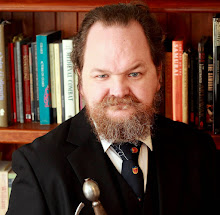
- Henry Walker
- Either an author who fences, or a fencer who tends to write a lot. I found a passion for writing first, then I found fencing. I also found that the pen and the sword work very well together. The pen may be mightier than the sword but together they are much greater.
Tuesday, May 13, 2014

Sunday, April 13, 2014
di Grassi - Of Sword and Buckler, Square Target and Round Target - from the second part
Greetings,
This is a transcription from the second part of di Grassi's (1595) His True Art of Defense. No spelling, punctuation, or grammar has been altered in any way. The only difference is the formatting which has changed due to the difference in width in the original text as compared to the transcription. This has been posted as a public service, anyone who would be interested in a more convenient version is free to contact me with regard to this.
Cheers,
Henry.
Of Sword and buckler, ſquare
Target and round Target.
An Aduertiſment concerning the defences of the falſe of the round Target.
This is a transcription from the second part of di Grassi's (1595) His True Art of Defense. No spelling, punctuation, or grammar has been altered in any way. The only difference is the formatting which has changed due to the difference in width in the original text as compared to the transcription. This has been posted as a public service, anyone who would be interested in a more convenient version is free to contact me with regard to this.
Cheers,
Henry.
Of Sword and buckler, ſquare
Target and round Target.
Being of
opinion that as touching deceite, there is but one conſideration to be had of all theſe weapons, and for becauſe all the
difference which may be between them is laide downe and declared in the true
arte, in the conſideration of the forme of each of them: Therefore I am willing
rather to reſtraine my ſelfe, then to indeuoure to fill the leafe with the idle
repetition of one thing twice.
All theis three weapons ought to be
borne in the fiſt, the arme ſtretched out forwardes, and this is euidently ſeene
in the ſquare Target and buckler: the round Target alſo, becauſe by reaſon of
his greatnes and waight, it may not be holden in the onelie fiſt, &
forwarde, in which kind of holding, it would warde much more is borne on the
arme, being ſtretched foorth with the fiſt forwardes, which is in manner all
one, or the ſelfeſame. Therefore one may falſe as much with the one as with the
other, conſidering there is no other falſe vſed with them then to diſcouer and
frame diuers wards, bering no reſpect to any aduantage. And yet there is this
difference betweene them, that with the round Target, one may eaſely warde both
edgeblowes and thruſtes, and with the ſquare Target, better than with any
other, he may warde edgeblowes, becauſe it is of ſquare forme: and the edge of
the ſword may eaſely be retained with the ſtreight ſide thereof, which is not
ſo eaſely done with the buckler: for ouer and beſides the warding of thruſtes,
the buckler is not ſo ſure of itſelf, but requireth aide of the ſworde.
Edge-blowes alſo when they come a thwart (for in that caſe, they incounter the
circumference thereof: the which if it chaunce, the ſword not to encounter on
the diameter, or halfe, in which place the ſword is onelie ſtaied, but doth
encounter it, either beneath, either aboue the ſaide diameter (maie eaſelie
ſlippe and ſtrike either the heade or thighs: therefore let euerie man take
heede and remember, that in ſtriking at the buckler, either with the poynte or
edge of the ſword, he deliuer it croſſing or a thwarte.
As concerning the falſes and
deceites, which may be vſed in the handling of theis weapons, as at the ſingle
ſworde, they are infinite, ſo at theis weapons they are much more, if the
number of infinite may be exceded. For beſides, that with the ſword one may
falſe a thruſt, an edgeblowe, on high, a lowe, within, without, and frame
diuers other vnorderlie wardes, There remaineth one deceite or falſe properlie
belõging vnto theis, which is, to beare the bukler, ſquar Target, or round
Target, wide from the bodie, and therewithall to diſcouer himſelfe, to the end
the enimie may be hindred, and loſe time in ſtriking, being therewithal ſure
& nimble to defend himſelfe & offẽd the enimie. And this he may
practiſe in euerie ward, but more eaſelie with the ſquare Target than with the
other two, becauſe it is bigge and large inough, & may eaſelie encounter
and find the enimies when in commeth ſtriking: but this happeneth not in the
rounde Target, becauſe his forme is circuler, neither in the buckler, becauſe,
beſides his roundnes, it is alſo ſmall: by meanes of which two things, blowes
are very hardly encountred except a man be very much exerciſed in the handling
thereof. And becauſe there are two weapons, the one of offence, and the other
of defence: it is to be conſidered, that when by meanes of a falſe thruſt or
edgeblowe, the enimies round Target, ſquare Target or buckler, is onely bound
to his warde, and his ſword remaines free and at libertie, one reſolue not
himſelfe to ſtrike immediatly after the falced thruſt, for then he may verie
eaſelie be hurt by the enimies ſword. Therefore let him remember for the moſt
parte, to falſe ſuch thruſtes, againſt the which, beſides the weapon of
defence, the ſword be alſo bound to his warde, or elſe to falſe edgeblowes from
the knee downewards: for ſeeing the round target, or any of the other two, may
not be vſed in that place, of force the ſword muſt be there placed at his
defence, which as ſoone as it is found, and thereby enſured that it may do no
hurte, a man may then ſtep forwardes, and deliuer ſuch a blowe as he beſt may
without daunger.
An Aduertiſment concerning the defences of the falſe of the round Target.
Everie time that one vſeth to falſe
with round Target, ſquare Target, and buckler, or as I may better ſaie, with
the ſword accompanied with them, he falſeth either an edge-blowe, either a
thruſt, either leaueth ſome parte of the bodie before diſcouered. Againſt all
the falces of the edge, which come from the knee vpwards, the round Target or
any of the reſt, muſt be oppreſſed, and then ſuddenly vnder them a thruſt be
deliuered, againſt that parte which is moſt diſarmed. But if blowed come from
the knee downwardes, they of force muſt be encountred with the ſword, and
alwaies with the falſe, or backe edge thereof, whether that the blowe be right
or reuerſed: & therewithall the enimies legge muſt be cutt with the edge
prepared without mouing either the feete or bodie. And this manner of ſtriking
is ſo ſhorte that it ſafely ſpedeth. Moreouer, all thruſts and other
edgeblowes, aſwell high as lowe may, naie rather ought to be warded, by
accompaning the target or other weapon of defence with the ſword, whoſe poynt
would be bent towards the enimie, & as ſoone as the enimies ſword is
encountred, if it be done with the falſe edge of the ſword, there is no other
to be done, then to cut his face or legges.
But if the ſword be encountred with
the right edge then if he would ſtrik with the edge, he muſt of force firſt
turne his hand and ſo cute. And this manner of ſtriking and defending, doth
properlie belong vnto the round Target, ſquare Target and buckler, and all
other waies are but vaine and to ſmall purpoſe: for to encounter firſt and then
to ſtrike, cauſeth a man to finde himſelfe either within the enimies Target or
ſword, by which meanes he may eaſelie ſtrike, before either the ſword or Target
may warde againe.
But if any man aske why this kind of
blowe carrieth ſmall force, and is but weake? I aunſwer, true it is, the blowe
is but weake, if it were deliuered with an axe or a hatchet, which as they
ſaie, haue but ſhort edges, and maketh but one kind of blowe, but if it be
deliuered with a good ſword in the foreſaide manner, becauſe it beareth a long
edge, it doth commodiouſly cut, as ſoone as the edge hath founde the enimies
ſword, and eſpecially in thoſe partes of the bodie which are fleſhy and full of
ſinnowes. Therefore ſpeaking of deceite or falſing, a man muſt alwaies with the
ſword and round Target and ſuch like, goe and encounter the enimies blowes,
being accompanied to gether. And as ſoone as he hath found the enimies ſword,
he ſhall within it, cute either the face or the legges, without any farthar
recouerie of his ſword, to the intent to deliuer either thruſtes, or greater
edgeblowes: for if one would both defende and ſtrike togeither, this the moſt
ſhorte waie that is.
But when the enimie diſcouereth ſome
parte of his bodie, thereby prouoking his aduerſary to ſtrike, and then would
beate off the blowe and ſtrike withall: in this caſe, either a man muſt not
ſtrike if he perceue not that his ſword is more neare the enimy, then his owne
Target is to the enimies ſword, or elſe if he ſtrik and be further off, he
muſtrecouer his ſword & void the enimies blowe, ſtriking comodiouſly ether
aboue ether ſome wher els. And it is a very eaſie matter to loſe much time, for
the Target and ſuch like are heauie, and if theſe motions meete with no obiect
or ſteye, they paſſe beyond their ſtrength. But if it ſo happen or chaunce, as
I haue before ſaide, that a man findes himſelfe more neare to hurte the enimie,
then the enimie is readie to defend himſelfe, then he muſt not falſe a blow
firſt, & then recouer his ſword, but ſtrik & driue it home at the
firſt, as reſolutlie & as nimblie as he may poſsiblie: & this maner of
ſtriking pertaineth rather to true art then to deceit or falſing.
Thursday, March 13, 2014
What is a Ward?
Greetings,
I suspect that this is going to be rather short, but I think it will supply some useful information of interest. The question would seem to have a relatively simple answer, however there is some contention with regard to the use of terms here, and it is this which will be discussed in the following. I am going to be horribly biased with regard to this and focus on the use of the single sword in this discussion.
A ward is a position from which an attack or defense is launched. I think this is the best definition of what a ward is that I can find. A more in-depth definition of this would also include that this is a position which the combatant moves through from one action to another. What this means is that a set of actions might look like this: Ward - attack - ward - defense - ward - attack, and so forth. What is important is this is not a "guard".
A guard is a position in which one line is closed, thus the fencer is defended along that line due to being ...
The rest of this article can be found in Un-Blogged: A Fencer's Ramblings by Henry Walker, which is available in paperback from:
Amazon: https://www.amazon.com/Blogged-Ramblings-Henry-Leigh-Walker/dp/098764470X
Booktopia: https://www.booktopia.com.au/un-blogged-henry-leigh-walker/book/9780987644701.html
Among other places...
It is also available in electronic format (pdf) from: https://buy.stripe.com/fZecP419c7CB9VKeUV
... or direct from the author.
I suspect that this is going to be rather short, but I think it will supply some useful information of interest. The question would seem to have a relatively simple answer, however there is some contention with regard to the use of terms here, and it is this which will be discussed in the following. I am going to be horribly biased with regard to this and focus on the use of the single sword in this discussion.
A ward is a position from which an attack or defense is launched. I think this is the best definition of what a ward is that I can find. A more in-depth definition of this would also include that this is a position which the combatant moves through from one action to another. What this means is that a set of actions might look like this: Ward - attack - ward - defense - ward - attack, and so forth. What is important is this is not a "guard".
A guard is a position in which one line is closed, thus the fencer is defended along that line due to being ...
The rest of this article can be found in Un-Blogged: A Fencer's Ramblings by Henry Walker, which is available in paperback from:
Amazon: https://www.amazon.com/Blogged-Ramblings-Henry-Leigh-Walker/dp/098764470X
Booktopia: https://www.booktopia.com.au/un-blogged-henry-leigh-walker/book/9780987644701.html
Among other places...
It is also available in electronic format (pdf) from: https://buy.stripe.com/fZecP419c7CB9VKeUV
... or direct from the author.
Thursday, February 13, 2014
Martial Art Versus Martial Sport
Greetings,
Regardless of the organisation, regardless of the weapon we use, at some point in time we need to sit back and have a look at what we are doing. We need to do this with a critical eye. Unfortunately as we become attached to a certain way of doing things in a certain group, we tend to become blind to alternatives which are just as valid, or in some instances even more valid than our own. This does not mean that we should change groups every time we find this, but we should at least look at what we are doing and with a critical eye. The purpose of this article is to ask question of whether that form of combat we are involved in is a "martial art" or a "martial sport". Both have their valid forms, but as stated we need to look at what we are doing with a critical eye in order to find the truth.
The first question to look at and one which will come up again and again is the question of consequences. In their original form the weapons and techniques used have and inherent lethality to them and the consequences for failure were for the most part dire. The presence of this level of threat, whether inferred or real is an important part of the form of combat. In the comparison between the martial art and the martial sport, this is a good place to start. In the martial sport, there are really little consequence for being struck, a combatant is struck, a point is awarded and the combatants re-start until a time limit is reached or one combatant scores a certain amount of points. This form is found in its extreme form in sport fencing. In the martial art, there are consequences present for the combatant who is struck, these are mostly simulated due to the nature of the real weapons, but are still present. A combatant who is struck with a lethal blow is considered killed, a strike to a limb results in the limb being useless for at least the rest of the bout.
In the further discussion of the idea of consequences in the combat, there is the question of the double-kill. Two combatants strike one another with equally lethal blows, what happens as a result of this determines the difference between the martial art and the martial sport. In the sport version both combatants are awarded on point each or zero points, the combatants then re-set and then continue the ...
The rest of this article can be found in Un-Blogged: A Fencer's Ramblings by Henry Walker, which is available in paperback from:
Amazon: https://www.amazon.com/Blogged-Ramblings-Henry-Leigh-Walker/dp/098764470X
Booktopia: https://www.booktopia.com.au/un-blogged-henry-leigh-walker/book/9780987644701.html
Among other places...
It is also available in electronic format (pdf) from: https://buy.stripe.com/fZecP419c7CB9VKeUV
... or direct from the author.
Regardless of the organisation, regardless of the weapon we use, at some point in time we need to sit back and have a look at what we are doing. We need to do this with a critical eye. Unfortunately as we become attached to a certain way of doing things in a certain group, we tend to become blind to alternatives which are just as valid, or in some instances even more valid than our own. This does not mean that we should change groups every time we find this, but we should at least look at what we are doing and with a critical eye. The purpose of this article is to ask question of whether that form of combat we are involved in is a "martial art" or a "martial sport". Both have their valid forms, but as stated we need to look at what we are doing with a critical eye in order to find the truth.
The first question to look at and one which will come up again and again is the question of consequences. In their original form the weapons and techniques used have and inherent lethality to them and the consequences for failure were for the most part dire. The presence of this level of threat, whether inferred or real is an important part of the form of combat. In the comparison between the martial art and the martial sport, this is a good place to start. In the martial sport, there are really little consequence for being struck, a combatant is struck, a point is awarded and the combatants re-start until a time limit is reached or one combatant scores a certain amount of points. This form is found in its extreme form in sport fencing. In the martial art, there are consequences present for the combatant who is struck, these are mostly simulated due to the nature of the real weapons, but are still present. A combatant who is struck with a lethal blow is considered killed, a strike to a limb results in the limb being useless for at least the rest of the bout.
In the further discussion of the idea of consequences in the combat, there is the question of the double-kill. Two combatants strike one another with equally lethal blows, what happens as a result of this determines the difference between the martial art and the martial sport. In the sport version both combatants are awarded on point each or zero points, the combatants then re-set and then continue the ...
The rest of this article can be found in Un-Blogged: A Fencer's Ramblings by Henry Walker, which is available in paperback from:
Amazon: https://www.amazon.com/Blogged-Ramblings-Henry-Leigh-Walker/dp/098764470X
Booktopia: https://www.booktopia.com.au/un-blogged-henry-leigh-walker/book/9780987644701.html
Among other places...
It is also available in electronic format (pdf) from: https://buy.stripe.com/fZecP419c7CB9VKeUV
... or direct from the author.
Monday, January 13, 2014
Reasons Why I Do Not Do Sport Fencing
Greetings,
I have a fencing history which begins officially back in my late teens. Of course I played with swords when I was a child, however it was only in my late teens and my first adventure to university that anything official happened with regard to this. This first adventure into the world of swordplay was to join my university fencing club, which, of course was teaching sport fencing. Due to leaving the university, I had to stop attending the club, however after sometime, and finding other areas of swordplay I decided I did not want to go back. This entry discusses the reasons for this.
Now, admittedly my adventure into this form of fencing was not long, relatively. So, there will be those that this was not a real investment or investigation into the art of fencing. However, from what I have seen as it is presented both in the media, but also as it is presented by those who promote this particular art, I believe that my reasons for not coming back or taking it up were well-founded.
The first area I would like to highlight in this particular explanation of my choice is, aims. It would seem that to strike the opponent is the primary aim of what happens in sport fencing. In no place is this more emphasised that in epee where the difference between a "hit" and a "non-hit" is something in the vicinity of 0.25 of a second. The idea of avoiding being struck in the process of striking the opponent seems to have been lost as long as your hit scores first. This seems to go against everything I know and feel about fencing. My belief is that you should be seeking to strike while not being struck yourself, or maybe my focus is a little off.
What has been discussed above focuses on the essential principle of fencing being that it is to defend yourself first and then to strike the opponent. This is the primary principle of fencing and it seems to have been pushed aside for "as long as you strike your opponent first". I will be examining this concept a little further later on with regard to another concept and reason. The principles of fencing seem to be something which are taught to beginners and then pushed aside. The other principle which is most evidently lost is the principle of distance and knowing it. In many pictures of fencers, they are standing on one another's toes, much too close. It would seem then rather than re-adjusting distance the idea is to contort arms etc in order to strike the opponent. If this foundation principle seems to be missing, what else could be?
My next point that I would raise can be described in one word, "ugly". This comprises two areas. The first I have dealt with a little and that is the "anything for a hit" concept. This bothers me a lot as it allows a lot into the "game" which would seem not to fit into an art which was once practiced by gentlemen and ladies. The idea allows a fencer to perform whatever action he can in order to lay his point or edge on to the opponent, rather than sticking with the forms and functions of the weapon which he is using, which leads to the second area "form".
In manuals we see pictures of fencers upright and standing with arms extended. In lessons we see the ...
The rest of this article can be found in Un-Blogged: A Fencer's Ramblings by Henry Walker, which is available in paperback from:
Amazon: https://www.amazon.com/Blogged-Ramblings-Henry-Leigh-Walker/dp/098764470X
Booktopia: https://www.booktopia.com.au/un-blogged-henry-leigh-walker/book/9780987644701.html
Among other places...
It is also available in electronic format (pdf) from: https://buy.stripe.com/fZecP419c7CB9VKeUV
... or direct from the author.
I have a fencing history which begins officially back in my late teens. Of course I played with swords when I was a child, however it was only in my late teens and my first adventure to university that anything official happened with regard to this. This first adventure into the world of swordplay was to join my university fencing club, which, of course was teaching sport fencing. Due to leaving the university, I had to stop attending the club, however after sometime, and finding other areas of swordplay I decided I did not want to go back. This entry discusses the reasons for this.
Now, admittedly my adventure into this form of fencing was not long, relatively. So, there will be those that this was not a real investment or investigation into the art of fencing. However, from what I have seen as it is presented both in the media, but also as it is presented by those who promote this particular art, I believe that my reasons for not coming back or taking it up were well-founded.
The first area I would like to highlight in this particular explanation of my choice is, aims. It would seem that to strike the opponent is the primary aim of what happens in sport fencing. In no place is this more emphasised that in epee where the difference between a "hit" and a "non-hit" is something in the vicinity of 0.25 of a second. The idea of avoiding being struck in the process of striking the opponent seems to have been lost as long as your hit scores first. This seems to go against everything I know and feel about fencing. My belief is that you should be seeking to strike while not being struck yourself, or maybe my focus is a little off.
What has been discussed above focuses on the essential principle of fencing being that it is to defend yourself first and then to strike the opponent. This is the primary principle of fencing and it seems to have been pushed aside for "as long as you strike your opponent first". I will be examining this concept a little further later on with regard to another concept and reason. The principles of fencing seem to be something which are taught to beginners and then pushed aside. The other principle which is most evidently lost is the principle of distance and knowing it. In many pictures of fencers, they are standing on one another's toes, much too close. It would seem then rather than re-adjusting distance the idea is to contort arms etc in order to strike the opponent. If this foundation principle seems to be missing, what else could be?
My next point that I would raise can be described in one word, "ugly". This comprises two areas. The first I have dealt with a little and that is the "anything for a hit" concept. This bothers me a lot as it allows a lot into the "game" which would seem not to fit into an art which was once practiced by gentlemen and ladies. The idea allows a fencer to perform whatever action he can in order to lay his point or edge on to the opponent, rather than sticking with the forms and functions of the weapon which he is using, which leads to the second area "form".
In manuals we see pictures of fencers upright and standing with arms extended. In lessons we see the ...
The rest of this article can be found in Un-Blogged: A Fencer's Ramblings by Henry Walker, which is available in paperback from:
Amazon: https://www.amazon.com/Blogged-Ramblings-Henry-Leigh-Walker/dp/098764470X
Booktopia: https://www.booktopia.com.au/un-blogged-henry-leigh-walker/book/9780987644701.html
Among other places...
It is also available in electronic format (pdf) from: https://buy.stripe.com/fZecP419c7CB9VKeUV
... or direct from the author.
Friday, December 13, 2013
What is a Master?
Greetings,
There have been questions with regard to the idea of the "master" and "mastery" floating around the internet in various forms for months. Being that I post quite a bit here about fencing and I am known by some, I thought it was time that I set the record straight as to what I think of the concept. Hopefully I will also be able to address some of the mysteries of this word and some of the ideas surrounding it, at least from my point of view. Please remember as you read that this is my own point of view.
The first title of "master" is within the Lochac Royal Guild of Defense, and this is as a Guildmaster, or Guild Master as the case may be. This is a teaching organisation formed within Australia as part of the SCA (Society for Creative Anachronism) in which each rank is tested. This rank is an accepted level of competence in western martial arts, and more so as an established teacher and researcher of western martial arts. The important part here is that it points these individuals out as teachers, not necessarily as great fencers, even though each is in their own particular way in their own particular right. This title is for the most part only recognised within the SCA, and in many ways only in Australia.
In the second instance of the use of the title of "master" it is Master of the School of Historical Defense Arts (SHDA). This is a title adopted for the school to denote the highest rank in the school, and as an administrative title which could be easily replaced with President or Chairman or similar things. For the most part, however this is to indicate the head trainer of the school and in many ways I get tempted to replace it with a more Elizabethan title in "Schole Maister" in order to be specific as to what the title means. It means that I am the highest rank teacher in the school. Once again no claims of anything but being a teacher and researcher.
You will notice that in both instances the words "teacher" and "researcher" are present with regard to the title of "master" in both instances. I think that this is vital. I know I have much to learn, and I am extremely happy about this. Every practitioner should and must keep learning for many reasons, the main answer for all of them is that it is better for the practitioner and also better for others who the practitioner comes into contact with. I make no claims with regards to my titles other than those which have been presented here, and I am quite happy to discuss this if anyone is interested.
The rest of this article can be found in Un-Blogged: A Fencer's Ramblings by Henry Walker, which is available in paperback from:
Amazon: https://www.amazon.com/Blogged-Ramblings-Henry-Leigh-Walker/dp/098764470X
Booktopia: https://www.booktopia.com.au/un-blogged-henry-leigh-walker/book/9780987644701.html
Among other places...
It is also available in electronic format (pdf) from: https://buy.stripe.com/fZecP419c7CB9VKeUV
... or direct from the author.
There have been questions with regard to the idea of the "master" and "mastery" floating around the internet in various forms for months. Being that I post quite a bit here about fencing and I am known by some, I thought it was time that I set the record straight as to what I think of the concept. Hopefully I will also be able to address some of the mysteries of this word and some of the ideas surrounding it, at least from my point of view. Please remember as you read that this is my own point of view.
Myself as a "Master"
In some circles I am referred to as a "master" of what I do. I thought that it would be most useful to address my own position before discussing a more general pattern and thought process. In my particular case there are two times where I might be referred to by the title master. It will be noted that in each circumstance these are with regard to a specific field of expertise and are specific to the setting in which they are found. Neither has any claims of anything more grand or over-reaching.The first title of "master" is within the Lochac Royal Guild of Defense, and this is as a Guildmaster, or Guild Master as the case may be. This is a teaching organisation formed within Australia as part of the SCA (Society for Creative Anachronism) in which each rank is tested. This rank is an accepted level of competence in western martial arts, and more so as an established teacher and researcher of western martial arts. The important part here is that it points these individuals out as teachers, not necessarily as great fencers, even though each is in their own particular way in their own particular right. This title is for the most part only recognised within the SCA, and in many ways only in Australia.
In the second instance of the use of the title of "master" it is Master of the School of Historical Defense Arts (SHDA). This is a title adopted for the school to denote the highest rank in the school, and as an administrative title which could be easily replaced with President or Chairman or similar things. For the most part, however this is to indicate the head trainer of the school and in many ways I get tempted to replace it with a more Elizabethan title in "Schole Maister" in order to be specific as to what the title means. It means that I am the highest rank teacher in the school. Once again no claims of anything but being a teacher and researcher.
You will notice that in both instances the words "teacher" and "researcher" are present with regard to the title of "master" in both instances. I think that this is vital. I know I have much to learn, and I am extremely happy about this. Every practitioner should and must keep learning for many reasons, the main answer for all of them is that it is better for the practitioner and also better for others who the practitioner comes into contact with. I make no claims with regards to my titles other than those which have been presented here, and I am quite happy to discuss this if anyone is interested.
"The Master"
Hopefully in this part of the discussion I may be able to shed some light on what it means to be a "master" of western martial arts. As far as I am concerned the following statement is accurate: A Master ...The rest of this article can be found in Un-Blogged: A Fencer's Ramblings by Henry Walker, which is available in paperback from:
Amazon: https://www.amazon.com/Blogged-Ramblings-Henry-Leigh-Walker/dp/098764470X
Booktopia: https://www.booktopia.com.au/un-blogged-henry-leigh-walker/book/9780987644701.html
Among other places...
It is also available in electronic format (pdf) from: https://buy.stripe.com/fZecP419c7CB9VKeUV
... or direct from the author.
Wednesday, November 13, 2013
Saviolo's Weapons
Greetings
I took it upon myself to examine the depictions given by Vincentio Saviolo, or at least his artist, of the two combatants and their weapons in order that I might discern the length of the weapons though proper by Saviolo for the practice of his art. While Saviolo gives no indication of the length of his weapons in his text, nor gives any particular preference to the length of the weapon desired by him, the depiction of the weapons gives some idea of what these weapons should be like. The following details the short bit of research that I embarked upon in the search for the weapons of Saviolo.
The first question is why? Or more to the point, why bother? To this I answer that having some idea of the length of the weapons is useful due to the effect which the length of a weapon has upon the combat in which it is involved. Clearly a weapon's make-up will have an effect on the combat. Weapons designed for cutting thrust less well, and vice versa. Thus gaining some idea of the length of the weapons in Saviolo will assist in the understanding of his combat, along with the proportion of the weapon to the user, which also has an effect.
What needs to be noted and accepted is that there are some inaccuracies that need to be taken into account. These inaccuracies will become apparent because of the method used and also some of the data collected from external sources. However, even with these factors the results of this examination are useful as it will give at least an approximate answer to the question.
First of all the "average" height of a male of the Renaissance period was researched in order to give some way to transfer the data from the page and into a "real world" setting. By the research performed on this particular subject the average height was established at approximately 5'5" or approximately 165-cm. The second part was to decide on what images to use to gain the data. So four images were selected, the first four given in the manual. Thus there is the depiction of the three single rapier and one from rapier and dagger. With this information gained it was then possible to start examining the images.
All of the images were scaled so that they were all from a common source. These images were then ...
The rest of this article can be found in Un-Blogged: A Fencer's Ramblings by Henry Walker, which is available in paperback from:
Amazon: https://www.amazon.com/Blogged-Ramblings-Henry-Leigh-Walker/dp/098764470X
Booktopia: https://www.booktopia.com.au/un-blogged-henry-leigh-walker/book/9780987644701.html
Among other places...
It is also available in electronic format (pdf) from: https://buy.stripe.com/fZecP419c7CB9VKeUV
... or direct from the author.
I took it upon myself to examine the depictions given by Vincentio Saviolo, or at least his artist, of the two combatants and their weapons in order that I might discern the length of the weapons though proper by Saviolo for the practice of his art. While Saviolo gives no indication of the length of his weapons in his text, nor gives any particular preference to the length of the weapon desired by him, the depiction of the weapons gives some idea of what these weapons should be like. The following details the short bit of research that I embarked upon in the search for the weapons of Saviolo.
The first question is why? Or more to the point, why bother? To this I answer that having some idea of the length of the weapons is useful due to the effect which the length of a weapon has upon the combat in which it is involved. Clearly a weapon's make-up will have an effect on the combat. Weapons designed for cutting thrust less well, and vice versa. Thus gaining some idea of the length of the weapons in Saviolo will assist in the understanding of his combat, along with the proportion of the weapon to the user, which also has an effect.
What needs to be noted and accepted is that there are some inaccuracies that need to be taken into account. These inaccuracies will become apparent because of the method used and also some of the data collected from external sources. However, even with these factors the results of this examination are useful as it will give at least an approximate answer to the question.
First of all the "average" height of a male of the Renaissance period was researched in order to give some way to transfer the data from the page and into a "real world" setting. By the research performed on this particular subject the average height was established at approximately 5'5" or approximately 165-cm. The second part was to decide on what images to use to gain the data. So four images were selected, the first four given in the manual. Thus there is the depiction of the three single rapier and one from rapier and dagger. With this information gained it was then possible to start examining the images.
All of the images were scaled so that they were all from a common source. These images were then ...
The rest of this article can be found in Un-Blogged: A Fencer's Ramblings by Henry Walker, which is available in paperback from:
Amazon: https://www.amazon.com/Blogged-Ramblings-Henry-Leigh-Walker/dp/098764470X
Booktopia: https://www.booktopia.com.au/un-blogged-henry-leigh-walker/book/9780987644701.html
Among other places...
It is also available in electronic format (pdf) from: https://buy.stripe.com/fZecP419c7CB9VKeUV
... or direct from the author.
Subscribe to:
Posts (Atom)