About Me

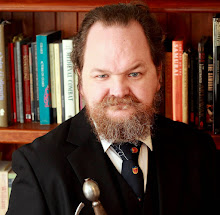
My photo
Either an author who fences, or a fencer who tends to write a lot. I found a passion for writing first, then I found fencing. I also found that the pen and the sword work very well together. The pen may be mightier than the sword but together they are much greater.

Friday, January 8, 2010

What is Fencing?

Greetings, A question that is not often asked is "What is fencing?" Most often the answer to this question is assumed to be general knowledge by most people. While swordplay, for most people, is not a normal part of their everyday life, there is the assumption that something is known about fencing. This blog will address both this particular question and some of the associated elements of fencing which must be realised, and most importantly by the fencing community. There are many assumptions which have been made about fencing over many years. Some of these are reinforced by popular culture in movies and other things. One of the first places that must be investigated is the "dictionary definition" of fencing and what that implies.
"Fencing is a family of sports and activities that feature armed combat involving cutting, stabbing, or bludgeoning weapons that are directly manipulated by hand rather than shot, thrown or positioned." http://en.wikipedia.org/wiki/Fencing
This gives a surprisingly broad definition of what fencing is. What is most relevant at this point in time is that this particular defintion of fencing is the one that must be used in order to appreciate its complete scale. Even for the fencer this is important, too often to we get locked into believing that what we do is the one and only true form of fencing whereas there are many out there. This much broader view of the idea of fencing allows for a much deeper analysis and discussion of fencing and the potential it has for all fencers and others as well. Where modern usage of "fencing" falls down is as follows:
"In contemporary common usage, fencing tends to refer specifically to European schools of swordsmanship and to the modern Olympic sport that has evolved out of them." http://en.wikipedia.org/wiki/Fencing
This falls down from several different points of view. First of all it limits fencing to European schools of swordsmanship. This is very limiting as it would be known and argued that any Japanese kendoka or Chinese swordsman would also argue the point. Fencing must refer to all forms of swordplay not only those found in European schools of swordsmanship. The next point that must be made is the idea that sport fencing "evolved" out of the previous forms. This is inaccurate to say the least. The change from the rapier to the smallsword and thus to later weapons was a result of fashion not evolution or increase in skills. Those treatises left by the masters of the Renaissance period will demonstrate that what was taught were complete and complex skill systems. Thus the so-called "evolution" is inaccurate. In order to approach fencing with a truly holistic point of view it must be appreciated how each of these martial arts relates to one another. The first is through the foundation principles. All the forms work on the ....

The rest of this article can be found in Un-Blogged: A Fencer's Ramblings by Henry Walker, which is available in paperback from:

Amazon: https://www.amazon.com/Blogged-Ramblings-Henry-Leigh-Walker/dp/098764470X
Booktopia: https://www.booktopia.com.au/un-blogged-henry-leigh-walker/book/9780987644701.html
Among other places...

It is also available in electronic format (pdf) from: https://buy.stripe.com/fZecP419c7CB9VKeUV

... or direct from the author.

Friday, December 18, 2009

Footwork: Movement in Fencing

Greetings, Footwork is vital in fencing and it is often overlooked in importance in comparison to the use of the sword. What must be realised in this particular situation is that it does not matter what forme of fencing is being done, footwork is of great importance. This particular edition will be focussing on footwork and its importance. It will also address the differences and advantages and disadvantages of practicing footwork both indoors and outdoors. For some they may not realise the difference, but there is a difference. Footwork is undoubtedly important. The practicing of footwork at a training session tends to be rather boring. It usually involves moving up and down the training area over and over again. This is designed to implant the footwork into the muscle memory of the fencer. Once the basic motions have been practiced and perfected, more interesting things can be done with it such as distance games of various kinds. The thing about this practice is that the fencer needs to be able to move without thinking. This means that the footwork movements need to be so familiar to the fencer that they do not have to think about them, this takes a lot of practice. Practicing and using footwork is all about the ability to move freely over the field. Now, anyone can walk or run across a field, this is undoubted as it is something which we learnt when we were small children. Footwork in fencing is about taking this particular ability and making it more efficient and also about making it effective. Footwork is also about teaching the body to be stable while moving across the field. This means that footwork enhances the ability of the fencer, and it also protects the lower limbs through this movement. Accurate footwork is about safe and efficient movement across the field. Simple things such as turning the foot in the direction of the opponent creates a biomechanical situation where the body is better protected from injury and damage. Distance is controlled by footwork. The arm of the fencer is only so long and so is their weapon. If the fencer stays stationary, the opponent only has to stay out of range of the arm and weapon. If the fencer moves with their feet they can change the distance. Footwork does the major part of moving the body of the fencer. Without the correct footwork, it is difficult for the fencer to move properly. It is also through the use of footwork that the fencer is able to control distance in the bout. Through this the fencer is then able to close or withdraw at the time and place of their choice. Through this use of distance the fencer is then able to control the bout. For the most part, the question of training and fighting indoors or outdoors is pretty much mute for the sport fencer. So this particular aspect is more directed at the Renaissance and Classical fencer whose tournament field may be indoors or outdoors. The question of where training will actually take place is usually up to the person or organisation which organises the training. This may mean that you may end up training either in a hall or outside. There are some important differences that must be realised between these two.

....

The rest of this article can be found in Un-Blogged: A Fencer's Ramblings by Henry Walker, which is available in paperback from:

Amazon: https://www.amazon.com/Blogged-Ramblings-Henry-Leigh-Walker/dp/098764470X
Booktopia: https://www.booktopia.com.au/un-blogged-henry-leigh-walker/book/9780987644701.html
Among other places...

It is also available in electronic format (pdf) from: https://buy.stripe.com/fZecP419c7CB9VKeUV

... or direct from the author.

Thursday, December 10, 2009

Newton's 3rd Law in Fencing

Greetings, This blog may be a little short, but it will be focussing on a single point in fencing which is of importance. One of the fundamental things about fencing is that there is no ultimate killing move. There is always a counter to every single attack performed. This is one of the things which is so exciting about fencing, it is about putting the bits together in order that they can work. So this blog will be focussing on action and counter.
"To every action there is an equal and opposite reaction."
With regard to many things, this particular comment has been used many times. This particular statement is as applicable to fencing as it is to human interactions as it is to physics. There is an action which can be used in response to any other action in fencing, no matter how simple it may be. This is one of the most essential points that as teachers, we must instill in our students, and as fencers, we must understand. This is one of the keys to the development of the fencing mind. So first, there is attack and defence. A scenario, a thrust is made this is a very simple attack to which there are at least three defences regardless of the form of fencing you are doing. The attack can be parried, voided or retreated from. Each one of these either displaces the body or displaces the attack. For this particular purpose the parry will be used. So, the attack is parried, this allows the parrier to mount a counter-attack, the riposte. With regard to this discussion, tempo is not going to be mentioned so bear with me. Even in a stesso tempo response there is still the element of a parry and a riposte, they are simply blended together. Of course the individual recieving the riposte can perform anyone of the three actions described in defence, the ceding parry being the most useful if blade engagement is to be maintained. From the ceding parry another counter-attack may be made. With the simple description above, it can be seen that each attack has a counter, this counter then builds to a counter-attack, and against this there is also a counter. There is no action in fencing which is performed which cannot be countered in some manner. It is up to the fencer to find this particular counter and use it against the attack. In many ways it is like the arms race. One builds a weapon, the other builds a weapon to counter it and so forth. Luckily in this competition the world is not under threat.

....

The rest of this article can be found in Un-Blogged: A Fencer's Ramblings by Henry Walker, which is available in paperback from:

Amazon: https://www.amazon.com/Blogged-Ramblings-Henry-Leigh-Walker/dp/098764470X
Booktopia: https://www.booktopia.com.au/un-blogged-henry-leigh-walker/book/9780987644701.html
Among other places...

It is also available in electronic format (pdf) from: https://buy.stripe.com/fZecP419c7CB9VKeUV

... or direct from the author.

Thursday, December 3, 2009

Why Do Renaissance Fencing?

Greetings, What a question. This is a big question that needs to be asked both of the beginner and the more experienced fencer. For those at the beginning, the answer is a reason to start and stick with the training. For those more experienced fencers, the answer is a reason to keep going with the training. This blog will bring up some of the reasons for starting fencing and also some of the reasons to continue with it. The important thing about the answer that is given to this question is that it must satisfy you more than anyone else. For some of my readers you will notice that this blog has a great deal of similarity with an article I wrote some time ago, well, to be honest, this is a re-write. The most interesting, and often most difficult question to answer, especially for the practitioner of Renaissance fencing is, why fence? What is the use of fencing? Why bother going to all the effort? In a way, points have to be conceded to this sort of questioning. For the Renaissance fencer, it is an “outdated” style of combat, which belongs to a period up to 500 or so years ago. For most fencers, there are no gold medals at the end of it, and not to mention the many confusing issues that abound with the recreation of this martial art. The original purpose of learning to fence has gone, people do not generally wander around in public with swords at their sides, and it is not likely you will be challenged to a duel either. This is a question of outsiders to the fencing community and members of the community also. The question is often best answered by each individual practitioner. But we can highlight some general points of relevance in answer to this perplexing question. There are many influences, which may cause a person to become interested in fencing, these all have an impact on the individual. The media, especially in regard to movies often influences people in this. A person may see a movie and become interested due to the flair, which is shown by the characters in the movie. With special attention to rapier combat, movies such as “The Three Musketeers”, “The Mask of Zorro” and “The Musketeer” all show rapier combat as a combat art with much skill. Unfortunately, these movies do not show the hard work that is required to develop such a level of skill. Learning how to fence and learning how to do it properly takes a great deal of time. People are also influenced by friends and family, especially those who are already involved in groups which do fence. A person may become influenced by the skills demonstrated by a relation or friend. Others may become interested because of a search for something new; these people often have a background in sport fencing and wish to explore new skills. Still others are interested in fencing because of the different styles and approaches, which are possible, and some become interested because of a level of competition that is not found in other sports. The reasons for starting to fence may actually not be the same reasons that a fencer will continue with it. This notes a change in mind-set in the fencer over time. A person’s own individual values and passions also influence a person’s interest. Values that are expressed in fencing and not so much in other combat arts. Others simply develop a passion for the arts of their own culture, and especially those from older times. It is often these passions and values, which will sustain a person through the long process of training. While oriental martial arts have a lot of mysticism associated with them, western martial arts do not. The important thing is that something deeper can be found in these martial arts and amongst the community who performs them, if only the fencer will look deeper than what is seen on the surface. Fencing not only teaches new skills but also teaches control, among other things. It also teaches a new approach on how the world should be viewed through the teaching of the social elements that are important. Though some teachers may neglect this particular aspect of fencing, it is something which should be taught. In some cases the student may have to simply go out and discover these aspects for themselves. Fencing also teaches strategy, strategy which is not only useful when fencing but also in other aspects of one’s life. These things that fencing teaches are of benefit to all, and not just those who fence.

....

The rest of this article can be found in Un-Blogged: A Fencer's Ramblings by Henry Walker, which is available in paperback from:

Amazon: https://www.amazon.com/Blogged-Ramblings-Henry-Leigh-Walker/dp/098764470X
Booktopia: https://www.booktopia.com.au/un-blogged-henry-leigh-walker/book/9780987644701.html
Among other places...

It is also available in electronic format (pdf) from: https://buy.stripe.com/fZecP419c7CB9VKeUV

... or direct from the author.

Tuesday, November 24, 2009

What Does Fencing Give the Fencer?

Greetings, The fencer puts a great deal of effort into training, acquiring the correct equipment and various other aspects if they want to become a better fencer. How much the fencer puts into this is the measure of their dedication to the art. The question that needs to be asked is, after all of the effort put in by the fencer what do they get back from it? This blog will address some of those things that the fencer gets back from doing fencing. Some of these things will be obvious and others will not be so obvious. In our dollar-emphasised, capitalist, modern society, the question is always what do I get out of this? It is a question that is asked in the workplace and even in social situations. In the workplace it is pretty easy to see, it is perks, benefits, and a regular payday. In the social situation it can be a little blurry, and for the fencer some of the results of the effort put into their fencing can be very difficult to see. Clearly, some rewards are obvious, these are usually in the form of such things as trophies, accolades, awards and other prizes usually awarded after a tournament or a period of service to fencing. Depending on what sort of fencing and what sort of structure will depend on which apply to you. These things are nice to get but in many cases they are fleeting in nature. The question that needs to be asked is whether there is more than these physical things. There are some physical aspects that the fencer will gain without having to win any tournament whatsoever. It is these physical aspects which are the most obvious rewards for the fencer. Fencing will, over time, improve the fitness of the fencer. This is especially the case if they are doing it on a regular basis. The simple cardio-vascular activity which goes on inside the body during fencing will improve the health of the fencer. While the health aspects are some which are the most obvious results of fencing, there are some health aspects which are over-looked. Such things as improvement in self-worth due to the acknowledgement of the skills which have been learnt, and the achievement associated with this. Then there are the skills learnt while fencing. These skills have their most obvious application while fencing, but the fencer will also notice other changes due to these skills being learnt. Their movements will be more fluid and more accurate. This actually leads on to the mental aspects as well.

....

The rest of this article can be found in Un-Blogged: A Fencer's Ramblings by Henry Walker, which is available in paperback from:

Amazon: https://www.amazon.com/Blogged-Ramblings-Henry-Leigh-Walker/dp/098764470X
Booktopia: https://www.booktopia.com.au/un-blogged-henry-leigh-walker/book/9780987644701.html
Among other places...

It is also available in electronic format (pdf) from: https://buy.stripe.com/fZecP419c7CB9VKeUV

... or direct from the author.

Tuesday, November 17, 2009

Pressure in Fencing

Greetings, Pressure is something that we all have to deal with in our every day lives. This blog is primarily aimed at the idea of pressure in fencing and more to the point suggestions of how it can be dealt with. In fencing pressure can build up for many different reasons and some of these are self-influenced. The result of this pressure is what happens when it actually begins to affect people. The pressure will affect people in different ways and we need to be aware of this, but more importantly is how to deal with the pressure. Pressure is exerted on people in fencing for different reasons and each one of these reasons has a particular impact on the individual. Any form of examination, whether it is verbal or physical, exerts pressure on the fencer as they are expected to perform. The success of this examination will allow them to progress further, the failure of which will restrict their progress. It is these thoughts which form a great part of the pressure. In the case of tournaments pressure is exerted because of the drive in the individual to win. Even if it is not to win the expectation of a certain level of performance is present. Expectations form one of the most pervasive forms of pressure placed on the individual. This pressure can either be an internal thing or an external thing. The pressure exerted from others may be something which is explicit or implicit. A teacher or someone else may come up and tell the individual that they expect them to do well in this particular situation, as much as this is encouragement it is also a form of pressure. The implicit pressure is merely from an expectation that the student has learnt a great deal and should do well because of this. Expectations which come from the self are actually much more pervasive than those from the outside. These exert more pressure because there is an expectation which has become a part of our own thoughts and thus while the expectations of others can be ignored to a point, the internal ones are ever-present and in our thoughts. This is also how the external pressures can become internal. There are three primary results due to pressure being exerted on the individual. Some people go to absolute pieces, some people focus harder on their task, and others do not seem to be affected at all. Obviously the people who go to pieces seem to be feeling the pressure of the situation the most out of the three, but this is not to say that presssure does not affect the other two, even subtly. The people who go to pieces, the pressure is exerted, hits a particular mark and then they go to pieces, all that they have learnt leaves their brain and sometimes they go catatonic. In this situation the pressure will move on toward panic, and the situation will get worse for them. The people who focus, tend to internalise the pressure and use it as a focus for the task which is at hand. They tend to end up so focussed that other that everything else is forgotten or just pushed to one side. The ones who do not seem to be affected actually are affected, but they have internalised it so far that it is just a normal thing for them and nothing to be thought about. The result of this is usually they end up blase about the situation, and this can lead to a lack of focus. Identifying which type of individual you are is the first step in dealing with it. Pressure exerted on the fencer can result in some specific things and some general things. For some it would seem that they have a loss of ability. They can't seem to perform the techniques which they have learnt effectively. A further stage of this is what I refer to as the "brain-melt". In this situation they have a complete loss of ability and they have no response to the actions of their opponent. This is usually one of the most catasrophic result of the exertion of pressure on a fencer. There are also physical effects that the fencer will notice in themselves. There is a large flow of adrenaline to the individual. This gives them more energy, but can result in being "twitchy" or the hands shaking. Another result of the boost of adrenaline is an increase in heart rate. Sometimes the increase in heart-rate will actually happen before the burst of adrenaline. This particular causality is the result of the human being's in-built fight or flight response. The increase blood-flow and adrenaline is so that the individual can either fight or fly. The amusing thing about this is that for a large portion of people the brain is programmed toward the flight response. This is not particularly helpful for the fencer. There are other effects that may be noticed, but these are the most common.

....

The rest of this article can be found in Un-Blogged: A Fencer's Ramblings by Henry Walker, which is available in paperback from:

Amazon: https://www.amazon.com/Blogged-Ramblings-Henry-Leigh-Walker/dp/098764470X
Booktopia: https://www.booktopia.com.au/un-blogged-henry-leigh-walker/book/9780987644701.html
Among other places...

It is also available in electronic format (pdf) from: https://buy.stripe.com/fZecP419c7CB9VKeUV

... or direct from the author.

Tuesday, November 10, 2009

Building an Individual Training Program

Greetings, The individual training program is different from the group training program as it is designed to fit an individual. This means that the specific requirements of the individual must be taken into account. In order for the student to get the greatest benefit from the program it is important that it suits them. This can be somewhat trying if sufficient information is not gained from the student to start with. The teacher should not be attempting to build the training program without communication with the student. In this way the program will fit the student better and go further to achieving their aims and also keeping them interested in it. The individual training program must suit the individual and thus must be individual in nature. This will mean that the program will change dependent on the particular student. There are several different aspects that must be taken into account in order for the program to suit the student the best and these will be discussed in a little detail. In order for the program to be the best for the individual student all of the elements present in the training program must suit the student. This means that information is required from the student in order for this to happen. The first element that must be taken into account is the student's background. Do they have previous experience in any relevant areas that may assist them? Are there any elements in their background that may hamper their development due to thought processes or physical elements present? Students with experience in martial arts of any kind will already have some background in movement and bio-mechanics. Also they will also have certain movement patterns and thought processes that will have an impact on what they are to learn. This is the same for students who have previous experience in fencing. How this will affect their program and ability will be dependent on the type of fencing they have done, and to some degree the school of thought. Other sports can also have an impact on the program depending on the sport. All of these background elements will have developed a level of conditioning which can be an asset or a detriment depending on their training. The student's present ability and potential ability is important and must be taken into account. Their present level of ability is important and must be taken into account so that the skills that will be taught are appropriate to the student. This is to ensure that the program does not deal with skills which are too far out of their current ability. This is also dependent on their potential ability. A student who is currently at a lower level may be able to deal with skills at a higher level if the program allows them to build up to the higher level, but this must be present in the program to allow them to do this. If the program is to be built around a particular manual, such as a period manual especially, this must also suit their ability in order that they are able to perform the skills present. Finally in this particular element, personal issues must be taken into account. This includes such things as disabilities, fencing knowledge and also time constraints. All of these elements will affect how the program is built and what sort of program is used.

....

The rest of this article can be found in Un-Blogged: A Fencer's Ramblings by Henry Walker, which is available in paperback from:

Amazon: https://www.amazon.com/Blogged-Ramblings-Henry-Leigh-Walker/dp/098764470X
Booktopia: https://www.booktopia.com.au/un-blogged-henry-leigh-walker/book/9780987644701.html
Among other places...

It is also available in electronic format (pdf) from: https://buy.stripe.com/fZecP419c7CB9VKeUV

... or direct from the author.